Amy Ming Wai Tai  1
1
How to cite
How to cite
Abstract
Abstract
Although many musicians consider meter to be a hierarchy of discrete and isochronous time points or spans, dancers emphasize the continuity of motion and time. This emphasis on continuity challenges the use of conventional music-theoretical models of rhythm and meter for dance analysis by many choreomusicologists, scholars of dance and music. I propose that the way dancers think of movement and time echoes that of philosopher Henri Bergson, who highlights the indivisibility of time and movement, as they carry memories from the past into the present and future, creating what he calls durée—a heterogeneous and continuous flow where one state melts into the next without clear boundaries. As such, a Bergsonian view of rhythm and meter in dance can reveal subtleties in the interaction between dance and music that might otherwise escape notice. I apply these concepts in a choreomusical analysis of the beginning of a duet in A Sweet Spell of Oblivion (2007) by David Dawson, choreographed to the E-flat minor prelude in Das wohltemperierte Klavier I by J.S. Bach.
Outline
Outline
Many musicians consider meter to be a hierarchy of pulses, which are conceived sometimes as discrete, isochronous, and durationless time points, and other times as time spans demarcated by these time points.2 In this model, when we hear expressive variation, we quantize the continuum of time into discrete patterns representable by notation.3 Most choreomusicologists, scholars of dance and music, adopt this view of rhythm and meter in analyzing dance. However, dance philosophers and practitioners, especially in ballet and modern dance, emphasize the continuity of motion and time. For instance, choreographer and philosopher Sondra Horton Fraleigh comments that there is no division from one movement to the next, because division cannot occur in something that cannot be frozen in time.4 Maxine Sheets-Johnstone, in a similar vein, discusses how motion is indivisible because it is always in the process of becoming.5 Their observations can be substantiated by physics in dance. According to Emily Coates and Sarah Demers:
Dancers use momentum to fold one movement into another. […] Some dancers think of this moment as the “bottom” of a jump or an action. This initial movement then generates a force that the dancer rides into the next action. Within the fulfillment of each movement lies the potential for the next movement that occurs.6
The continuity of movement is highlighted in dance pedagogy, too. Ballet pedagogues Barbara Walczak and Una Kai note that whatever the step is, “the dancers are not stopping,” because “[t]here is constant flow between the notes or counts.”7 And as dance accompanist Elizabeth Sawyer points out, “most of the crucial preparatory and connecting movements are outside, or even contrary to (contre-temps) the tick-tock of the beat and meter.”8 Although dancers sometimes also refer to “counts” as discrete points or spans, in those cases, they are mostly using counts as mnemonics for learning and notating choreography, not a comprehensive representation of movement.9
Such views on continuity and qualitative expression of movement challenge the efficacy of conventional models of rhythm and meter in music theory for dance analysis. Whereas these views theoretically do not prevent one from perceiving qualitative expression in rhythm, the tendency to quantize, which is implied by the existence of theoretically durationless time points, leads many choreomusicologists to pay attention to “what” happens on which beat instead of “how” it happens and the transitions between movements, while the “how” and the transitions matter much to dancers. Due to these habits—quantizing and focusing on the “what”—choreomusicology has yet to resolve questions such as the following:
-
Why do dance and musical accents seldom align perfectly?
-
How do we determine a durational unit, such as a phrase, in dance?
-
How can we take into account qualitative feeling in analyzing rhythm and meter in dance?
In this paper, I propose that the way dancers think of movement and time echoes that of philosopher Henri Bergson,10 who highlights the indivisibility of time and movement as they carry memories from the past into the present and future, creating what he calls durée—a heterogeneous and continuous flow where one state melts into the next without clear boundaries.11 As such, a Bergsonian view of rhythm and meter in dance can reveal subtleties in the interaction between dance and music that might otherwise escape notice, and provide novel insights into the aforementioned questions. I begin by examining Bergson’s conception of durée and how movement as discussed by twentieth-century dance writers gives rise to durée. After that, I discuss Bergsonian views of rhythm and meter in music theory, such as those of Victor Zuckerkandl and Christopher Hasty. Similar to dancers, they treat rhythm and meter as motion and processual experience. One might think that the difference between them and the customary model is that they see beats as spans, whereas the latter considers them to be points. However, as Graeme Boone points out, points and spans are dual in nature—points necessarily generate spans between them.12 The difference is, rather, that whereas the customary model represents the points or spans as discrete, the Bergsonian ones focus on the process between these points or spans. I then explore how Hasty’s and Zuckerkandl’s theories can be extended to dance, since they use metaphors of motion in describing rhythm and meter but do not discuss movement per se.13 Finally, I apply these concepts in a choreomusical analysis of the beginning of the first duet in A Sweet Spell of Oblivion (2007) by David Dawson, choreographed to the E-flat minor prelude in Das wohltemperierte Klavier I by J.S. Bach, orchestrated by Leopold Stokowski.14
Dance and Bergson’s durée
Bergson observes that, before the discovery of calculus, science mostly investigated homogeneous and discrete elements juxtaposed in space, and many transferred ways of modeling space to time, representing time as durationless points.15 For him, however, spatial models cannot capture the experience of motion and time, where the present contains all the memories from the past which become potential for the future. As such, it is more fitting to conceptualize motion and time as continuous and indivisible, where successive states melt into one another with indeterminate boundaries. Since memory is constantly accumulating, we cannot live the same moment twice, making the flow of motion and time a heterogeneous and perpetual becoming.16 The continuity and heterogeneity of time creates a qualitative flow which he calls durée, or “duration” in English: “pure duration might well be nothing but a succession of qualitative changes, which melt into and permeate one another, without precise outlines […] it would be pure heterogeneity.”17
Dance writers often describe movement as a flow that corresponds to Bergson’s durée. Dancers do not think of steps as durationless “hits.” Any step involves an impulse that starts the movement, a getting into the position, and a coming out of the position, and all these stages merge into a continuous flux.18 On top of the physical necessity for movement to be continuous, dancers also deliberately make this flow heterogeneous by quickening certain parts of the movement and slowing down others to enhance its expressiveness, a technique dancers call “phrasing.”19 In the ballet style of George Balanchine, the pioneer of neoclassical ballet, this is usually achieved by starting a movement fast and then slowing it down at the end. According to Suki Schorer, a pedagogue of the Balanchine style, the tendu is phrased if it “starts out rapidly, then slows slightly to reveal the full point. It starts in sharply and then slows as the foot is placed in fifth.”20 Phrasing is even more perceptible in adagio movements, where “[t]he dancer must show the beginning with a quicker start, then slow as she continues smoothly down.”21 Even when the dancer seems to be “holding a pose,” energy is continuously growing in that position. For instance, in a leg extension, “[o]nce the dancer reached the extended line, she ‘grew’ in the held position so it did not look static and lifeless. Each movement must maintain a vibrant energy throughout.”22 That is, after the dancer reaches the extended line, her leg continues to get higher, especially right before it comes down; dancers call this “breathing.” As Jordan notices, although changes of speed and intensity within a movement are common in dance, it is relatively difficult to achieve within a single note in music.23 A situation where it is possible to vary the speed and intensity within a single musical note is playing a long note with vibrato. However, conventional theories of rhythm and meter do not address this phenomenon in vibrato—for similar reasons that they do not address this phenomenon in dance—which is that they are in general not concerned with motion and process.24
The continuity and heterogeneity of time is also seen in the transitions between movements. As discussed, for Bergson, memory makes time continuous because the present engulfs the past, which in turns becomes potential for the future. Likewise, in dance, kinesthetic memory—conditions set forth by the previous step—become the preparation for the next step and render the succession of steps continuous.25 For instance, if a dancer finishes a step at a certain location on stage in a particular body position, s/he must begin the next movement from that position. But this continuity is not merely a physical necessity; in order to enhance the impression of continuity, from one step to the next, dancers also deliberately let different body parts arrive at different times to eliminate sharp demarcation between steps. Often, although the footwork coincides with the count conceived as a time point or the onset of the count conceived as a time span, movements in the head, arms, and torso begin or end slightly before or after that.26 As Walczak and Kai write, “the essence lies in the musicality of how each movement flows over into the next, meaning that a movement may not end or begin squarely on a given count but may overlap into the next count.”27 In the process of increasing the sense of continuity, dancers transform the theoretically isochronous and metronomic stream of dance counts into a heterogeneous flow, where the duration of the first movement imperceptibly bleeds into the second, and the second movement has always already begun by the time the dancer gets into position. This is why the boundaries between time spans in dance are often indeterminate, creating the phenomenon in Bergson’s durée where one state melts into the next without clear boundaries.
Toward a Bergsonian View of Rhythm and Meter in Dance
What do these observations on movement, time, and memory mean for analyzing rhythm and meter in dance? As mentioned above, a count can refer to a time point or span, and as I shall discuss in more detail, dancers use the word for both meanings. When a count is conceptualized as a point, how do we reconcile the seemingly punctilious aspect of counting in dance and the continuity of movement? When it is a span, how do we take into account the indefinite overlap between steps? How do these questions illuminate metric and rhythmic concepts in dance, such as accent and phrase, as outlined in the introduction? And what role does memory play in all this? To explore these questions, I will extend Zuckerkandl’s and Hasty’s Bergsonian views of rhythm and meter for analyzing dance.
When dancers discuss how to make movement expressive, they tend to conceptualize counts as spans. Walczak’s comment above that a movement “may overlap into the next count [my emphasis]” implies a span-view of counting.28 As a more explicit example, Jordan points out that, for choreographer Mark Morris, “a beat is a concept that is not about a point, but rather about a length, in time […] it has a ‘front,’ a ‘back’ and the more familiar center, which he simply calls being ‘on’ it.”29 As mentioned above, dancers do sometimes refer to counts as time points, especially when they use it as a heuristic to learn choreography. In such cases, the movement can pass through the count, or the beginning, the apex, or the end of a movement can coincide with it.30 But even when they refer to counts as time points, they emphasize the transition between them. As choreomusicologist Robert James Nicholas Coleridge points out, “The interest of the exercises and the true nature of their rhythmic life are to be found entirely in the way the dancers move between each downbeat[.]”31 Coleridge here takes a “point” view of meter, but for him what is important is the transitions between these points. As such, dance counts can be thought of as hypothetical points that lie in the continuum of movement without stopping it.
In order to explain the phenomenon of counting in dance without compromising the continuity of movement, we can think of these counts as points on a continuous graph, whose properties can be modelled by calculus in mathematics.32 The idea of “limit” in differential calculus approximates the gradient of a curve at a point without freezing or dissecting the curve, allowing us to make observations about a point while preserving the continuous nature of a curve.33 For Bergson, calculus brings to the fore the notions of process and continuity in modern science and mathematics, which were sidelined before its invention.34 He writes, with reference to calculus, that
[m]odern mathematics is precisely an effort to substitute for the ready-made what is in process of becoming, to follow the growth of magnitudes, to seize movement no longer from outside and in its manifest result, but from within and in its tendency towards change, in short, to adopt the mobile continuity of the pattern of things [emphasis his].35
Bergson finds calculus a fitting analogy for durée and movement.36 He comments that, just as calculus stimulated modern mathematicians to focus on the continuous instead of the discrete, durée motivates modern philosophers to forego their spatialized concepts of time and motion as disconnected and durationless instants.37
Zuckerkandl takes up Bergson’s ideas on the continuity and heterogeneity of durée in his conception of rhythm and meter.38 Just as Bergson conceptualizes durée as a curve modelled by calculus, Zuckerkandl represents meter as a continuous wave that cannot be segmented. Although Zuckerkandl does not discuss movement per se, he echoes Coleridge’s comment above by arguing that it is more productive to represent meter as “not born in the beats at all, but in the empty intervals between the beats. [emphasis his]”39 In his model, musical counts fall onto different points of a curve. As figure 1 shows, in a wave of duple meter, counts 1 fall on the peaks and counts 2 in the troughs. Every point in a cycle has a different metrical quality.40 Although Zuckerkandl does not invoke calculus in his explanations, we can compare the situation to how different points on a curve in a cycle have different gradients or different changes of signs of the gradients around those points. For instance, although the maxima and minima both have a zero gradient, the gradient changes from positive before a maximum to negative after that, and vice versa for a minimum. This mathematical phenomenon explains how counts 1 and 2 have different metrical qualities even though they are both points of emphasis in the continuum of musical motion.
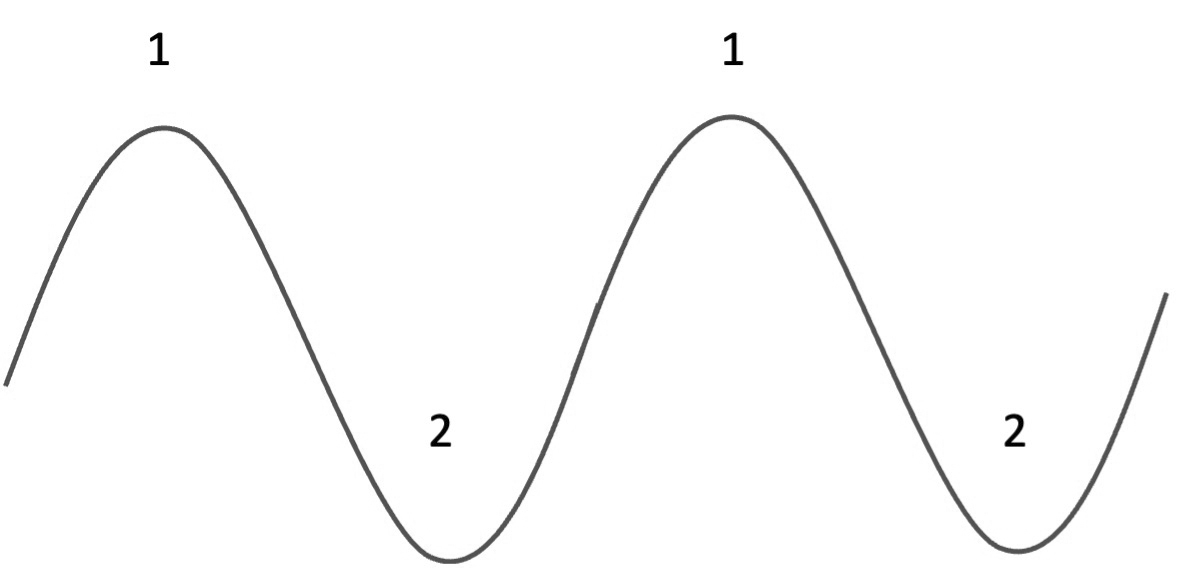
Figure 1: Zuckerkandl’s metrical wave for duple meter. Reproduced based on Victor Zuckerkandl, The Sense of Music (Princeton: Princeton University Press, 1959), 116. © Princeton University Press
Zuckerkandl’s metrical wave can be adapted to show the relationship between counts and the continuum of movement in dance. Imagine the tendu as Schorer describes it above, which “starts out rapidly, then slows slightly to reveal the full point. It starts in sharply and then slows as the foot is placed in fifth.”41 If we graph the distance of the foot away from the dancer’s body (d) over time (t), if count 1 is out, count 2 is in, the metrical wave approximates the diagram in figure 2:
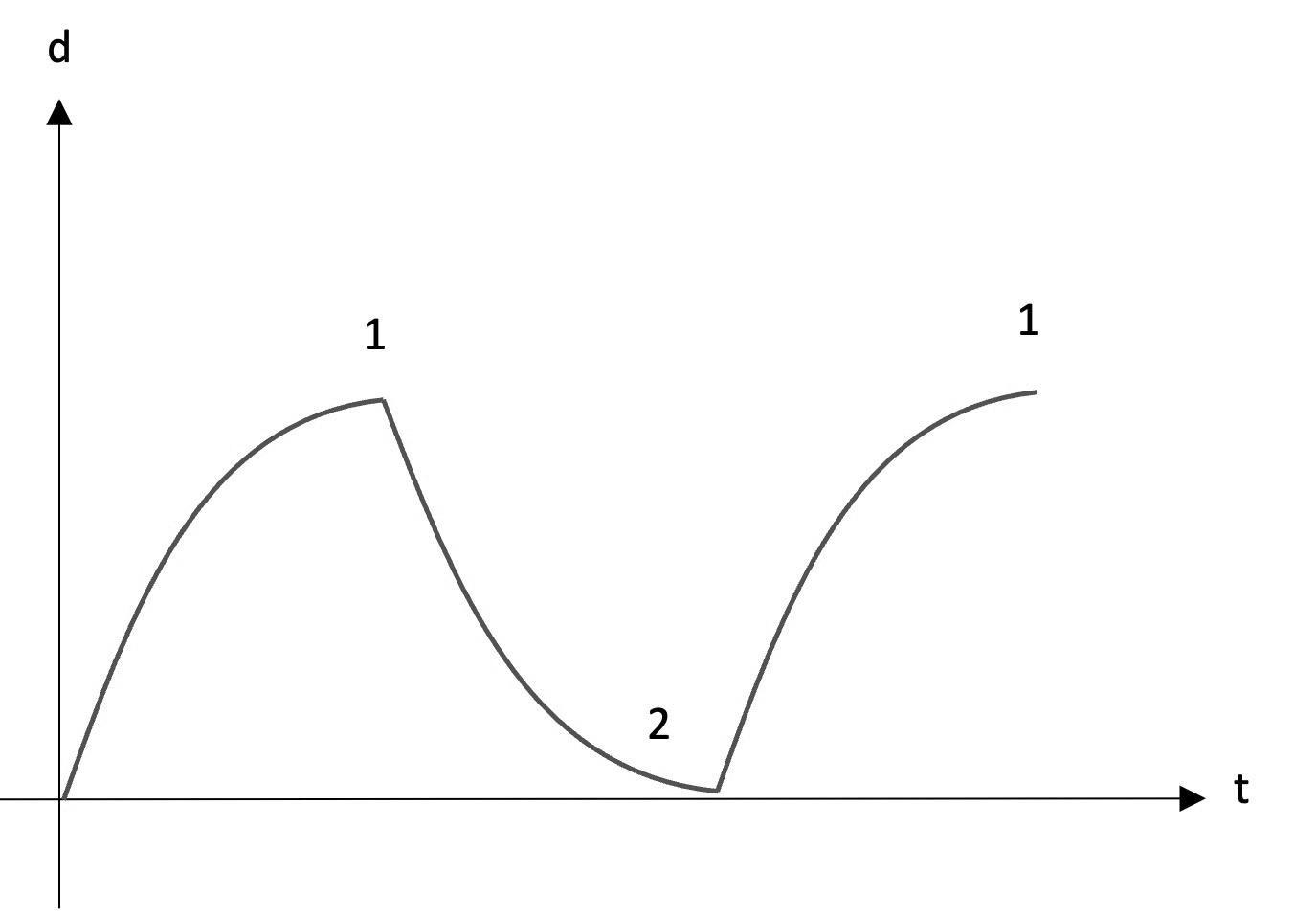
Figure 2: The metrical wave of tendus. © Amy Ming Wai Tai
Adapting Zuckerkandl’s metrical wave to model counting can illuminate the nature of accents in dance, which is most controversial in adagio movements. For example, in leg extensions in adagio, as explained above, the leg is customarily said to get into position “on the beat” but actually rises incrementally throughout the step to enhance the feeling of extension, and “breathes” before it comes down.42 If we graph distance of the foot from the floor (d) over time (t), count 3 should fall slightly before the apexes of the graph, as illustrated in figure 3:
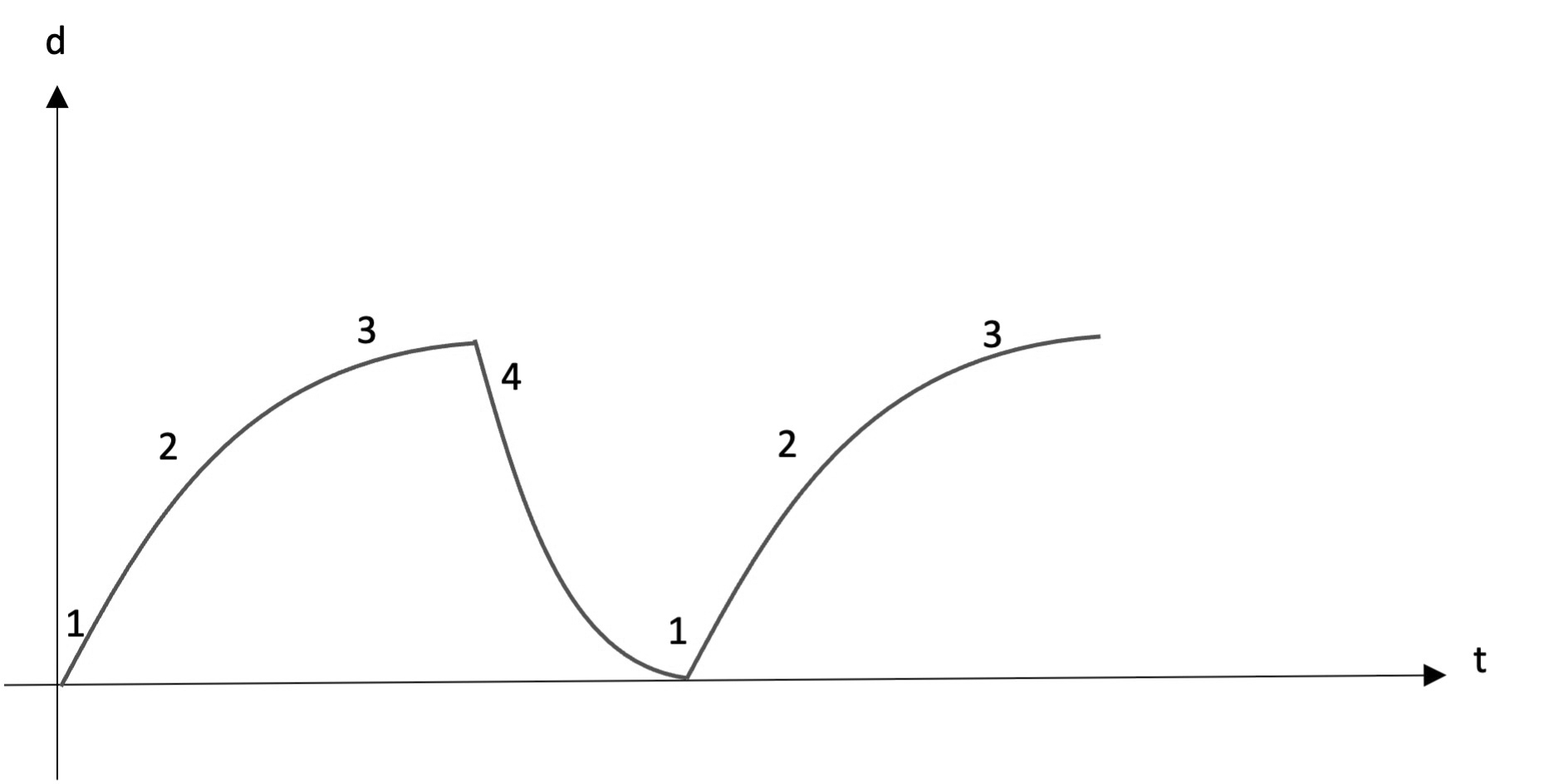
Figure 3: The metrical wave of leg extensions. © Amy Ming Wai Tai
This phenomenon helps explicate the nature of “accents” in dance. As in music, an accent in dance can broadly speaking be understood as a moment of perceived emphasis.43 However, there are two kinds of emphasis in play here: one is the location of the “count,” the other the furthest point of extension of the leg, and there is a slight lag between the two. As such, we get the impression that an accent in dance occupies duration. Moreover, like a state in Bergson’s durée, this duration is perceived to have indeterminate boundaries, because the transition from count 2 to 3 and from 3 to 4 happens in a continuum.
In fact, although music theorists typically think of accents in music as theoretically durationless timepoints, Brent Yorgason points out that musicians often slightly spread apart elements in a single rhythmic event for expressiveness, as in the performance of arpeggios or grace notes, a phenomenon he calls “dispersal.” Within a certain temporal threshold, we perceive these dispersed elements as belonging to the same rhythmic event.44 Dispersal can create the impression of an elongated downbeat.45 The idea that musical accents occupy duration is supported by cognitive science. Drawing on previous research by J. W. Gordon (1987) and M. J. Wright (2008), Anne Danielsen and others argue that rhythmic events are better modelled as a probability distribution rather than a time point.46 The resulting curve is the “beat bin,” defined as “the perceived temporal width of a beat according to the musical context. Multiple onsets falling within the boundaries of the perceived beat bin will be heard as merging into one beat.”47 What J. Morton, S. Marcus, and C. Frankish (1976) call the “perceptual center” (also called the “P-center”) of a note, “the specific moment at which a sound is perceived to occur,” occupies duration within the beat bin.48 The duration of the P-center is affected by factors such as tempo and instrumentation, and it is found that slow, long, and low notes have the longest P-centers.49 If we treat the P-center in music as analogous to the moment we perceive an accent in a dance step, the results of this experiment may suggest explanations to why, in dance, the time lag between different kinds of emphasis is more perceptible in adagio movements than in quick movements.
Conceptualizing dance and musical accents as events that occupy duration helps us understand Edwin Denby’s comment that “dance accents frequently do not reproduce the accents of a musical phrase, and […] even when they correspond, their time length is rarely identical with musical time units,” and this is what makes dance “alive.”50 In this connection, it is interesting to note that Denby was influenced by Bergson’s ideas of movement.51 Denby’s comment has fascinated many dance and music scholars. Dance accompanist Elizabeth Sawyer and choreomusicologists Stephanie Jordan and Rachel Short interpret Denby’s observation as the result of rubato and cross-accents,52 but they have not discussed what the “time length” of a dance accent is, how that interacts with “musical time units,” and why dance and musical accents are not identical even when they “correspond.” Denby’s comment is most applicable to slow dances that emphasize the continuity from one movement to the next. As discussed, in such dances, dance steps have relatively long P-centers. As such, there are more varied ways for the P-centers in the dance and music to synchronize. Thus, even when the choreographer intends the step and the musical tone to “correspond,” we may still perceive the two events as slightly misaligned or only loosely synchronised. Conversely, in fast and percussive dances, where the P-centers of the movements are shorter, we are more likely to see the dance steps as being exactly “on” or “off the beat” of the music.
That accents in dance occupy duration suggests that we can represent movement more accurately by modelling counts in dance as spans rather than points, as dancers tend to do when they ruminate on the nature of movement or explain how to make movement expressive. Conceiving of counts as spans has the additional advantage of being able to portray the counts as overlapping by an indefinite duration, which represents the phenomenon of one movement overlapping with the next with fuzzy boundaries. Although musicians by and large do not consider successive musical events to overlap, this is accounted for in Hasty’s model of rhythm and meter. For him, rhythmic events, like successive states in Bergson’s durée, cannot be discretely separated. He writes,
[T]he first event as past, ended, and completed does not precede the beginning of the second event; and although end and beginning happen at the same time, this time involves duration — the (indefinite) duration in which beginning, as I have argued, creates an overlap in the making past of the first event and the making present of the second.53
The indefinite overlap between successive rhythmic events arises because of the dual nature of the transition: the beginning of the second event defines the end of the first, and at the same time the memory of the first event becomes potential for perceiving the second. The situation is analogous to how, in dance, the end of a step is simultaneously the preparation for the next.
The overlap between steps in dance contributes to what Jordan has observed as difficulties in determining units of duration in dance in general.54 “Phrase,” for example, is an elusive concept in dance. As Jordan comments, “even when the phrase beginnings and endings in music and dance seem to correspond, there is often in reality overlap, a blurred synchronization, energies awakening and trailing to rest at different times.”55 Due to the fuzziness of phrase boundaries in dance, phrase overlap is much more common in dance than in music. This is most evident when there is a phrase break in the music but none in the choreography, which is often the result of the fact that, while music can articulate phrase boundaries by changing register, dancers cannot leap to a new position without transitional movements and without traversing the space in between. This phenomenon makes phrase boundaries in dance necessarily kinesthetically and spatially coincidental, just as memory and potential are inseparable in durée. Again, the difficulty of determining durational units in dance comes from the physical necessity of movement to be continuous and the aesthetic decision to emphasize that continuity. As such, the fuzziness in the boundaries of units of duration are to be taken as a positive aesthetic attribute rather than something to be normalized or explained away.
In fact, it is often variations in the ways these durational units overlap that makes dance expressive. Conventional models of rhythm and meter, treating events as discrete and successive, cannot model this. We need a model of rhythm and meter that does not arrest the flow of movement, where memory and expectation participate in a dynamic process. Hasty takes a similar view in music. For him, “music as experienced is never so arrested and is not, I will argue, an expression of numerical quantity. […] it is open, indeterminate, and in the process of becoming a piece of music or a part of that piece.”56 In his projection model, inspired by Bergson’s idea that memories serve as potential for the future, the duration of the first event projects the next. In figure 4, A and B are two rhythmic events of the same duration,57 whose beginnings are represented by a and b, respectively. With the onset of B, the duration of A becomes determinate, and projective potential Q is realized. Since B is of the same duration as A, the potential Q’ is realized, too. However, since there is no event C, the projective potential R is not realized, as indicated by the cross on the arrow.58
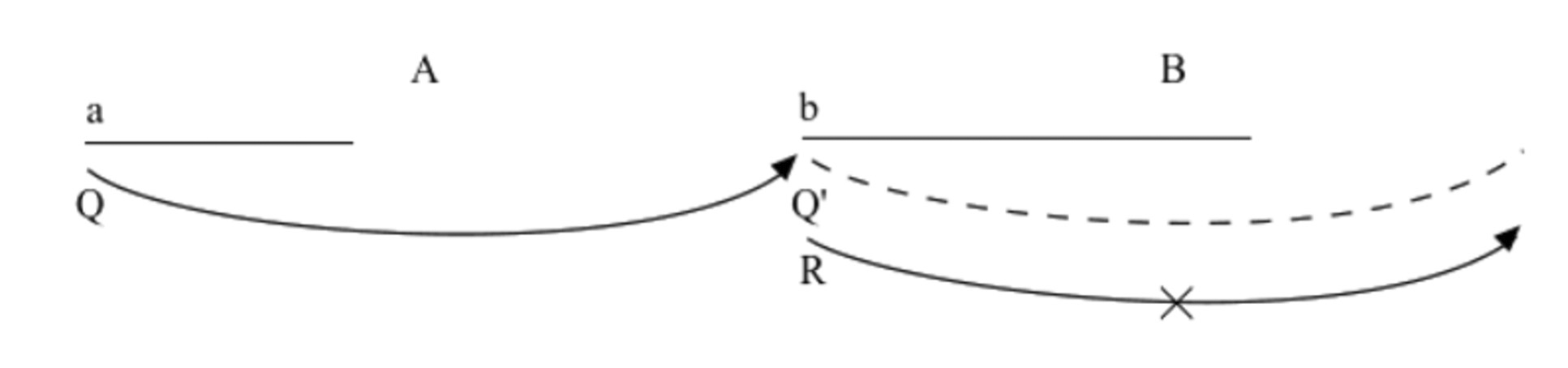
Figure 4: Hasty’s projection model. Reprinted from Hasty, Meter as Rhythm, 85. © Oxford University Press
Hasty’s model views rhythm and meter as an active and dynamic process. Adapted to analyze the interaction between dance and music, Hasty’s model can bring to light the aesthetic effects created by variations in how a dancer moves from one time span to the next.
An Analysis: A Sweet Spell of Oblivion (2007) by David Dawson
To explore the last question outlined in the introduction—“how can we take into account qualitative feeling in analyzing rhythm and meter in dance”—I will adapt Bergsonian views of rhythm and meter to analyze the beginning of the first duet in A Sweet Spell of Oblivion by David Dawson, choreographed to the E-flat minor prelude in Das wohltemperierte Klavier I by J.S. Bach.
The music consists of four subphrases. As shown in music example 1, the tonic expansion in mm. 1-2 goes into viiº through a 2-3 suspension in the bass. However, the resolution, D-natural, arrives prematurely in the soprano during the suspension. Although in terms of melodic organization, subphrase 3 is clearly separated from subphrases 1 and 2, the anticipatory resolution of the suspension at the end of subphrase 2 creates a sense of continuity between subphrases 2 and 3. The harmony returns to i in m. 4. Adopting Hasty’s projection model and his use of arrows to denote projective potential, the repetition of the rhythmic pattern from mm. 1-2 in mm. 2-3 leads us to expect a similar half-note downbeat at the beginning of m. 4. This half note, although present in the bass, fails to materialize in the soprano as it did previously, as shown by the dotted arrow that is crossed out; instead, it is delayed to the second beat of that measure. In retrospect, the progressive diminutions at the end of m. 3 into m. 4, from sixteenth notes to the trill, which are felt as acceleration at the moment, actually contribute to the delay of the half note G-flat. But afterwards the music tarries no more, for the bass kicks in with another anacrusis that overlaps with the end of subphrase 3, rushing the half note at the end of subphrase 4 to arrive “on time” on the downbeat of m. 5.
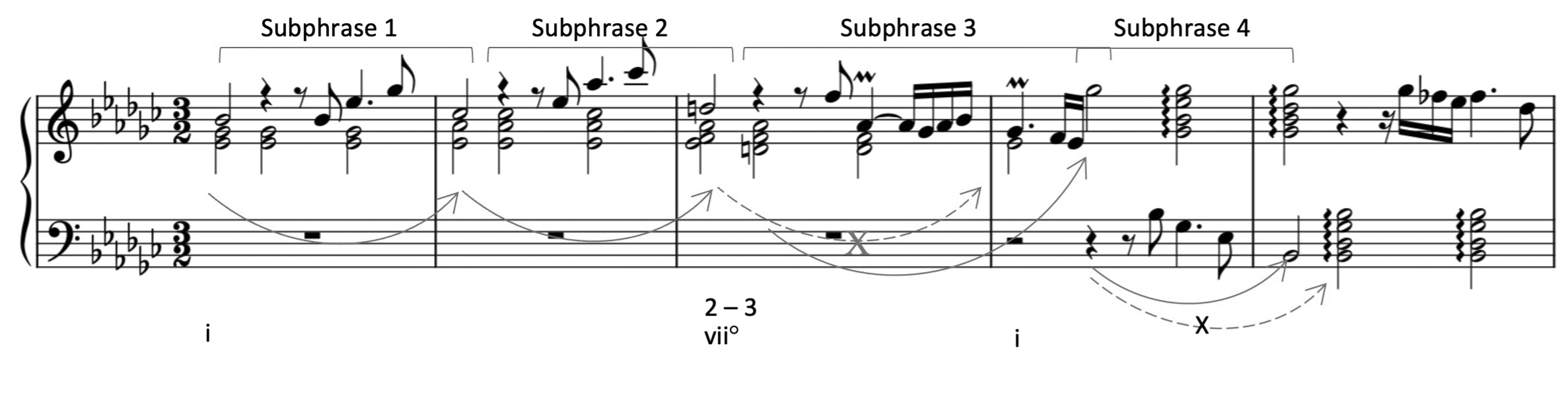
Music example 1: J.S. Bach, E-flat minor prelude from Das wohltemperierte Klavier I, mm. 1-5 (Franz Kroll, Bach-Gesellschaft Ausgabe, Band 14, (Leipzig: Breitkopf und Härtel, 1866), 32, newly typeset and annotated by Amy Ming Wai Tai with MuseScore). © Amy Ming Wai Tai
Before reading the following dance analysis, the reader is encouraged to watch 0:00-0:45 of the choreography,59 paying attention to the onsets and apexes of the dancers’ movements in relation to the accents and phrasing in the music. At the end of subphrase 1, as shown in the video in example 2,60 the female dancer luxuriates in an off-balance spin that takes the full duration of the half note indicated by the large arrow.
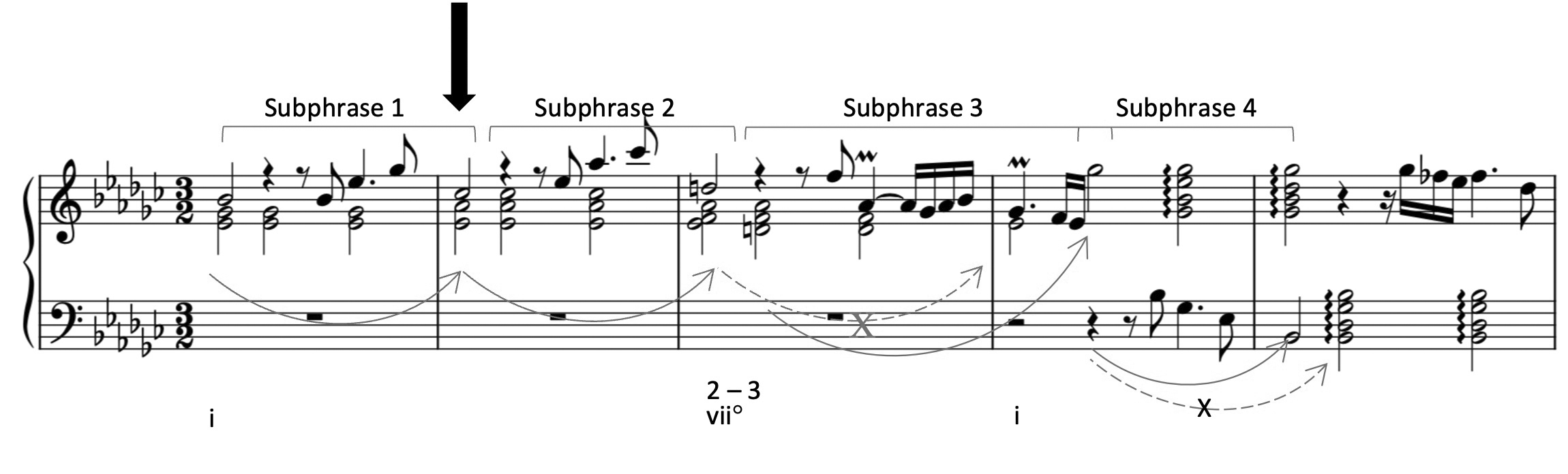
Music example 2: A Sweet Spell of Oblivion, subphrase 1. (Franz Kroll, Bach-Gesellschaft Ausgabe, Band 14, (Leipzig: Breitkopf und Härtel, 1866), 32, newly typeset and annotated by Amy Ming Wai Tai with MuseScore). © Amy Ming Wai Tai
In contrast, at the end of subphrase 2, shown in the video in example 3, the dancers unfold their bodies relatively “on the beat.” This is more perceptible in the female dancer: her feet and wrists arrive at the positions at the beginning of the note. I have discussed how the resolution of the suspension at the beginning of m. 3 comes too soon; her being “on the beat” here accentuates that feeling. Note though, that even here the step is not a durationless “hit.” Her gaze slowly rises after she gets into the pose, as though the motion continues through and beyond subphrase 2.
When she runs over to the male dancer to prepare for the start of subphrase 3, we feel that the energy is directed, bringing to the fore how the premature resolution of the suspension glues the phrases together. And just as in the harmony vii° has the urge to resolve to i, at the beginning of subphrase 3, the female dancer turns the tardiness in subphrase 1 into active anticipation. In the video in example 4, at (a) and (c), she steps slightly before the note so as to do a développé or turn at the onset of the notes at (b) and (d).
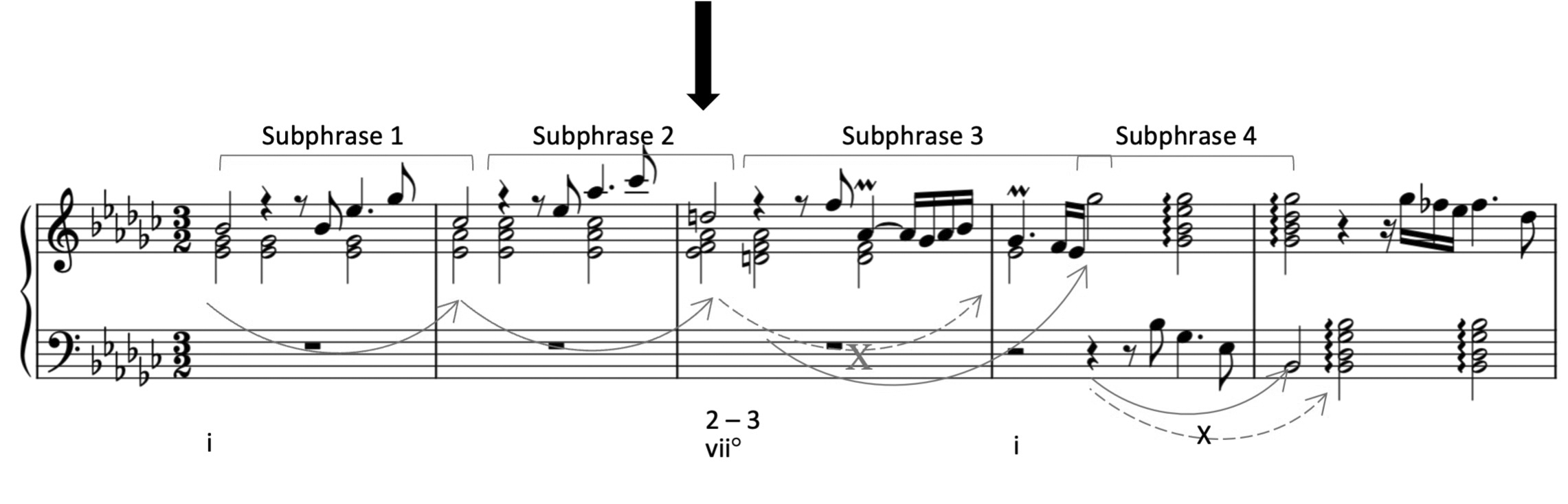
Music example 3: A Sweet Spell of Oblivion, subphrase 2 (Franz Kroll, Bach-Gesellschaft Ausgabe, Band 14, (Leipzig: Breitkopf und Härtel, 1866), 32, newly typeset and annotated by Amy Ming Wai Tai with MuseScore). © Amy Ming Wai Tai
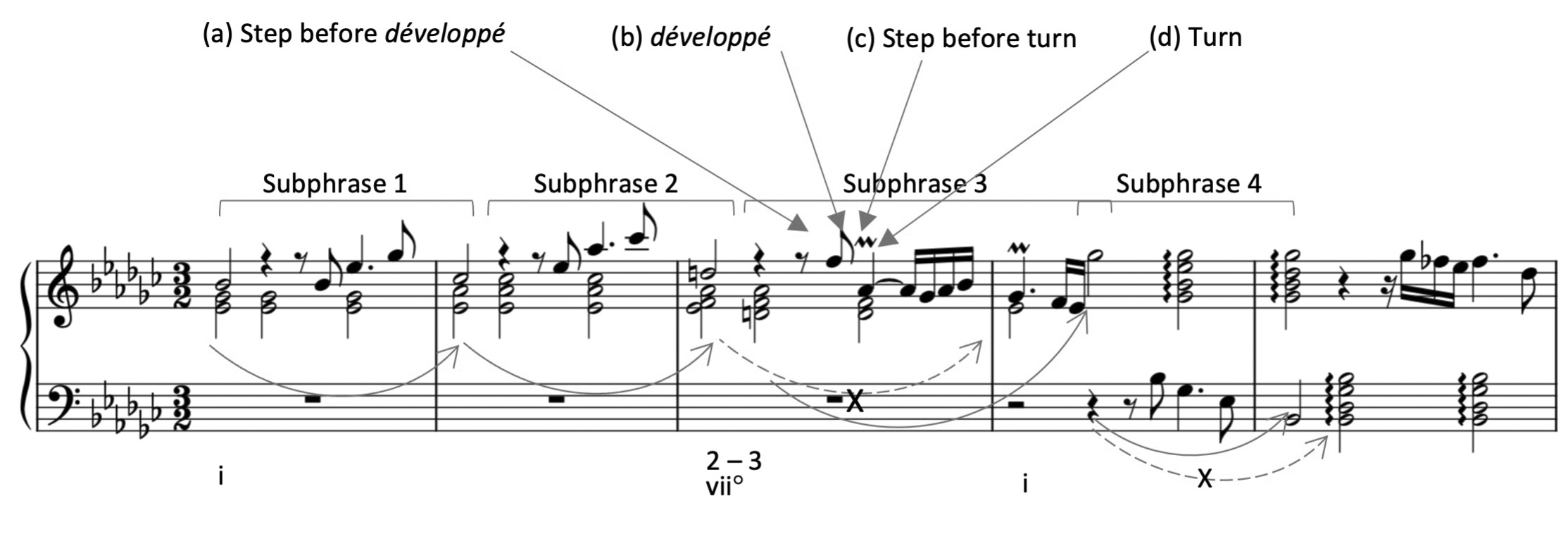
Music example 4: A Sweet Spell of Oblivion, transition between subphrases 2 and 3 (Franz Kroll, Bach-Gesellschaft Ausgabe, Band 14, (Leipzig: Breitkopf und Härtel, 1866), 32, newly typeset and annotated by Amy Ming Wai Tai with MuseScore). © Amy Ming Wai Tai
However, as shown in the video in example 5, by the end of subphrase 3 on the high G-flat in m. 4, the dancers only complete the unfolding of their bodies toward the end of the note, in effect delaying the accent of the step until then. This accentuates the feeling of delay that we already experience in the music itself, since, as discussed, the G-flat appears on the second beat of m. 4 instead of the expected downbeat.
The feeling of delay is underscored by the fact that on the downbeat of m. 3, where the half-note D-natural fulfills the projective potential, the dancers’ unfolding of their bodies is relatively “on the beat.” In contrast, on the second half note of m. 4, when the fulfillment of our projective potential is delayed, the dancers’ unfolding of their bodies is held off until the end of the note. In a dance that thematizes remembering and forgetting, we could imagine that at the end of subphrase 3, the female dancer recapitulates the feeling of moving through the note at the end of subphrase 1. This choreographic echo calls to attention that at this point the music returns to the tonic, for at the end of subphrase 1, where a tonic pedal was held, the female dancer similarly used up the whole beat to complete her motion.
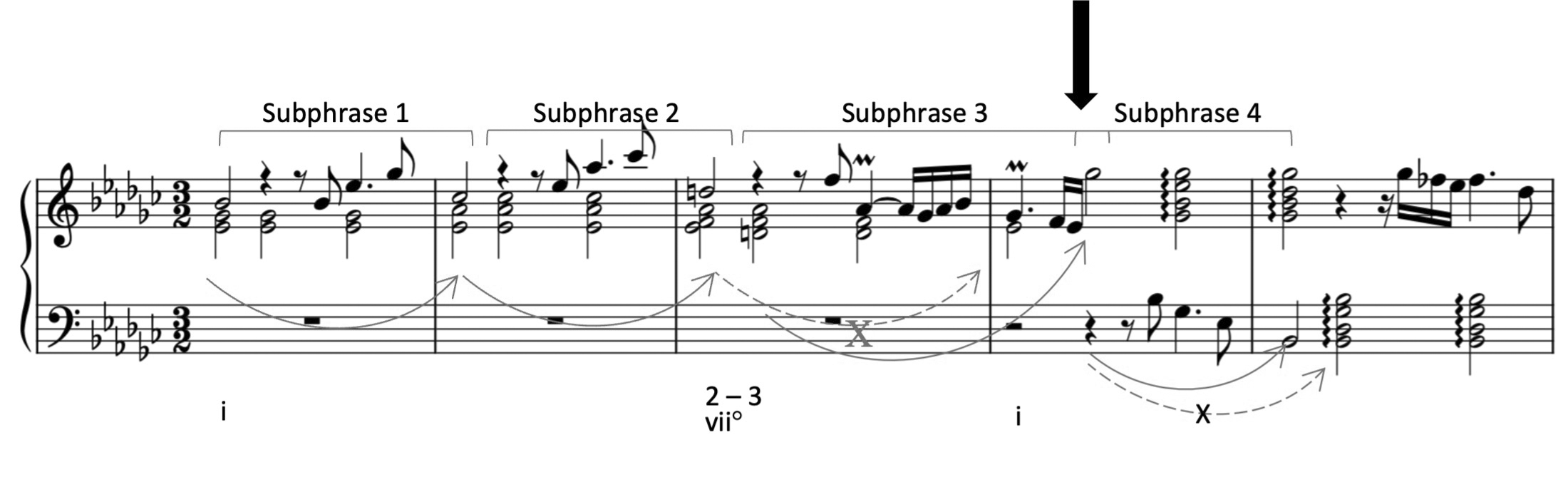
Music example 5: A Sweet Spell of Oblivion, subphrase 3 (Franz Kroll, Bach-Gesellschaft Ausgabe, Band 14, (Leipzig: Breitkopf und Härtel, 1866), 32, newly typeset and annotated by Amy Ming Wai Tai with MuseScore). © Amy Ming Wai Tai
The half note delayed until the second beat of m. 4 overlaps with the start of the next subphrase, as shown in the video in example 6. In the dance, once the dancers finish unfolding their fingers at the end of the second beat of m. 4, the male dancer immediately starts a rond de jambe which gets him into position for the next partnering move.
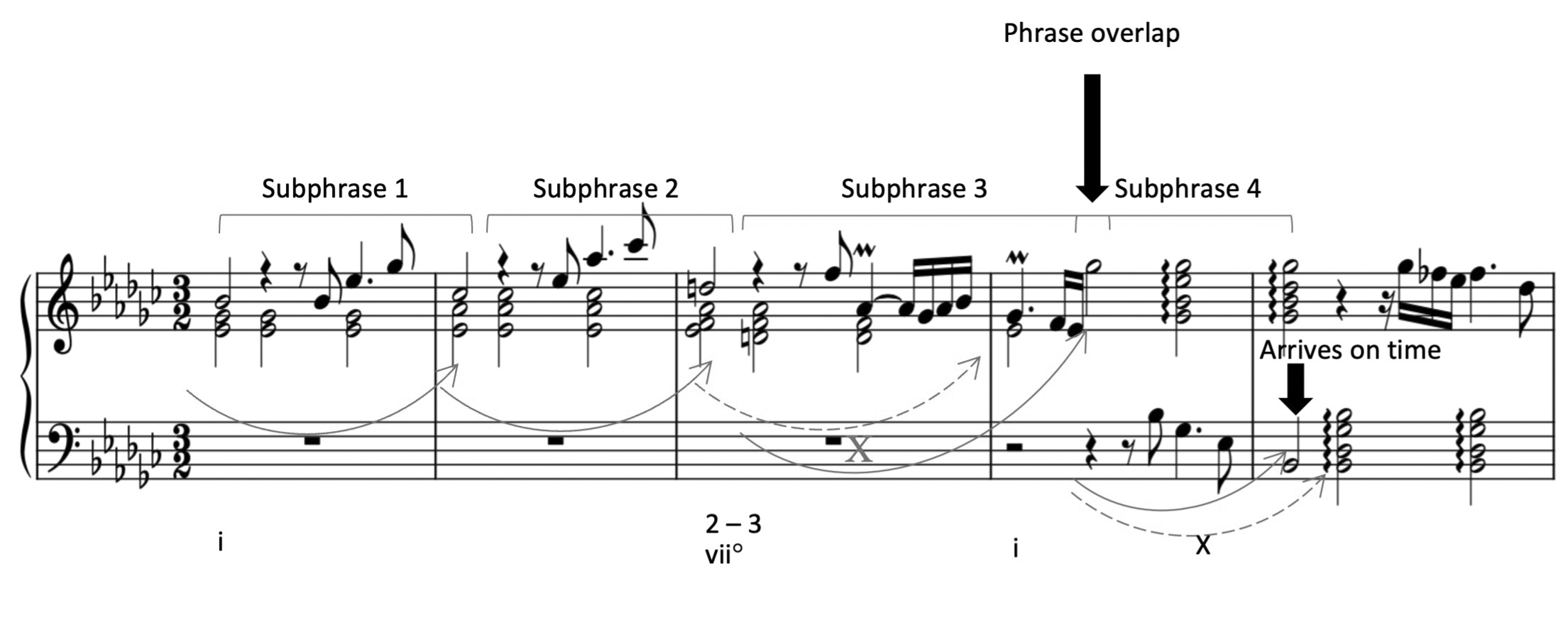
Music example 6: A Sweet Spell of Oblivion, subphrase 4 (Franz Kroll, Bach-Gesellschaft Ausgabe, Band 14, (Leipzig: Breitkopf und Härtel, 1866), 32, newly typeset and annotated by Amy Ming Wai Tai with MuseScore). © Amy Ming Wai Tai
As such, we get the impression that the delay of the accent in one step simultaneously serves as the impetus for the next, just as in durée, successive states are linked to and constantly impact one another. This impetus gives the impression that the music rushes towards the next event; why the half note at the end of subphrase 4 in the bass comes “on time” on a downbeat suddenly makes kinesthetic as well as musical sense.
Conclusion
In the formative years of choreomusicology in the 1990s, Jordan suggested adapting conventional methods from music analysis to analyze dance because music already had an existing methodological framework whereas dance did not.61 This approach has seen fruitful results, helping choreomusicology establish its place in academia, especially within music studies. However, these methods do not capture the continuous and dynamic qualities in many styles of dance, especially ballet and certain styles of modern dance. As such, many concepts in dance-music analysis, such as what accents and phrases are in dance, remain obscure to dance and music scholars. A Bergsonian approach to rhythm and meter in dance addresses these aspects of dance-music analysis.
The discussion above has also shown that music is more like dance than conventional music theories might lead us to think. For instance, vibrato, like dance steps in neoclassical ballet, plays with the variations in speed and intensity within a single note, which conventional models of rhythm and meter do not account for. Accents in music, like those in dance, occupy duration, in contrast to what music theory customarily implies. As such, dance can be a tool through which to understand embodied approaches to music theory and analysis. For instance, Hasty’s work, though highly regarded in music theory,62 is not free from criticism. As Bryan Parkhurst writes in a forthcoming review of Meter as Rhythm, the book has not led to what Roger Grant calls a “complete revision of our core beliefs.”63 This is because, as Parkhurst explains, the book “is regularly cited but rarely engaged with, and is far more mentioned than grasped.”64 One of Parkhurst’s arguments against Hasty’s Meter as Rhythm is that although Hasty claims that music-theoretical language does not fully capture the experience of time and motion, there is no better alternative.65 My investigation above, however, suggests that dance can be this alternative to conventional music-theoretical language, as dance embodies and visualizes what a processual view of rhythm and meter looks and feels like. As such, dance can make Hasty’s ideas not only mentionable but also intuitively graspable.
By using dance research to inform music theory, this paper participates in a larger trend in music studies which emphasizes the epistemological value of embodiment in analysis. Whereas music theorists traditionally situate analytical observations in the brain, recent scholars argue that the body plays an important part in our engagement with music.66 Despite its growing popularity, embodied musicology still appears obscure and analytically irrelevant to some music theorists, as Parkhurst’s critique above illustrates. My choreomusical research shows that dance studies can concretize concepts in embodied musicology and perhaps contribute to a “complete revision of our core beliefs” in music theory.
-
An earlier version of this paper was presented at the annual meeting of the Society for Music Theory in 2020. I thank my professors and colleagues who gave me thoughtful advice for this project, most notably Richard Cohn, Christopher Hasty, Zachary Stewart, Jacob Reed, Henry Balme, Liam Hynes-Tawa, and many others.↩︎
-
For instance, see Graeme M. Boone, “Marking Mensural Time,” in Music Theory Spectrum 22, no. 1 (Spring 2000): 1-43, 2-3.↩︎
-
Peter Desain and Henkjan Honing, “The Formation of Rhythmic Categories and Metric Priming,” in Perception 32, no. 3 (2003): 341-65, 341-2.↩︎
-
Sondra Horton Fraleigh, Dance and the Lived Body: A Descriptive Aesthetics (Pittsburgh: University of Pittsburgh Press, 1987), 191.↩︎
-
Maxine Sheets-Johnstone, The Phenomenology of Dance, 5th ed. (Philadelphia: Temple University Press, 2015), 27-28.↩︎
-
Emily Coates and Sarah Demers, Physics and Dance (New Haven: Yale University Press, 2019), 68.↩︎
-
Barbara Walczak and Una Kai, Balanchine the Teacher: Fundamentals that Shaped the First Generation of New York City Ballet Dancers (Gainesville: University Press of Florida, 2008), 16.↩︎
-
Elizabeth Sawyer, Dance with the Music: The World of the Ballet Musician (Cambridge: Cambridge University Press, 1985), 38.↩︎
-
Sheets-Johnstone, The Phenomenology of Dance, 87-90; Stephanie Jordan, e-mail communications, October 27, 2020.↩︎
-
Fraleigh cites Bergson in her discussion of movement and time (Dance and the Lived Body: A Descriptive Aesthetics, 191), and Sheets-Johnstone is influenced by Maurice Merleau-Ponty and Jean-Paul Sartre (The Phenomenology of Dance, 11), whose ideas on the continuity of time and movement were inspired by Bergson. For how Bergson influenced Merleau-Ponty and Sartre in their views on time and movement as they apply to dance phenomenology, see Fraleigh, Dance and the Lived Body: A Descriptive Aesthetics, 178-81. For the relationship between Bergson’s and phenomenology’s views of time in general, see Christian Dupont, Phenomenology in French Philosophy: Early Encounters (Dordrecht: Springer, 2014), 47-55.↩︎
-
Bergson discusses durée in many places. See, for example, Matter and Memory, trans. Nancy Margaret Paul and W. Scott Palmer (London: George Allen & Unwin, 1911), especially chap. 4; Time and Free Will, trans. F.L. Pogson (London: George Allen & Unwin, 1910), especially chap. 1-2; The Creative Mind, trans. Mabelle L. Andison (New York: Philosophical Library, 1946), 192-3.↩︎
-
Boone, “Marking Mensural Time,” 2-3.↩︎
-
For the relationship between physical movement and the theories of Zuckerkandl and Hasty, see John Paul Ito, Focal Impulse Theory: Music Expression, Meter, and the Body (Bloomington: Indiana University Press, 2021), 267-8, 270-2.↩︎
-
David Dawson, duet from “A Sweet Spell of Oblivion,” performed by Jurgita Dronina and Fabien Voranger at the Dance Open Festival in Saint Petersburg in 2013, with costumes by Yumiko Takeshima and original stage design by John Otto, accessed 16 March 2020, https://youtu.be/24EAi6FLhkQ. I would like to thank the choreographer and dancers for their kind permission to use this video.↩︎
-
Bergson, Time and Free Will, chap. 1-2.↩︎
-
Bergson, The Creative Mind, 192-3.↩︎
-
Bergson, Time and Free Will, 104.↩︎
-
Jonathan Still discusses this phenomenon in greater detail with regards to ballroom dancing. See “How Down is a Downbeat? Feeling Meter and Gravity in Music and Dance,” in Empirical Musicological Review 10, no. 2 (2015): 121-34, 125.↩︎
-
John White, Advanced Principles in Teaching Classical Ballet (Gainesville: University Press of Florida, 2009), 109. On the surface, this seems to be a strange appropriation of the musical term, but if we consider how Hugo Riemann talks about “phrasing” as the increase and decrease in volume for purposes of articulation (see Lee Rothfarb, “Energetics,” in Cambridge History of Western Music Theory, ed. Thomas Christensen (New York: Cambridge University Press, 2001), 927-55, 935), borrowing this term to mean the flow of energy within a movement in dance is not inappropriate at all.↩︎
-
Suki Schorer, Suki Schorer on Balanchine Technique (New York: Alfred A. Knopf, 1999), 67.↩︎
-
Ibid., 136.↩︎
-
Ibid., 124.↩︎
-
Stephanie Jordan, Moving Music: Dialogues with Music in Twentieth-Century Ballet (London: Dance Books, 2000), 79.↩︎
-
I thank Liam Hynes-Tawa for sharing this idea with me (private communications, August 2023).↩︎
-
Sheets-Johnstone, The Phenomenology of Dance, 84.↩︎
-
Stephanie Jordan, Moving Music, 80.↩︎
-
Walczak and Kai, Balanchine the Teacher, 8.↩︎
-
Walczak and Kai, Balanchine the Teacher, 8.↩︎
-
Stephanie Jordan, Mark Morris: Musician-Choreographer (Binsted: Dance Books, 2015), 119.↩︎
-
Robert James Nicholas Coleridge, “Music and Dance in the Twentieth Century: Issues and Analyses” (PhD diss., University of Southampton, 2005), 104-5.↩︎
-
Ibid., 103.↩︎
-
I am indebted to Dora Hanninen for pointing out to me during the Society for Music Theory Annual Meeting in 2020 how “inflection points” keep the idea of “point” without compromising the qualities of change and continuity, which inspired me to examine Bergson’s use of calculus in discussing movement.↩︎
-
Pete A.Y. Gunter, “Bergson, Mathematics, and Creativity,” in Process Studies 28, nos. 3-4 (1999): 268-88, 274-9; “Temporal Hierarchy in Bergson and Whitehead,” in Interchange 36, 1-2 (2005): 139-57, 146.↩︎
-
Gunter, “Bergson, Mathematics, and Creativity,” 277; “Temporal Hierarchy in Bergson and Whitehead,” 146. See also his “Gilles Deleuze, Deleuze’s Bergson and Bergson Himself,” in Deleuze, Whitehead, Bergson: Rhizomatic Connections, ed. Keith Robinson (Basingstoke: Palgrave Macmillan, 2009), 167-80, 170-1.↩︎
-
Bergson, The Creative Mind, 225. David M. Peña-Guzmán discusses this passage in relation to calculus in “Bergson’s Philosophical Method: At the Edge of Phenomenology and Mathematics,” in Continental Philosophy Review 53, no. 1 (2020): 85-101, 95, and Gunter in “Temporal Hierarchy in Bergson and Whitehead,” 146 and “Gilles Deleuze, Deleuze’s Bergson and Bergson Himself,” 171.↩︎
-
Alan Robert Lacey discusses this interpretation of Bergson by Jean Milet in Bergson (London: Routledge, 1989), 121. See also Gunter, “Gilles Deleuze, Deleuze’s Bergson and Bergson Himself,” 170.↩︎
-
Gunter, “Gilles Deleuze, Deleuze’s Bergson and Bergson Himself,” 171. See also Bergson, Matter and Memory, 241-2.↩︎
-
Victor Zuckerkandl, Sound and Symbol: Music and the External World, trans. William R. Trask (Princeton: Princeton University Press, 1956), 243-5.↩︎
-
Ibid., 181.↩︎
-
Victor Zuckerkandl, The Sense of Music (Princeton: Princeton University Press, 1959), 116.↩︎
-
Schorer, Suki Schorer on Balanchine Technique, 67. For a video demonstration of the tendu in Schorer’s and Merrill Ashley’s class, see “The Barre–Part 1” in The Balanchine Essays, directed by Merrill Brockway, produced by Catherine Tatge and Barbara Horgan (George Balanchine Foundation, 1998), accessed 26 August 2022, https://video.alexanderstreet.com/watch/the-balanchine-essays-the-barre-part-1, 15:00–15:30.↩︎
-
Schorer, Suki Schorer on Balanchine Technique, 124.↩︎
-
Rachel Elizabeth Short, “Musical Feet: The Interaction of Choreography and Music in Leonard Bernstein and Jerome Robbins’s Fancy Free” (PhD diss., University of California Santa Barbara, 2016), 67.↩︎
-
Brent Yorgason, “Expressive Asynchrony and Meter: A Study of Dispersal, Downbeat Space, and Metric Drift” (PhD diss., Indiana University, 2009), 46.↩︎
-
Ibid., 132.↩︎
-
Anne Danielsen et al., “Where is the Beat in That Note? Effects of Attack, Duration, and Frequency on the Perceived Timing of Musical and Quasi-Musical Sounds,” Journal of Experimental Psychology: Human Perception and Performance 45, no. 3 (2019): 402-18, 403.↩︎
-
Ibid., 404.↩︎
-
Ibid., 403.↩︎
-
Ibid., 413.↩︎
-
Edwin Denby, Dance Writings (New York: Alfred A. Knopf, 1986), 62.↩︎
-
Andrea Harris, Making Ballet American: Modernism Before and Beyond Balanchine (New York: Oxford University Press, 2017), 103-44, 113-114, 128.↩︎
-
Sawyer, Dance with the Music: The World of the Ballet Musician, 133-34; Jordan, Moving Music, 76-77; Short, “Musical Feet: The Interaction of Choreography and Music in Leonard Bernstein and Jerome Robbins’s Fancy Free,” 68-70.↩︎
-
Christopher Hasty, Meter as Rhythm (New York: Oxford University Press, 1997), 92-3.↩︎
-
Jordan, Moving Music, 79; “Music/Choreographic Discourse: Method, Music Theory, and Meaning,” in Moving Words: Re-writing Dance, ed. Gay Morris (London: Routledge, 1996), 15-28, 19.↩︎
-
Jordan, Moving Music, 78.↩︎
-
Hasty, Meter as Rhythm, 3.↩︎
-
In Hasty’s explanation, these events are just “given” without explanation on how their duration is determined. Technically speaking, we cannot actually determine the duration of B without the onset of a following event. See Meter as Rhythm, 85.↩︎
-
Ibid., 84-85.↩︎
-
David Dawson, duet from “A Sweet Spell of Oblivion,” performed by Jurgita Dronina and Fabien Voranger at the Dance Open Festival in Saint Petersburg in 2013, with costumes by Yumiko Takeshima and original stage design by John Otto. Accessed 16 March 2020, https://youtu.be/24EAi6FLhkQ.↩︎
-
Music examples 2-6 have associated video examples, available here: https://vimeo.com/showcase/8466217. The password is “duree.” I would like to thank the choreographer and dancers for their kind permission to use the YouTube video.↩︎
-
Jordan, “Music/Choreographic Discourse: Method, Music Theory, and Meaning,” 15-8.↩︎
-
This is seen in the publication of Music in Time: Phenomenology, Perception, Performance edited by Alexander Rehding and Suzannah Clark (Cambridge, MA: Harvard University Press, 2016) which celebrates Hasty’s retirement, and the recent 20th anniversary edition of Meter as Rhythm published in 2020.↩︎
-
Bryan Parkhurst, “Review of Music in Time and Meter as Rhythm” (unpublished manuscript, summer 2023), 11, https://www.academia.edu/105723331/Review_of_Music_in_Time_2016_and_Meter_as_Rhythm_2020_, accessed Sep 2, 2023.↩︎
-
Parkhurst, “Review of Music in Time and Meter as Rhythm,” 9.↩︎
-
Parkhurst, “Review of Music in Time and Meter as Rhythm,” 18.↩︎
-
The recent burgeoning of literature on the topic testifies to this. See, for example, Arnie Cox, Music and Embodied Cognition: Listening, Moving, Feeling, and Thinking (Bloomington: Indiana University Press, 2016); Steve Larson, Musical Forces: Motion, Metaphor, and Meaning in Music (Bloomington: Indiana University Press, 2012); Marius Kozak, Enacting Musical Time: The Bodily Experience of New Music (New York: Oxford University Press, 2019), Ito, Focal Impulse Theory: Music Expression, Meter, and the Body.↩︎