Perceptual Aspects from the Field of Eurhythmics
Dorothea Weise 
How to cite
How to cite
Abstract
Abstract
This paper will venture to describe modes of perception that emerge through the interaction and counterplay of listening and seeing by means of a partial analysis of the compositional access.
Choreomusical work opens a world of images and signs beyond language. The expressiveness of what is heard and seen merges with the tacit-knowing-view of the viewer and the listener. Meaningful resonances and processes of understanding develop along the structure of the work and within the individual construct of implicit and explicit knowledge of the audience. In this process, perception plays a major role. Aside from the obvious processing of acoustic and visual stimuli, this paper will look at the role of proprioception, especially the kinesthetic sense, with regard to its role as intermediary and creator in the process of perception.
A closer look at a short section of Susanne Jaresand’s choreography Beauty/Schönheit/Skönhet and the way it was created shows how a differentiated texture in the interweaving of music and movement turns listening into an acoustic, a visual and kinaesthetic act.
Outline
Outline

“Beauty is not a thing but an act.”
Friedrich Theodor Vischer, (1922)1
To Stumble Is to Perceive
The ability to arrange and connect sensory impressions in such a way that the brain can generate meaningful perceptions, emotional reactions, thoughts, and motor actions appropriate to a situation is continuously formed during the first seven years of a child’s life.2 Accordingly, it is a learned skill to use this interplay of all levels of perception, called sensory integration, as a source of understanding and meaningful response, which expands and differentiates with new experiences. However, contemporary music/dance performances—which shift, decouple, or even negate what is being seen and heard—put precisely this hard-won skill to the test.
The concept of refusing the mutual confirmation of hearing and seeing began radically with John Cage and Merce Cunningham and was subsequently explored in the most diverse forms. At the same time, the synchronicity of music and dance, and with it the certainty of the meaning it conveys, lived and lives on seemingly unbroken. Cage and Cunningham did not seem very interested in how their performances affected perception: The unravelling of visual and auditory impressions caused by their aleatorically conceived works makes sensory integration impossible. And yet a strong desire to bring seeing and hearing together remains. A strange moment of satisfaction or brief inner relaxation occurs when a musical gesture and a dance gesture coincide in time and energy—even if it is “just” by coincidence. This is how reactions can be interpreted when viewing Cunningham’s choreographies, in which only the duration of the pieces or individual phrases was agreed upon with the composer beforehand.
Merce Cunningham impressively describes the freedom of perception found at that time through its systematic overtaxing. In 1952, a forty-five-minute event took place at the Black Mountain Summer School, with David Tudor at the piano, accompanied by poetry recitations, white monochromatic paintings by Robert Rauschenberg on the walls (who in turn played records himself), John Cage presenting texts, and Cunningham dancing. The audience sat diagonally across from each other in the middle of the room, making it impossible to see everything that was happening. “Nothing was intended to be other than it was, a complexity of events that the spectators could deal with as each chose.”3 They were, after all, interested in the effect of their works on perception, perhaps even more than those dance creators who favor representing music in movement, so-called “mickey-mousing.”
Sixty years later in his texts on theater, the composer and director Heiner Goebbels calls for the spectator’s expectation space not to be “blocked with images of unambiguity”4 and quotes the French art historian Georges Didi-Huberman: “to give something to be seen always means to disturb seeing in its act, in its subject” and adds that this also applies “to listening—and even more, to the sum of both.”5 In this case disturbance is not to be understood as a sensation of threat, but rather as a disquieting element, as a motor for paying attention and activating action-oriented thought resources.
In the pedagogy of the musician Heinrich Jacoby, efforts are made in the spirit of reform pedagogy to promote the development of the senses and “the forming of an alert relationship […] on the basis of a conscious perception of the current condition.”6 Jacoby called such awareness stumbling and urged his students to break habits and “be ready to stumble.”7 The call for refined perception and a readiness to stumble runs through the fields of aesthetic education more or less until today. The dancer and psychologist Detlef Kappert describes the search for meaningful confrontation as essential for personal growth and artistic maturation in the context of his reflections on a teaching style that equally enables performance, sensitivity, and artistic development. Kappert introduces the concept of productive uncertainty for this purpose,8 which refers to a kind of shock that releases productive energy into the dialogue between taught content and oneself. Ursula Brandstätter names the ability to differentiate—to tolerate difference, irritation, and the questioning of the familiar—as an opportunity in aesthetic education.9 And Heiner Goebbels writes in his publication Aesthetics of Absence (Ästhetik der Abwesenheit), which culminates in reflections on education for the performing arts:
Our perception reacts where intensity is evoked and produced—this can also be a blank space. An observation at the edge, something that lacks conclusiveness because it does not fit together or denies visibility and completion. As spectators we want to bridge distances and instinctively wish to close gaps.10
Every child has the ability to tolerate gaps in order to use them as a springboard for their own fantasies, conclusions, and interpretations. As an adult, this ability often has to be regained. Aesthetic experiences can provide numerous starting points to explore the spectrum of perception in which the self and the other fall into each other,11 including the consciously experienced pleasure of not understanding.12
Excursus on Empathy
The concept of empathy, as researched at the beginning of the twentieth century by Theodor Lipps especially in the field of psychology and aesthetic perception, is fundamental for our ability to connect with what we perceive.13 According to Lipps, empathy occurs in a bodily way, in that what is perceived is involuntarily followed as a micro-movement and subsequently experienced as a projection into the other. He did not distinguish between inanimate objects and living beings. For him, aesthetic experiences of things, be they landscapes, objects, or architecture, as well as living events were objects of empathy, because “generally every sensual object imposes on me to be active.”14
Automatic empathy often occurs unconsciously or below the threshold of perception and is today supported by the theory of mirror neurons as the basis of empathy. With regards to the reception of music (and dance), physical empathy shows itself, for example, as swinging or rocking along, provided that the formative elements such as rhythm, phrasing, and dynamics can be sufficiently anticipated. Lipps developed the model of empathy broadly. It also includes the active, intentional process, which is based on the recognition of fundamental, bodily experienced dynamic processes, which are described by him as
free-flowing or inhibited; easy or forced; unanimous or opposed; tense and loosening; concentrated in one point or diverging in manifold life-activities and ‘losing oneself’ in them.15
In a reassessment of this concept, Karsten R. Stueber differentiates between immediate bodily experience as a “basic” form of empathy—described by Lipps as mimicry—which he links to the activity of mirror neurons, and the process of “reactive” empathy.16 This second, reactive form involves cognitive processes such as comparisons, considerations, and imagination, which make it possible to understand the causes of behaviors or events. Vittorio Gallese also sees the mirror neurons as part of a multi-layered process that enables empathy and imitation. In his view, several mechanisms of synchronization intertwine.17 He emphasizes that experienced analogies include all aspects of what can be perceived and are to be understood as a multi- or intermodal system.
The distinction between basic and reactive empathy can possibly be transferred to the distinction between kinetic listening as an involuntary physical reaction to beats and catchy rhythms, and kinesthetic listening, which is able to reflect impulsive bodily reactions and differentiate them into different levels of perception.18
The following example illustrates how movement perception and hearing can also develop in cultural contexts. Dancer and movement analyst Cary Rick describes the effect of his solo dance “Sodom” from the cycle Totem based on descriptions from the Old Testament. The theme is sensual pleasure. He performed soft undulating movements with his arms and spine, while his legs moved quickly and rhythmically. This was accompanied by drum music (unfortunately not described in detail). While the European audience watched the performances in silence, the audience at a dance festival in Tabarka, Tunisia “enthusiastically began clapping along to the rhythm of the percussion accompaniment”19 and demanded a repetition of the piece. Apparently, the kinetic effect of the music and the dancer’s movements, intensifying into trembling, had literally swept the audience off their feet. In contrast, the European audience, not used to visible physical participation in concerts or dance performances, sat completely paralyzed, presumably triggered by the sublimity of the religious theme.
Daniel Stern addresses the phenomenon of displacing affects in his infant research.20 Rather than using emotion labels, he works with dynamic, kinetic terms such as “‘surging’, ‘subsiding’, ‘fleeting’, ‘explosive’, ‘swelling’, ‘bursting’, ‘dragging on’”21 to describe so-called “vitality affects,” which are recognized at an early age due to the simultaneous (amodal) perception of time, form, and intensity. The physicality of these energetic states (or Gestalten) can later become a connecting link in the perception of aesthetic products and turn it into a bodily experience. The extent to which consciousness and reflection can deepen the process of perception and thus empathy depends—especially in the case of the so-called (contemporary) time-based arts of music and dance—on how they are made. If the audible is not clearly oriented towards the visual, if music and dance don’t happen at the same time or are separated through other non-congruent means, it becomes more complicated—and arguably more interesting. It is pointless to try to determine how perception is experienced in detail, since it will never be identical between two people, fed by individual experiences of hearing, moving, and seeing, as well as current sensitivities. It may rather be of interest which clues awaken and guide the processes of listening and seeing by vitality affects or “stumbling blocks.” This could lead to a new richness of expressiveness in the connection between music and dance, thus how listening is deepened through seeing.
Beauty
In her music-choreographic work Beauty/Schönheit/Skönhet,22 which was created within the framework of an artistic research, the Swedish eurhythmics practitioner and choreographer Susanne Jaresand explores the similarities and differences between what can be heard in music and what can be physically heard in dance:
The concept of reflective listening is, for all participators of this project, an important parameter as a methodology for analyzing how music and dance inter-operate, and how choreography creates a kind of listening, which can transform music into a physical experience.23
Jaresand aims to create a physical experience while listening to music for everyone present at a performance: the audience, musicians, dancers, and the artistic collaborators for costumes, set, and lighting.24 She developed a concept that combines a choreography with different casts, the composition for string quartet Fragmente—Stille, An Diotima by Luigi Nono and a composition for chamber ensemble by Sven-David Sandström. The latter was created on the basis of dance sequences that had themselves been developed through improvisation and without music. Dance relates to music and music relates to dance.25
The working process was complex. After a long listening phase, Jaresand divided Nono’s string quartet into four parts based on different musical elements, which she then visualized in relation to possible dance events. She gave improvisation guidelines to the dancers, who then produced movements that later functioned as a counter or accompanying voice to the music. Once the finished movement sequences were created, the dancers heard the respective part of the string quartet for the first time whilst performing their sequences and at the same time their own musical embodiment, which was indirectly fed by the composition.
Originally, the string quartet was to be heard first, followed by Sandström’s composition. Jaresand discarded this concept and interwove the musical levels in such a way that some parts of the compositions can be heard separately and some simultaneously. In this way, she was able to juxtapose the conventional style of Sandström’s work with Nono’s uncompromising composition through long phases of silence. The different constellations of bodies moving on stage, only occasionally in direct correspondence with the music, further influence and deepen the listening experience. The following graphic by Jaresand shows the time structure of the different levels of action of music and dance:
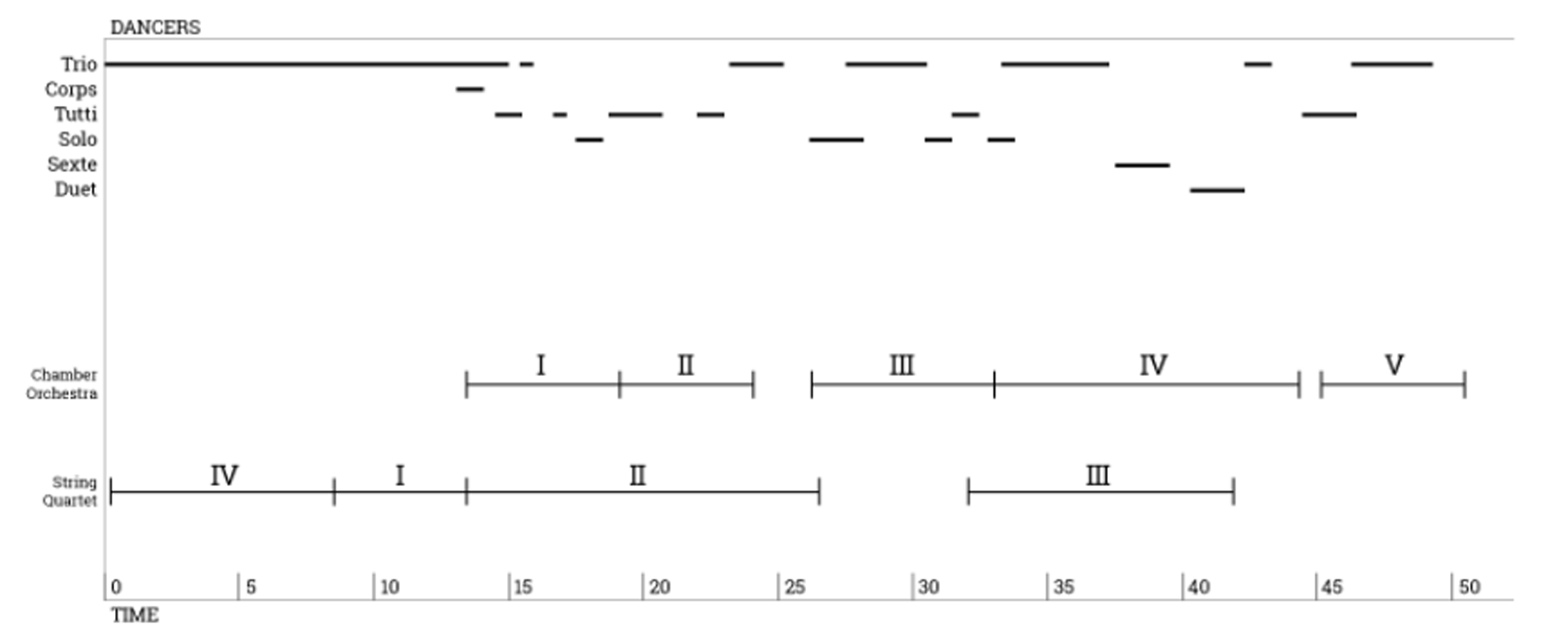
Figure 1: Graphic by Susanne Jaresand on the time structure of Beauty/Schönheit/Skönhet. © S. Jaresand
Sandström’s composition is heard in the notated sequence with two interruptions. The string quartet begins with the fourth part (defined as such by Jaresand, see figure 1), which is followed by parts 1 and 2 and, after a longer pause, part 3. A longer opening of the choreography is performed by a dance trio, followed by more frequent changes in the cast, repeatedly accompanied or replaced by the dance trio, which also performs the end of the choreography.
Jaresand combined the thirteen-minute trio made up of two men and a woman at the beginning of the choreography with the final part of the string quartet. The ninety seconds,26 which will be examined in more detail here, are initially characterized by multiple fragments of sound that rapidly swell and subside and sometimes emerge like flashes. Quarter tones and an extremely wide tonal space develop into a disparate auditory image that suddenly changes into a long, thin, sustained tone. This leads with a rapid crescendo to a sequence of briefly oscillating chords. Ghostly flashing tonal schemes from piano to quadruple pianissimo then ebb into a fermata whose duration Nono notes as 8-11 seconds.27 The last passage, again in delicate dynamics with short recumbent notes and bouncing balzare jumping back and forth between the instruments, leads again into a seemingly endless sustained sound.
Which components of the music Jaresand transformed into movement and suggested as improvisation guidelines for the development of movement phrases and gestures can be tentatively derived from the movement terms used in the music description. Roughly described, the motif-generating physical actions are short, rapid, and selectively separated movements that combine to form a kaleidoscopically changing picture of jumping geometric forms, body lines cutting through space, tense holding figures, horizontal and vertical pendular movements as well as isolation and whole-body modeling. The elements of this short introductory phase form a complex material that is taken up again in the further course of the piece, spun on, transposed and supplemented.
Calling for Attention
Hearing, since it cannot be turned off and remains active even in sleep, forces attention. Nevertheless, hearing does not automatically mean paying attention or listening. Something must awaken attention in order to generate precise listening. Attention is directly connected with experiencing something and the sensations that accompany perception.28 Waldenfels regards the experience of the moment in which subjective attention is awakened as a double event.29 He refers to the moment an event hits or touches one as an experience to which a reaction of the subject is attached only in the second step: “What comes towards me is separated by a gap from what goes out from me.”30 This gap presents itself as a liminal moment of transition between attentiveness and noticing. It is only as a result of this attention that behavior occurs which interprets the impulse into structures, follows it, or rejects it. Waldenfels depicts individual attention as a selection in which “some things stand out, others recede, like in a relief.”31 In the image of a relief with stronger and weaker characteristics, perception is thus constituted as a multi-layered process that is fed by the organization of the respective individual fields of experience.
In the opening passage of Beauty/Skönhet/Schönheit, hearing and seeing are constantly immersed anew in “experiences” through extremely changeable events. Not only is there no stable relationship established between music and dance, but the compositional material changes almost constantly within each medium. This complexity and the associated moments of surprise offer an abundance of connection experiments with already existing experiences in movement and listening, and—in keeping with the choreographer’s intention—with events that have already taken place in the work. The dance material combines, for example, gestures of pointing and determining with pendular and swinging movements that may be linked to physical experiences of bobbing and slinging. These are reflected—though not in temporal correspondence—in tonal gestures, as can be seen in the description of the musical events of this section (cf. section “Aleatoric Counterpoint”). The perceived density of events decreases when the passage is viewed several times. Moments of silence allow the audience to process the information and to connect what has been seen and heard. For example, the author only noticed after a while that a rhythmic swinging motif is repeated five times. Since this rhythmic structure is not confirmed on the musical level, the seeing was, so to speak, “out of step.” Instead, in the search for accordance, short moments of temporally close or almost synchronous overlaps in articulation, direction of movement, and dynamics were recognized, whereby hearing and seeing were connected.
Timing as a Physical Experience
With thirteen different basic tempi, numerous fermatas and breaks, as well as the instructions accelerando and ritardando, which are to be interpreted subjectively, Fragmente—Stille, An Diotima presents itself as extremely discontinuous in the course of time. However, with a few exceptions, identical tempi are provided in all four parts and similar compositional textures are marked with the same tempo indications.32 This results in a homogeneous structure in each of the individual sound fragments. Inspired by Stern’s vitality effects described above, these figures can be identified as kinetic elements: tumbling, dragging, searching, oscillating, fleeting, jerking.33 Like the shapes of a mobile, they emerge and disappear again from the field of vision or listening sphere.
If one wants to consider the quartet under the aspect of rhythm, an extended approach must be applied. Although the score is marked with bar and scale lines as well as with horizontal and vertical arrows that divide the time stream and clarify what sounds together, the listening is oriented towards the texture of the individual fragments, their duration, and the energetic quality of their transitions. In accordance with the core principle of Gestalt theory, the sums of the most differentiated figurations become audible as a whole, which is more than the addition of its individual elements, so that “the succession of discrete individual elements […] is elevated to a description of dense cumulative figures.”34 These acoustic perceptual forms manifest themselves physically and are questioned and contrasted in various ways throughout the dance events. Depending on the individual disposition, the process takes place primarily on the visual level and the listening is contextualized accordingly. However, the stumbling blocks could possibly be bypassed and a perceptual level disregarded, which would regrettably diminish the process of getting into motion.35
Aleatoric Counterpoint
The complex interlocking of music and dance is introduced in Beauty/Schönheit/Skönhet right at the beginning and arises from the choreographer’s way of working. She derived movement qualities and spatial figurations from her intensive listening that were explored improvisatorially in dance and composed into movement phrases. In the subsequent performance with music, random points of connection occur in which accents, slips, or pauses in the movement coincide with the music. However, the piece is dominated by non-simultaneity.
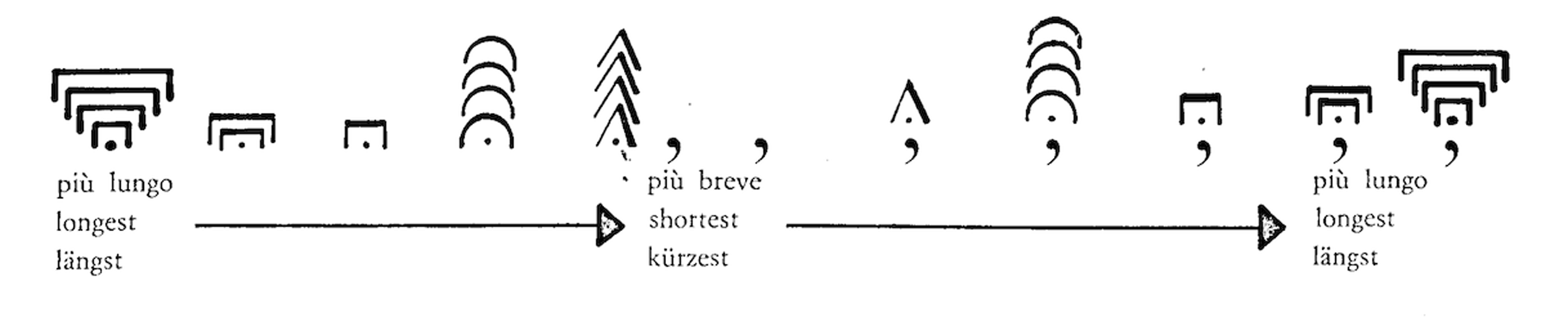
Figure 2: Notations of fermatas from the playing instructions of Luigi Nono’s Fragmente—Stille, An Diotima.36 © 1980 Casa Ricordi Srl, a division of Universal Music Publishing Group. International Copyright Secured. All Rights Reserved. Reprinted by permission of Hal Leonard Europe BV (Italy)
Nevertheless, music and dance enter into a dialogue that contains a special analogy to language through its syntax, in this case as the formation of groups of events that are separated from each other by longer pauses. The alternation of sound chains of varied articulation, colour, and dynamics characterize Nono’s string quartet. They create phases of silence through the expansion of sounds as well as pauses, and open up spaces for musical associations.37 These stretches are notated in the score as fermatas (figure 2) and were differentiated by Nono in twelve different forms.
In developing the choreography, Jaresand also sought to form movement fragments that create a kind of arhythmic expression38 and are also separated from each other by moments of pause. It was a particular concern for her not to let the end of movements necessarily coincide with the arrival in a final body position, but to set moments of pause also where movement actually wants to be continued and the audience may already feel them coming on.

Figure 3: Overview of the relationship between pausing (H = held notes, vertical lines = pause) and action (continuous horizontal lines) in music and movement. Bew. = movement, PZ = score numbers. © D. Weise
The characteristic of interrupting and pausing is equally present in the music as well as in the choreography of this section danced in unison. However, there are hardly any temporal correspondences in the transitional moments from action to pause and vice versa, which is not surprising given the choreographic method. As can be seen in the sketch (figure 3), there are only two such events: in second 17 and at the end of score number 47. Correspondences in the energy and dynamic of the movements lead to those musical-sound elements in the dialogical interweaving of music and dance. Ears and eyes are stimulated by the polyphony of both voices, which use different languages, to perceive the events as independent but also related to each other. Nevertheless, there are moments of energetic correspondence, for example when an arrow-like realignment of movement in space coincides with a sharp, high, torn string sound, or when a physical softening is combined with the fading of an oscillating interval. Somewhat reminiscent of the well-known memory game, sound and movement motifs are mixed and the pairs are only revealed partially and delayed in time. The movement phrases composed in advance by the dancers from the music, but without having heard it, meet Nono’s complex construction of sound, pauses and silence. In this way, the choreographic procedure devised by Jaresand creates a texture of aleatoric counterpoint.
Heinrich Jacoby described trying as a further development step after stumbling. This was exemplified in the creation of Beauty/Schönheit/Skönhet through the various approaches to movement, listening, and finally composing in dance and music. This piece thus explicitly focuses on perception as the motor and generator of artistic creation and demands of its audience: s/he who will hear must feel.39
-
Friedrich Theodor Vischer, “Kritische Gänge,” in Kritik meiner Ästhetik, ed. Robert Vischer, 383, quoted in Robin Curtis and Gertrud Koch, eds., Einfühlung. Zur Geschichte und Gegenwart eines ästhetischen Konzepts (München: Fink Verlag, 2008), 8 (trans. Josefine Bingemer): “Das Schöne ist nicht ein Ding, sondern ein Akt.”↩︎
-
A. Jean Ayres, Bausteine der kindlichen Entwicklung (Berlin: Springer, 1984), 37.↩︎
-
Peter Gena and Jonathan Brent, A John Cage Reader (New York: C.F. Peters, 1982), 111.↩︎
-
Heiner Goebbels, Ästhetik der Abwesenheit. Texte zum Theater (Berlin: Theater der Zeit, 2012), 85 (trans. Josefine Bingemer): “mit Bildern der Eindeutigkeit zu verbauen.”↩︎
-
Ibid., 84 (trans. Josefine Bingemer): “Zu sehen geben heißt stets, das Sehen in seinem Akt, in seinem Subjekt zu beunruhigen […] [Dies] gilt auch für das Hören—und mehr noch für die Summe beider.”↩︎
-
Heinrich Jacoby, Jenseits von “Begabt” und “Unbegabt.” Zweckmäßige Fragestellungen und zweckmäßiges Verhalten—Schlüssel für die Entfaltung des Menschen (Hamburg: Christians Verlag, 1994), 19 (trans. Josefine Bingemer): “Sich-Erarbeiten einer wachen Beziehung […] aufgrund bewussten Zustandsempfindens.”↩︎
-
Walter Biedermann, Entfaltung statt Erziehung. Die Pädagogik Heinrich Jacobys (Freiburg: Arbor Verlag, 2003), 18 (trans. Josefine Bingemer): “für das Stolpern bereithalten.”↩︎
-
Detlef Kappert, Tanz zwischen Kunst und Therapie (Frankfurt am Main: Brandes und Apsel Verlag, 1993), 11ff.↩︎
-
Ursula Brandstätter, “Differenzen als ästhetisches und pädagogisches Potenzial,” in Positionen. Beiträge zur Neuen Musik, Heft 61 (November 2004): 2-7.↩︎
-
Goebbels, Ästhetik der Abwesenheit, 85 (trans. Josefine Bingemer): “Unsere Wahrnehmung reagiert dort, wo Intensität hervorgerufen oder produziert wird—das kann auch eine Leerstelle sein. Eine Beobachtung am Rande, etwas, das Schlüssigkeit vermissen lässt, weil es nicht zusammenpasst oder Sichtbarkeit und Komplettierung verweigert. Gerade Distanzen wollen wir als Zuschauer überbrücken, Lücken wollen wir instinktiv schließen.”↩︎
-
Siri Hustvedt, Embodied Visions: What Does It Mean to Look at a Work of Art? (München: Deutscher Kunst Verlag, 2010), 7.↩︎
-
Wicki Bernhardt, “Warum machen die das?,” in Rhythmik—Musik und Bewegung. Transdisziplinäre Perspektiven, ed. Marianne Steffen-Wittek, Dorothea Weise, and Dierk Zaiser (Bielefeld: transcript, 2019), 420.↩︎
-
Dargelegt in Theodor Lipps, Ästhetik, Psychologie des Schönen und der Kunst I: Grundlagen der Ästhetik (Hamburg: Voss, 1903).↩︎
-
Curtis and Koch, Einfühlung, 16 (trans. Josefine Bingemer): “jedes sinnliche Objekt überhaupt stellt an mich die Zumutung zu einer Thätigkeit.”↩︎
-
Ibid., 17 (trans. Josefine Bingemer): “frei dahinfließende oder gehemmte; leichte oder bemühte; in sich einstimmige oder in sich gegensätzliche; sich spannende und sich lösende; in einem Punkt konzentrierte oder in mannigfachen Lebensbethätigungen auseinandergehende und in ihnen ‘sich verlierende’.”↩︎
-
Karsten R. Stueber, Rediscovering Empathy. Agency, Folk Psychology, and the Human Sciences (Cambridge: MIT Press, 2006).↩︎
-
Vittorio Gallese, “The Roots of Empathy. The Shared Manifold Hypothesis and the Neural Basis of Intersubjectivity,” in Psychopathology 36 (2003): 171-80, 175, accessed 6 December 2021, https://www.karger.com/Article/Abstract/72786.↩︎
-
Stephanie Schroedter, “Musik erleben und verstehen durch Bewegung. Zur Körperlichkeit des Klanglichen in Choreographie und Performance,” in Musik und Körper. Interdisziplinäre Dialoge zum körperlichen Erleben und Verstehen von Musik, ed. Lars Oberhaus and Christoph Stange (Bielefeld: transcript, 2017), 223↩︎
-
Cary Rick, “Das Auge des Betrachters,” in Tanz Affiche, Nr. 31 (1991), 67 (trans. Josefine Bingemer): “enthusiastisch den Rhythmus der Schlagzeugbegleitung mitzuklatschen.”↩︎
-
Daniel Stern, Die Lebenserfahrung des Säuglings (Stuttgart: Klett-Cotta, 2003).↩︎
-
Ibid., 83 (trans. Josefine Bingemer): “‘aufwallend’, ‘abklingend’, ‘flüchtig’, ‘explosionsartig’, ‘anschwellend’, ‘abklingend’, ‘berstend’, ‘sich hinziehend’.”↩︎
-
Video on YouTube, accessed 31 March 2022, https://www.youtube.com/watch?v=xDlRiNSJT58.↩︎
-
Susanne Jaresand and Maria Calissendorff, “Beauty/Schönheit/Skönhet. An Artistic Research Project in Music and Dance,” in Le Rythme. Scientific Perspectives, Artistic Research and Theory (2019): 161-74, 164, accessed 20 July 2022, https://fier.com/wp-content/uploads/2022/07/le-rythme-2019.pdf.↩︎
-
“[…] a physical experience to all in the space that are exposed; musicians, dancers, audience and hopefully the artistic people of more material matter as scenography, costume and of course the light.” (Jaresand in an e-mail to the author dated 16.08.2020.)↩︎
-
Jaresand and Calissendorff, “Beauty/Skönhet/Schönheit.” A taping of Beauty/Schönheit/Skönhet can be seen here, accessed 23 August 2020, https://www.youtube.com/watch?v=xDlRiNSJT58&feature=youtu.be.↩︎
-
This section corresponds to the score numbers 44-47.↩︎
-
At the request of the La Salle Quartet, to whom Luigi Nono dedicated the work, he added seconds to some of the fermatas.↩︎
-
David Espinet, Phänomenologie des Hörens, 2nd edition (Tübingen: Mohr Siebeck, 2016), 109.↩︎
-
Bernhard Waldenfels, “Geweckte und gelenkte Aufmerksamkeit,” in Aufmerksamkeit. Neue humanwissenschaftliche Perspektiven, ed. Jörn Anders Müller, Andreas Nießeler, and Andreas Rauh (Bielefeld: transcript, 2016), 29.↩︎
-
Ibid., 30 (trans. Josefine Bingemer): “Was auf mich zukommt ist durch eine Kluft getrennt von dem was von mir ausgeht.”↩︎
-
Bernhard Waldenfels, Phänomenologie der Aufmerksamkeit (Frankfurt am Main: Suhrkamp, 2004), 101 (trans. Josefine Bingemer): “einiges hervortritt, anderes zurücktritt, wie bei einem Relief.”↩︎
-
Joachim Junker, “Die zarten Töne des innersten Lebens.” Zur Analyse von Luigi Nonos Streichquartett Fragmente—Stille, An Diotima (Büdingen: Pfau, 2015), 60.↩︎
-
These terms were derived from the author’s movement reactions to the music section discussed here.↩︎
-
Viktor von Weizsäcker, Gestalt und Zeit (Göttingen: Vandenhoeck & Ruprecht, 1960), 3, cited in Junker, “Die zarten Töne des innersten Lebens,” 269 (trans. Josefine Bingemer): “die Sukzession von diskreten Einzelelementen […] für eine Beschreibung von dichten Summengestalten erhoben wird.”↩︎
-
“Gestalt is that which has become solid, but precisely this then proves to be fluid again. Gestalt is in figures and forms; but these are seemingly not the beginning nor the end, but themselves what has become and is becoming.” von Weizsäcker, Gestalt und Zeit, 3, cited in Junker, “Die zarten Töne des innersten Lebens,” 269 (trans. Josefine Bingemer): “Gestalt ist das Festgewordene, aber gerade dieses erweist sich dann wieder als das Flüssige. Gestalt ist in Figuren und Formen, aber diese sind offenbar nicht Anfang, nicht Ende, sondern selbst Gewordene und Werdende.”↩︎
-
Luigi Nono, Fragmente—Stille, An Diotima per quartetto d’archi (Milano: Ricordi, 1985).↩︎
-
Junker, “Die zarten Töne des innersten Lebens,” 48.↩︎
-
“[…] a kind of arhythmic expression.” (Jaresand in an e-mail to the author dated 12.08.2020.)↩︎
-
Referring to the German proverb “Wer nicht hören will, muss fühlen.” In English: S/he who will not hear must feel.↩︎