
How to cite
How to cite
Outline
Outline
In the back streets of New Orleans, the contemporary displays of power and authority “in drag”—which variously referenced Perchten, court spectacles, and minstrel blackface—were, by the early twentieth century at the latest, undermined by appearances in public marked by shifting conflicts. Hardly photographed in the decades that followed, but visually ubiquitous today, this Mardi Gras, again shaped by roving mobs, opens up a particular understanding of the possibility of nomadic cross-referencing. These clubs, tribes or loose assemblies were not immune from being co-opted and made hypervisible amid changing social dynamics. Yet the traces of their Mardi Gras narrate the potential for a performing otherwise of prevailing conditions. The multifarious history of this long-overlooked Mardi Gras of the subalterns operating off the official carnival routes reads as a symptom of contested social shifts and testifies to the capacity of people to relate to another against all odds—that is, to resist segregation.
Iconoclasms (Zulu)
“There Never Was and Never Will Be a King Like Me” was a sketch performed around the turn of the twentieth century in a vaudeville show at the Pythian Temple on the edge of Black Storyville’s red-light district. Apparently, around 1909, a gang of guys from another social context than that of the Tramps captured in the photo above used this sketch to take to the streets in blackface. They also called themselves Tramps, thereby referencing Jim Crow in their own way.456
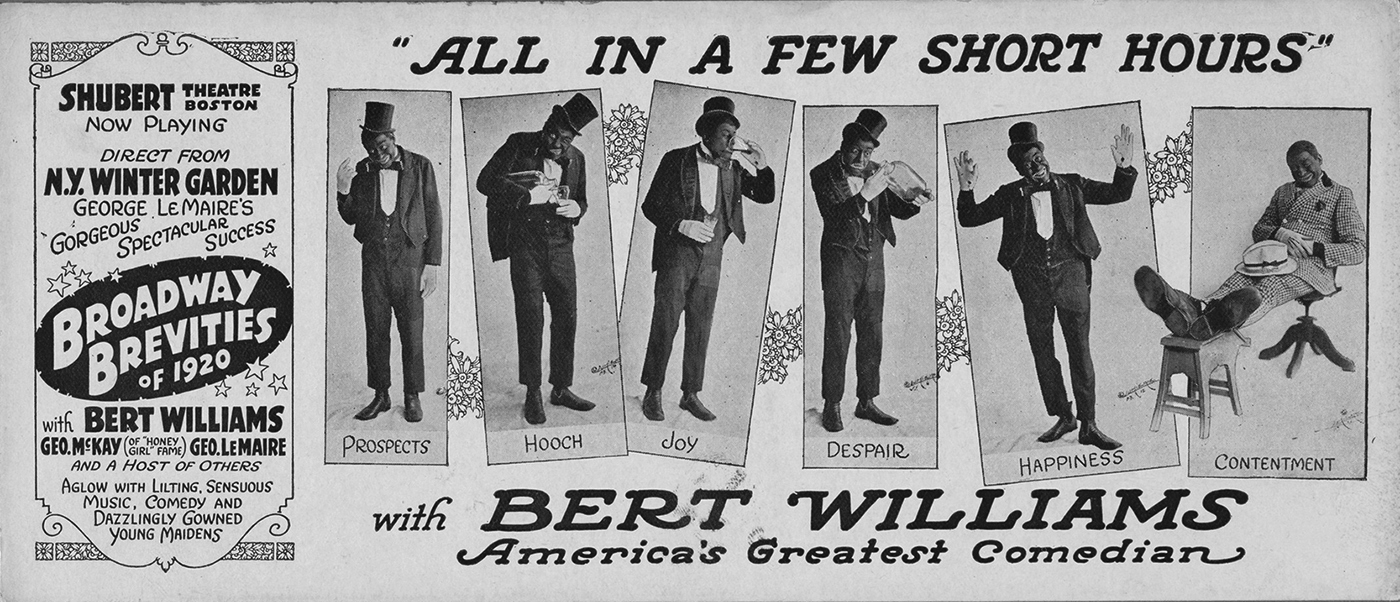
Figure 43: Bert Williams, undated. Harvard Theatre Collection on Blackface Minstrelsy, 1833—1906 (Houghton Library).
However, this gang does not appear to have been visually documented—other than their kin decades later. They drew on the tradition of Black carnival kings and the genre of blackface-on-Black minstrelsy. As the “Royal Coon,” the Black dandy became part of contemporary music history and—within the context of the widely received Anglo Zulu Wars (1879—1896)—also came to be associated with southern Africa.457 The comic blackface persona, the Jim Crow tramp, emerged as an established character type, linked to the image of rebellious Africans. “‘Zulu’ … became synonymous with artifice and disguise,” writes Louis Chude-Sokei in The Last “Darky,” a study of the Caribbean, New York-based comedian Bert Williams; pseudo-Zulus thus emerged “as a stock character type that eventually entered the standard vocabulary of ethnic imagery.”458 Williams had first appeared as an “Exhibition Zulu” in P. T. Barnum’s circus—essentially a human zoo—and later gained fame on Broadway performing in blackface. With songs like “Evah Darkey Is a King,” he helped shape creolized versions of the comic figure around 1900 and began to blur the color line on stage and screen. His remaining images and films bear witness to a different version of blackface—as a creolized comic figure—that would later be echoed in Baker’s performances.459
In New Orleans, “Zulu” was used as a slur for the darker-skinned and the underclass—shorthand for the precarious.460 Renaming themselves the Zulu Social Aid and Pleasure Club, in 1909 the Tramps from the Pythian Temple founded a counterpart to the high society’s Gentlemen’s Club: a carnival club and mutual aid organization—a benevolent society for those excluded from public welfare under Jim Crow.461 Quoting the blackface routine noted above, they changed their name from Tramps to Zulu, highlighting transatlantic lines of flight. In reply to Rex and his Tramp entourage, they staged King Zulu and his retinue in blackface and Africanized costumes, reversing dominant local and colonial stereotypes. Dressed in improvised costumes, bent tin-bucket hats, and grotesquely exaggerated makeup, they paraded through the streets. This was not some Afrocentric imagined elsewhere. As their early spectacular appearances made clear, this blackface was, in the context of segregation-era politics, “akin to the ‘category crisis’ … in the politics of drag,” as Chude-Sokei calls it.462 Zulu affirmatively overperformed racist caricatures. The white New Yorker T. D. Rice had translated the comic figure of European folk theater into Jim Crow—a figure swaying between subaltern smartness and rural simple-mindedness. Transposing his stock character into the plantation context in the 1830s, Rice had linked the traditionally dark mask of Arlecchino from sixteenth-century European itinerant theater to the “second skin” of a tramp-like fugitive slave. The New Orleanian Zulu Club, caught between port-city creolization and segregation, responded to this in the context of Black performers entering early mass culture and defying Jim Crow politics. Zulu blackface translated the grotesque figure—tamed by the post-Rice minstrel genre but since reimagined by Bert Williams, later also by Josephine Baker, and others—into something “faux-African.”
Here, the inherent ambivalence of blackface—its complicity in Othering versus its potential to subvert hegemonic culture—was transposed into carnival in a new way, one that resonated within the Southern Atlantic. While blackface in Cape Town’s carnival from around the same time signaled a transoceanic mass culture and could be read as a creolized nod to “postcolonial” US entertainment, the Zulu Club projected distorted racialized drag back onto the African continent. This blackface also served as a way to externalize racist stereotypes, by performing them within an imagined colonial scenario. Yet Zulu dragging also disrupted the frame of the official Mardi Gras. Emerging in the early twentieth century, it exemplifies those grassroots carnival mobs long ignored by official histories, gangs that challenged the established segregationist order and how it had been affirmed by hegemonic popular culture.
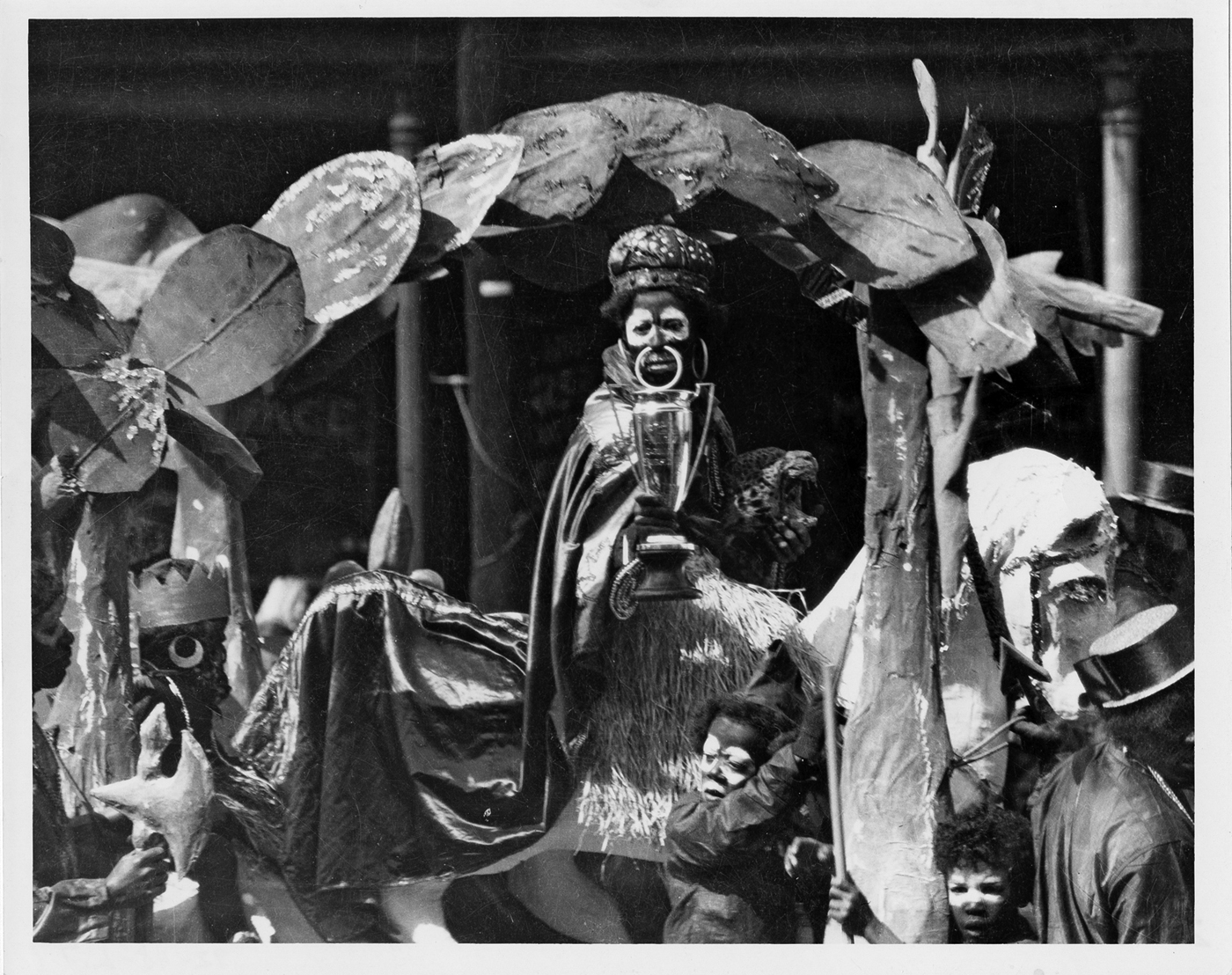
Figure 44: Zulu King Baley Robertson, Mardi Gras, New Orleans, 1925. The William Russel Collection, The Historical New Orleans Collection (THNOC 92-48-L.77; MSS 520.3223).
While the face mask has remained largely unchanged, Zulu’s status within New Orleans Mardi Gras has shifted alongside evolving local “race” politics. In its early years, the Club turned up on unpredictable routes, coming off as a fraternal band of nomadic rowdies. By 1914, Zulu began showing up at the Rex Parade, eventually taking the lead. From 1923 onward—wearing raffia skirts—they challenged the “elevated carnival” with a wild mix of blackface and African stereotypes atop eccentric floats, as a 1925 photograph from The Historical New Orleans Collection indicates. Zulu introduced a whole cast of stock characters to accompany the Zulu King, from the Witch Doctor to Big Shot Africa. In 1933 already, however, the club rebranded itself in a patriarchal mold, copying the white krewes who had done away with cross-dressing.463 Like the carnival kings of high society, the Zulu King was now flanked by a female queen. Unlike in the context of the self-styled Old Liners, however, she was not obliged to appear as a virginal debutante.464 Still, the regendering of the club’s appearances was more a sign that the organizers were slowly aligning themselves with the prevailing carnival economy than a demonstration of advancing gender equality. Zulu thus became a marker of the shifting terrain of segregation. Today, the club is involved in municipal politics and commercially networked with the Old Liner krewes. The story of the Zulu Club—whose floats have included white members in blackface since carnival organizations desegregated in 1991—has become a lens for viewing social transformation. It raises questions about the changing role of a largely unchanged mask worn by members of a carnival club that emerged from the underclass of segregation and gradually came to bridge high society and the increasingly gentrified back streets.
Zulu’s reception thus serves as a kind of seismograph for political shifts as reflected in carnival. In 1996, theater historian Joseph Roach described Zulu’s performance style, in his widely cited study Cities of the Dead, as deconstructive. By staging an obviously fictional African tradition through a blackface citation, Roach argues, the carnival of the elites itself becomes legible as a form of whiteface minstrelsy.465 The white makeup beneath Zulu’s black mask, he continued, points to a kind of self-reflexiveness: a subversive laughter that, by parodying a particular image of Africa, turns Eurocentric stereotypes around. Roach celebrated the visual citation of carnivalesque mass culture—blackface and raffia skirt—as a satirical reversal of racist projections. He saw Zulu’s performances as an iconoclastic strike against the white Old Liner krewes:
Since 1909 members of the Zulu Social Aid and Pleasure Club have … staged an annual float parade, featuring strereotypes of “Africans.” In addition to “King Zulu,” high officials in the organization take on such personas as “The Big Shot of Africa,” “The Witch Doctor,” “Governor,” “Province Prince,” and “Ambassador” … Originally known as “The Tramps,” the working-class African Americans who founded Zulu took their inspiration from a staged minstrel number … They parade on Mardi Gras morning, using the same route along St. Charles Avenue that Rex follows an hour or so later. They wear grass skirts and blackface laid on thick over an underlying layer of clown white circling the eyes and mouth. In addition to plastic beads, Zulu members throw decorated coconuts, for many parade goers the most highly prized “throw” of Mardi Gras.466
Referencing Henry Louis Gates Jr.’s Signifying Monkey, Roach suggested in the 1990s that the deconstructive spirit of the West African trickster Esu lived on in Zulu’s parade, though it seemed to be shaped by its adversarial relationship to Rex: “Zulu might very well have taken his present form without Esu per se, but he certainly could not exist in the same way today without Rex, nor, it must be emphasized, could Rex in the same way exist without Zulu.”467 Esu, in this reading, was not an “African retention” but rather “a circum-Atlantic reinvention.”468 Roach framed this as surrogation: as an act through which the “New World” was not discovered by Europe, but invented on site.469 Such creolized performative transpositions, he argued, carry with them the memory of substitutions that would otherwise be forgotten, revealing the creativity and modernity of improvisational responses to cultural entanglements within the liminal space of a colonial contact zone.
While Roach highlighted Zulu’s deconstructive potential and anchored it in a (West) Afrocentric framework via Esu, the Zulu Club came under fire as early as the beginning of the Civil Rights era.470 This criticism stemmed not just from a breach of respectability politics but also from the club’s political cooptation.471 In the early 1960s, Zulu was the only Black organization to break with the Mardi Gras boycott organized by the Civil Rights movement in protest against racist segregation. In doing so, Zulu accepted, for instance, the use of dogs by the police for crowd control during its parade.472 Later, the club made a temporary effort to rebrand itself with African themes and to drop blackface. But this shift was accompanied by the distribution of tokens and souvenirs made in apartheid-era South Africa, as if to suggest an inherited tradition from the “mother continent.” Meanwhile, Zulu’s Mardi Gras ball permitted only formal Euro-American eveningwear.473 Even during the global antiapartheid boycotts and amid widespread criticism of Mangosuthu Buthelezi for collaborating with the apartheid regime as the official Zulu leader, New Orleans entertained the idea of inviting South African Zulu delegations to march in the parade.474
At first glance, this move may seem to support newer interpretations framing Zulu as part of a transcontinental tradition. Kevin McQueeney, for example, points to increased Atlantic shipping between New Orleans and Cape Town, especially around 1900 during the Second Boer War, to buttress a claim of transoceanic relations:
Steam freighters regularly sailed between the Port of New Orleans and Cape Town in the early twentieth century, especially during the Second Boer War (1899—1902). During the conflict, the British military established their own port section in the city and sent tens of thousands of horses, mules, and other livestock to South Africa, as well as guns and additional supplies, at a cost of tens of millions of dollars. The British purchased the goods and animals in the US, as well as actively recruited for soldiers to fight in South Africa, and then shipped the cargo, along with white and black porters and muleteers from New Orleans to Cape Town.475
Starting from port connections, McQueeney traces trade routes in an effort to confirm a link between the Zulu Club and the South African Zulus: in 1905, following the end of the Second Boer War, a British army parade reportedly took place in New Orleans, featuring “ethnic Zulus who fought on their side.”476 The Anglo Zulu War of 1879 had also received broad press coverage. Still, even the Zulu Social Aid and Pleasure Club does not claim such a direct lineage from its South African namesakes. As Felipe Smith observes: “Given the many overlapping affiliations that social aid and pleasure club members maintain, throughout its history there is a disturbing consistency in the Zulu Club’s willingness to advance its own organizational interests at the expense of black community solidarity.”477 Unlike McQueeney—who in 2018 cast the Zulu Club as a now-established cultural emissary with distinct ties to Africa—Smith underscores the extent to which the club had been co-opted:
Thus the Zulu Club did not adopt and perpetuate blackface masking in a vacuum, nor did they challenge its meaning or change its ritual functions as scripted by white carnival elites. They adopted blackface while it was still a white carnival masking tradition that they, like Williams and Walker, believed they could perform in a style that would improve upon the white “imitators,” and in the process they partly made their way through cunning and determination into a festival performance genre that had been evolving for half a century. … The persistent description of the Zulu parade as a veiled critique of the Rex parade that follows it on Shrove Tuesday (an interpretation that Zulu strenuously denies) reflexively recognizes the two events as linked, but symbolically oppositional expressions of racially inflected cultural paradigms.478
Smith argues that Zulu blackface was predisposed from the start to be absorbed into the official Mardi Gras. The Club has long functioned as a networking hub for New Orleans’s Black political elite. And, for a time, it even ran as a franchising operation for “desegregated” white blackface riders, who, starting in the 1990s, could pay handsomely to ride on the floats. This shift in Zulu’s function caused increasing disputes regarding its mode of appearance, which may be read as emblematic for a specific contemporary discourse on recognition.
In 2019, activists launched an attack on the club with the rallying cry, “All symbols of white supremacy must fall”479—driving a social media campaign against Zulu. Take ‘Em Down NOLA, an activist collective emanating within the broader context of Black Lives Matter across the United States, demanded that the Zulu Club adopt new masks, challenging what Roach and others had described as a deconstructive usage of blackface.480 Take ‘Em Down NOLA featured alternative masks drawn by artist Journey Allen, latently referencing the then-new Marvel blockbuster Black Panther, conjuring a stylized, feudal-folkloric fantasy of Africa.481 These masks bear no relation to South African Zulu masks, nor to the ornamental glitter masks that succeeded carnival blackface after apartheid’s end in Cape Town. Instead, they seem to stand in for a longing to fabricate a seemingly “authentic” transatlantic tradition and invent an imagined past purified from colonial domination.
“Black makeup is NOT ‘Blackface’” was the Zulu Club’s official response to Take ‘Em Down NOLA’s tribal-style face paint designs.482 This statement attempted to fight Take ‘Em Down NOLA on their own terrain, framing blackface as an Afrocentric symbol, a representation of African tradition. The club insisted it was not invoking “symbols of white supremacy,” but paying homage to African Zulu tribal culture. While its use of blackface is nevertheless clearly legible as a grotesque minstrel pastiche, the club responded to the ensuing scandal by reinterpreting its official historiography. In effect, the Zulu Club, pretending to cite South African Zulu traditions for its grass skirts and exaggerated makeup, was leveraging the activists’ own understanding of symbolic representation.
This representational take was echoed in another initiative by activists related to Take ‘Em Down NOLA, staged after the protests against the Zulu Club: a reenactment of the long-suppressed Slave Rebellion of 1811. In the revolt of 1811, enslaved people had risen up against their disenfranchisement and brutal hyperexploitation a full fifty years before emancipation in the United States.483 Staged with historical weapons and costumes, the reenactment was to evoke the longue durée of Black Lives Matter. Its form and function—as a representative embodiment of the past—stood in direct opposition to the grotesque minstrel mask and its play with referential confusion. Despite the differences in historical narrative, the performative commemoration of the 1811 rebellion aesthetically competed with the countless Confederate and Civil War pageants held in the South. Within the genre itself, it was to offer a symbolic counterrepresentation of the past—while drawing on established aesthetics of embodied imitatio. Yet the actual preparations for the 1811 revolt had taken place in disguise, under the cover of carnival masks.
The scandal around Zulu may be read as symptomatic. “Authenticating” references to invented traditions on both sides might also signal a broader contemporary forgetting of a carnivalesque-creolized dispositif of subaltern performativity—one that runs counter to the representational logic of the symbolic politics of the ruling class. In both cases, a practical knowledge of dynamic performative aesthetics, of minor mimesis, fades from view, even as it still reemerges in second lining, in local, collective forms of dancing along—subtly undermining dominant representationalisms of hegemonic culture and its faceist epistemology.
The specter of iconoclasm, by contrast, was already being summoned as early as 1991 by white supremacists. Neo-Nazi and former Ku Klux Klan grand wizard David Duke, who had publicly worn brown-shirted Nazi uniforms in 1970s New Orleans, called for resistance against carnival desegregation.484 This desegregation, he warned, would lead to Jackson Square being renamed Stevie Wonder Square and hence to the destruction of the tourist hub of the French Quarter. At the time, Duke himself equated all opponents to Confederate monuments with Nazis. His tale of an alleged Black hijacking of New Orleans’s city center was a textbook right-wing populist alt fact, overwriting the gentrification already underway in surrounding back streets. Still, the Jackson Memorial linked to Confederate propaganda remains untouchable to this day, while many in nearby neighborhoods have been displaced by incoming white middle-class families.
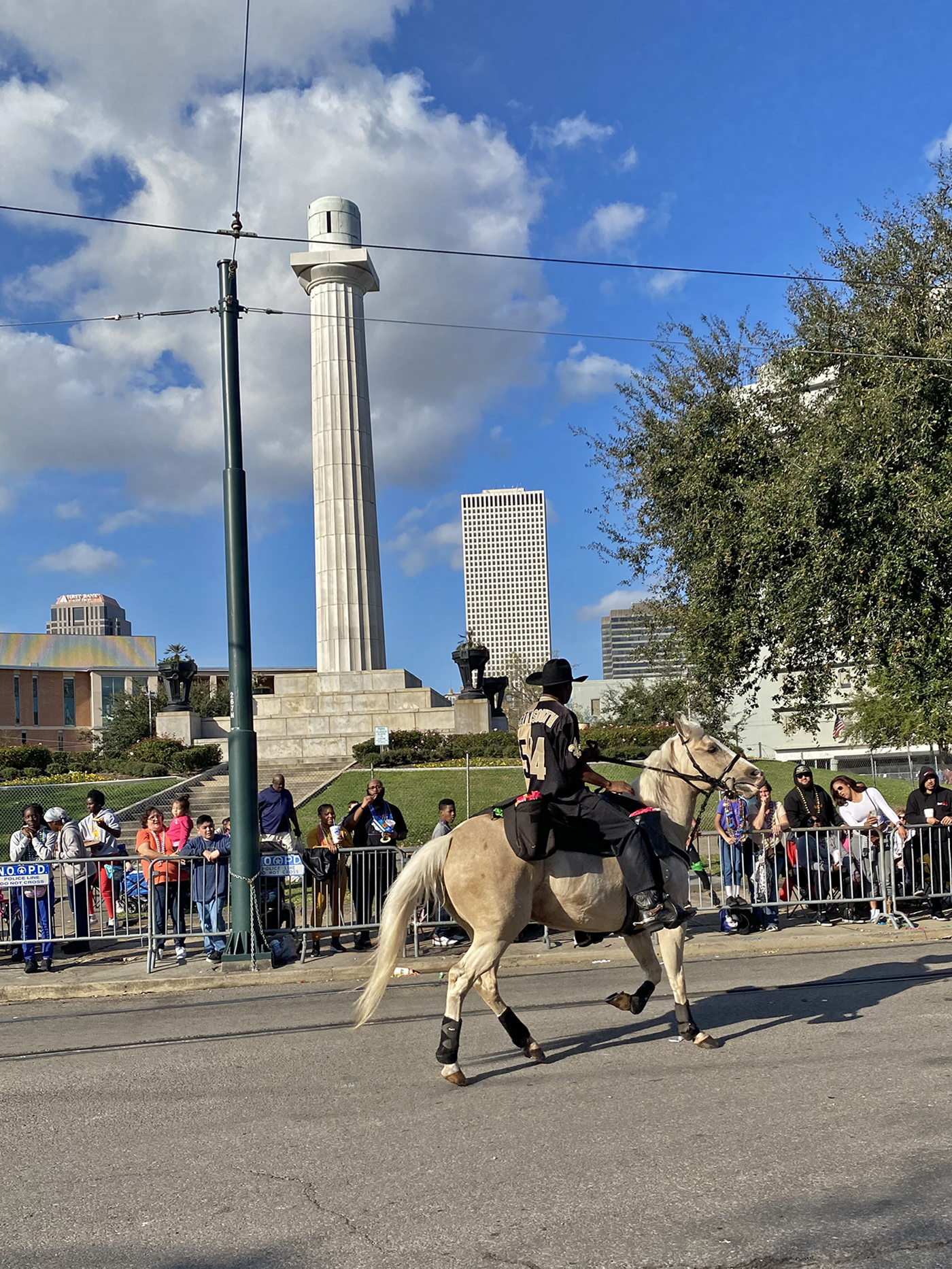
Figure 45: Lee Circle, Mardi Gras, New Orleans, 2020. Photo: Evelyn Annuß.
Duke’s nightmare, however, seemed to come true elsewhere—that is, in a different way—more than twenty-five years later. Today, anyone following Zulu or the other well-known uptown parades down St. Charles Avenue to Canal Street, to the edge of the historic French Quarter, will come across an empty pedestal at Lee Circle. The middle of this traffic circle—surrounded by unsightly new buildings and nearby expressways, and right next to a still-functioning private Confederate museum—looks a bit like an open wound in the urban landscape. Since 2017, only the pedestal has remained to mark where, in 1884, a bronze statue of General Robert Edward Lee once was erected—the largest of its kind in the whole country.485 The bare pedestal continues to signal how the United States, despite the Confederacy’s defeat in the Civil War, has been littered with such revisionist monuments, even outside the Deep South. After Reconstruction, they became symbols of commemorative politics: tools for modernizing racist ideology by mythologizing the old South.
The monumentalized Lee quite literally gave the politics of Jim Crow, of white supremacy, a face—in bronze. After his death, Lee, a plantation owner himself, became the icon of the Civil War. He had helped crush the Harpers Ferry revolt, fought in the Mexican American War, and served as general in chief of the Confederate Armies. After the war, he became a hero to right-wing white supremacists. From the height of the “ elevated carnival” until 2017, his enormous figure—arms crossed in command—looked north over New Orleans, that is, over the city’s Black neighborhoods. Thanks to the protest by Take ‘Em Down NOLA, only the massive pedestal, with its interior staircase, now towers over the area where Mardi Gras parades pass. Yet removing the statue marked a high point in the campaign against Confederate nostalgia and the defense of white dominance. Iconoclasm then took on a life of its own when activists failed in bringing down the Jackson monument in the French Quarter, fracturing potential coalitions in a way that may be seen as emblematic of broader political developments.
As the group continued seeking media attention, both iconoclastic energies and currents of symbolic politics began to turn against carnival itself—following a politics of respectability shaped by educated elites. Take ‘Em Down NOLA did not attack the white nouveau riche Mardi Gras, such as the Krewe of Choctaw and their use of “Indian” masks glossing over colonial sociocide, nor the invitation-only balls of New Orleans’s still-segregated carnival elites, themselves a parallel society.486 Echoing the semantic shift of Jim Crow—the transposition of the name of a figure “too slippery … to police”487 into the designation of an apartheid-like, binary classification system—Zulu Blackface instead became the central campaign target in 2019. This referential displacement transposed the shiftiness of “Jim Crow”—now reused to name today’s racist policing and systematic mass incarceration of Black male youth—into an Afropessimist narrative of a direct link between ongoing structural violence, disrespect, and the carnival.488 Where the statue of Lee had surveyed the gradual gentrification of the back streets and their Black residents beginning in the late 1960s—roughly coinciding with the forced removals in Cape Town—Zulu was now being cast as a kind of mobile monument to current power structures.
Adolph Reed Jr., among others, has criticized the anti-Zulu campaign as focused on symbolic politics—as undercutting a historical understanding of shifting modes of exploitation and exclusion. In an appeal to distinguish between the plantation, Jim Crow, and today’s structures of inequality, he has named Take ‘Em Down NOLA a race-reductionist “neoliberal alternative to the left”:
The city is certainly a better place for being rid of those monuments, and having removed them from public display could be a step toward finally defeating the Lost Cause Heritage ideology that remains too useful a tool of the right for making class power invisible in both the past and the present. But, while the group’s efforts contributed appreciably to pressing the issue and mobilizing some public support for removal, Take ‘Em Down NOLA’s campaign also obscured class power, ironically in the same way as did the fin-de-siècle ruling class that erected the monuments. For Take ‘Em Down NOLA and other antiracist activists, the monuments’ significance is allegorical; they are icons representing an abstract, ultimately ontological white supremacy that drives and reproduces racial inequality in the present as in the past. The monuments, that is, are props in the broader race-reductionist discourse that analogizes contemporary inequality to Jim Crow or slavery.489
In critiquing the Afropessimist politics of the activists, Reed calls for historicizing racist policies and their class dimension, that is, for situating and differentiating them more carefully. His critique also highlights what remained absent from the anti-Zulu campaign: the question of gentrification—and with it, who attends the parades where, when, and why.490 With Reed, the protest against Zulu blackface as ostensibly misrepresentational overlooks the people who take over the streets after the Rex parade ends and Zulu proceeds alone into the back streets: despite police barricades, in the very neighborhoods once under the gaze of Lee’s monument, the parade becomes an occasion for celebrating together. Along the packed sidewalks, the crowd calls to mind the earlier function and form of the mutual aid clubs and burial organizations as grassroots self-help networks: as neighborhood-based assemblages of solidarity for those long excluded from public welfare. Hence, even if the Zulu Club has evolved from a fraternal gang into a kind of patriarchal surrogate royalty, its collective celebration in the back streets of New Orleans is still akin to practices of second lining and surviving manifestations of collective support—in masking, as well as funeral processions.491 In spite of ongoing gentrification, the Mardi Gras hustle and bustle in the streets of these neighborhoods thus also resonates with the political and historical context in which Zulu first arose around 1900: the staking of a claim on street carnival for everyone, for tout-monde, through loosely shared gathering. Zulu’s ambivalent spectacle thus still sparks affective energies in the streets—slipping past iconoclasm bound up with representationalism. Here, rather than at the threshold of elite carnival, an aesthetics of performing a social otherwise emerges within carnival—though maybe rather on the ground than on the floats. In the back streets, questions of transoceanic lines of flight indeed come into view.
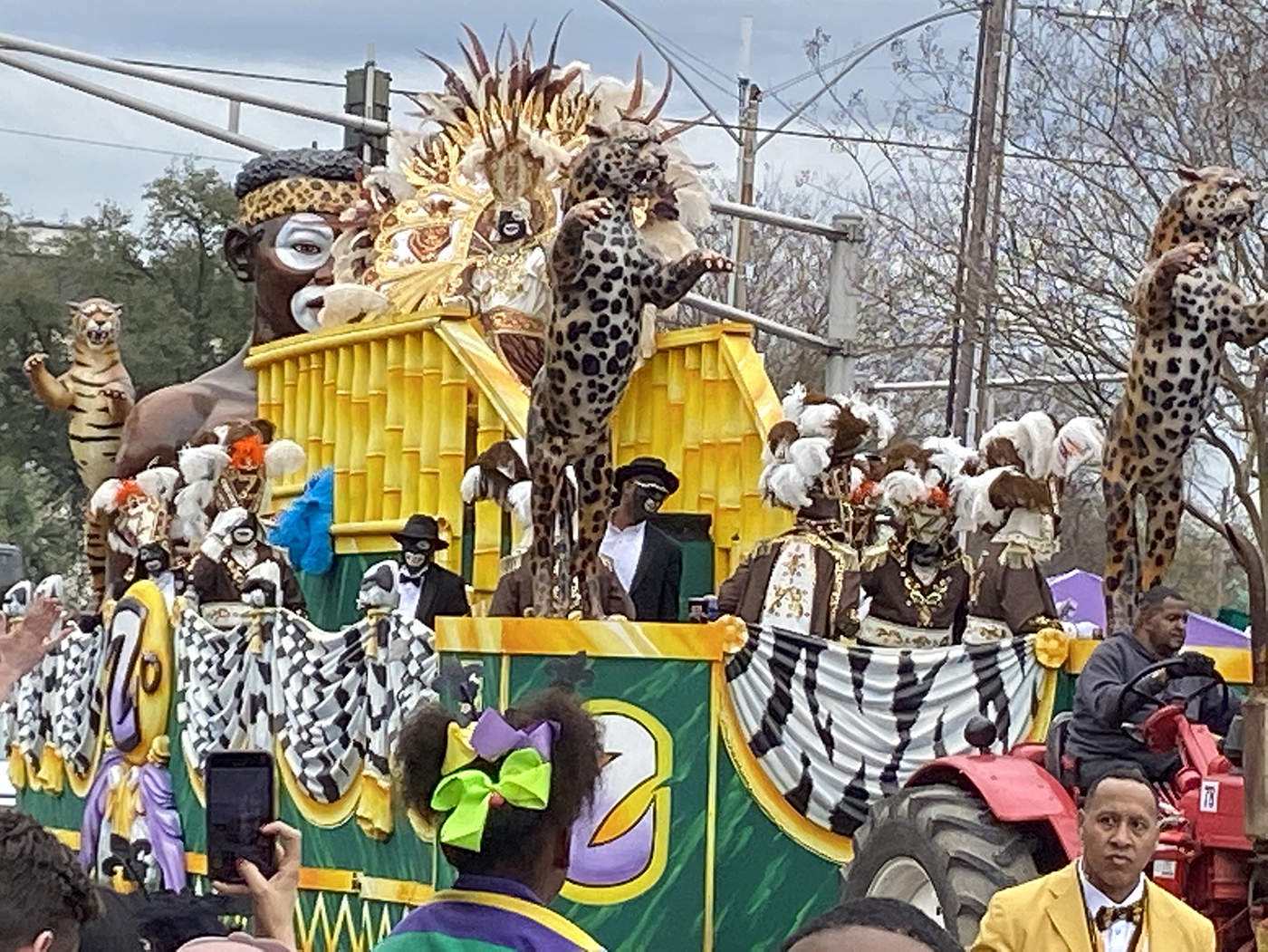
Figure 46 Zulu Parade, Mardi Gras, Tremé, New Orleans, 2020. Photo: Evelyn Annuß.
According to a Mardi Gras legend said to be from the 1930s, the Zulu King set off from Cape Town the day after Christmas to journey to New Orleans. The tale seems to creolize and reframe the story of Zwarte Piet, the blackface figure who accompanies the Dutch Sinterklaas and arrives by ship from Spain to the Netherlands, now retold through a southern Atlantic lens.492 It thus also gestures toward distant and now-transformed kinship relations that are obscured or blocked by invented origin myths. It is likely that creolized, carnivalesque masking practices shaped by transatlantic contact traveled into the Caribbean via New Orleans sailors, and by around 1900 had reached Cape Town. Both port cities—one at the mouth of the Mississippi, the other on the Cape—touch the Atlantic and act as related zones of contact. Their familial resemblance shows up in their colonial-era architecture, such as the cast iron balconies of Bourbon and Long Streets, each outfitted in line with nineteenth-century trade routes, bearing the architectural signature of colonial port towns. But it is also reflected in their creolized carnival repertoires, shaped by a first wave of globalized mass culture and adapted locally over time.493 Read against the grain, McQueeny’s interpretation of transatlantic Zulu history evokes the counterhegemonic performative transpositions of blackface that appeared in the Cape Town carnival, along with its later, postapartheid afterlife that is not Afrofolkloric but ornamental in character. To date, efforts by Cape Town’s carnival organizers to establish sustained ties with the Zulu Club in New Orleans have largely failed. The similar creolized carnival practices of those labeled “Coloured” under apartheid remain unacknowledged by both the Zulu Club and Take ‘Em Down NOLA. So far at least, the transoceanic lines of flight visible through Zulu have been displaced in New Orleans by arbitrary genealogies—narratives of origin, authenticity, and kinship. These narratives, can be seen not only as acts of surrogation but also as indicators of possible alliances that have been blocked so far.494
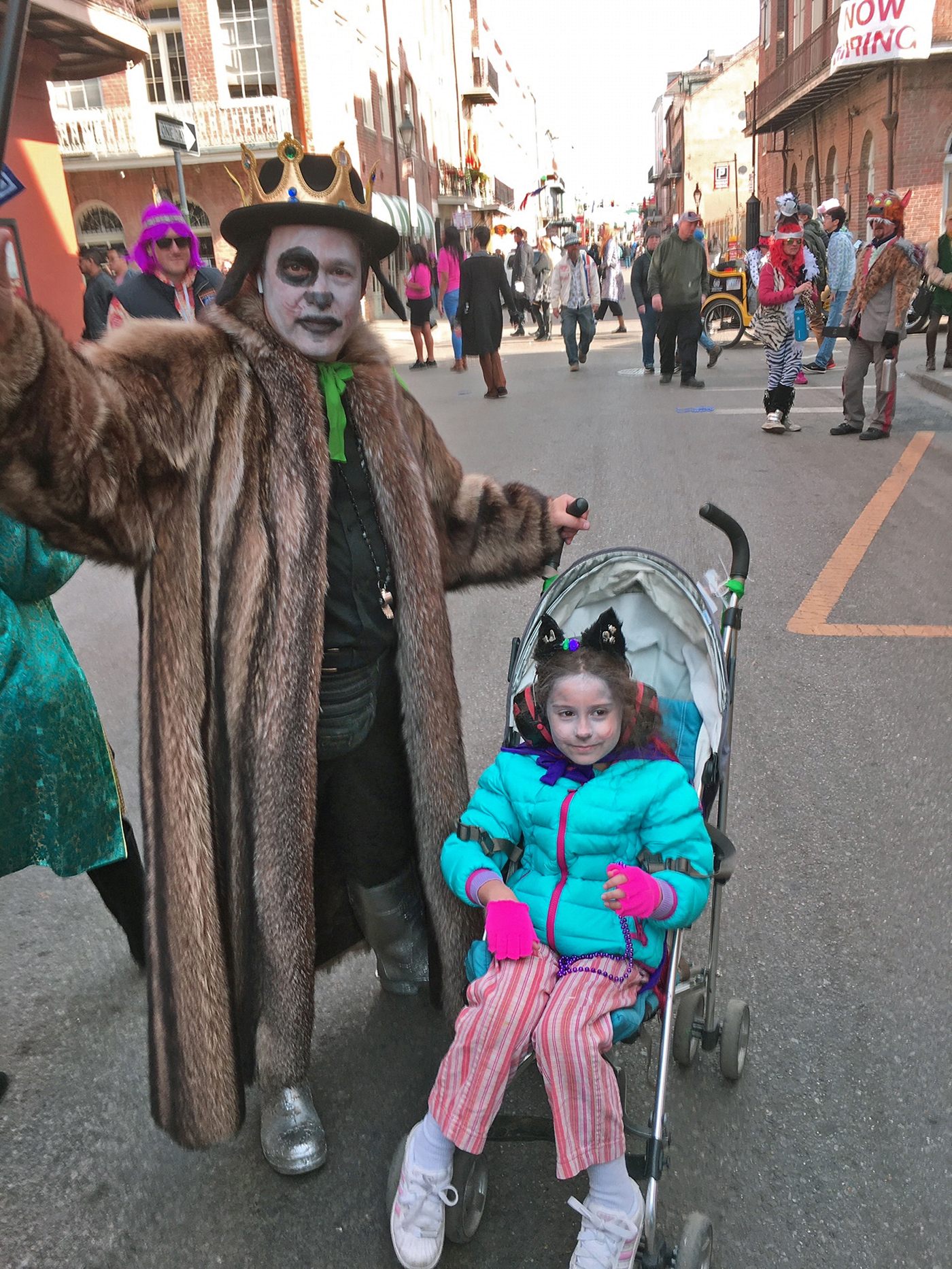
Figure 47 LJ Goldstein und Mia Sarenna, Mardi Gras, New Orleans, 2020. LJ Goldstein Private Collection (New Orleans).
Oddkinships II (Krewe du Jieux, Krewe of Julu)
In New Orleans itself, local practices of relating hint at the potential for new forms of solidarity. In the mid-1980s, the Krewe du Jieux transposed Zulu-style blackface into a means of confronting antisemitic stereotypes. Iconic Zulu Club characters such as the Witch Doctor were reinvented as the Rich Doctor, among others.495 The Krewe du Jieux repurposed old parade floats from the nineteenth-century elite carnival—which also excluded Jews—and redecorated them as “Ortho Ducks Floats” and similar tongue-in-cheek entries. Donning fake noses and Marx Brothers-style glasses, the krewe danced through the streets with bagels on necklaces during both Mardi Gras and Jewish holidays. After Hurricane Katrina, they reappeared as “wandering jieux” for Mardi Gras, calling attention to the lack of state support for New Orleans’s newly homeless. In their performative parody of antisemitism, the point is not simply to deconstruct but to empty out heavy signs to spark new and previously unthinkable modes of relating to another on the street.
Later on, the Krewe of Julu took up the Zulu parade reference.496 These performative transpositions of Zulu parades by often short-lived, loosely organized Mardi Gras clubs—drawing links between antisemitic and racist discrimination—serve as an open invitation to tout-monde in the crowd to puzzle out the tangled references, to momentarily laugh away the politics of Othering and perhaps dance along. Their aterritorial, meandering mode of dragging undermines attempts to lock referentiality in place. Instead, it evokes performative unpredictability as a source of relating. Seen through the lens of how these other gangs cite Zulu, Mardi Gras here becomes a specific kind of contact zone—one that enables scattered, fluid gatherings while simultaneously calling hegemonic societal structures across different forms of discrimination into question.
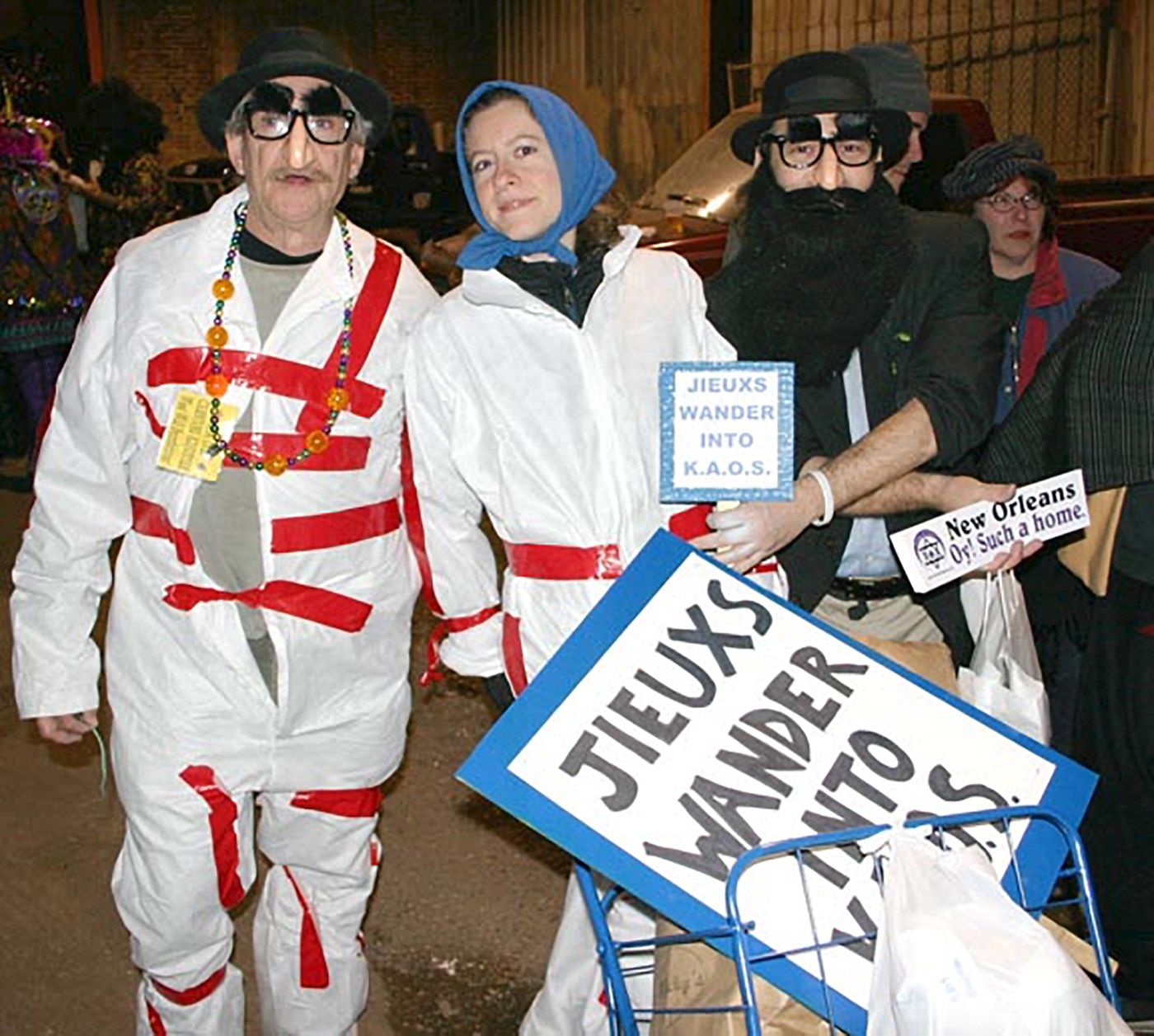
Figure 48: Krewe du Jieux: L. J. Goldstein, Valerie Minerva, White Boy Joe Stern, Mardi Gras 2006, following Hurricane Katrina. L. J. Goldstein Private Collection (New Orleans).
This has produced lasting micropolitical effects. In 2005, when Hurricane Katrina devastated New Orleans and the authorities failed to provide aid in the so-called “city that care forgot,” it was, not least, those who had earlier borrowed from Zulu masking practices who revived the legacy of the mutual aid clubs. Allegedly, the first house rebuilt by those affiliated with the Krewe du Jieux was Ronald Lewis’s House of Dance and Feathers, a private museum in the flooded Ninth Ward way beyond the city center.497 The museum tells the story of the Black Indians—nomadic gangs of Black men in “Amerindian”-style masks—as the story of a creolized Mardi Gras that references anything and everything. Outside the spectacles of the commercial elite, the possibilities of relating fostered by carnival and the networks it produced on the ground gave rise to concrete solidarity, to collective mutual aid across different masking practices and neighborhoods.498 These alternative ways of relating become legible through a shift in focus from representation and iconoclasm to allegorical dirty dragging—an unpredictable, mimetic mode of collective referencing through performative transposition.
“Other” Indigenizations (Black Indians)
“REIGN OF REX ENDS” is the headline on page 7 of the Ash Wednesday issue of the Times Democrat, dated February 25, 1903. Since its creation in 1872, Rex had ruled as King Carnival: the white face of a newly invented Mardi Gras that, after the Civil War defeat, increasingly aimed at mass tourism. The Times Democrat’s coverage of the elite Mardi Gras and its courtly pageantry played into Southern mythmaking—casting Confederates of the Jim Crow era as “men who have gone forth to die for their country.”499 But visually, the politics of this narrative are oddly undercut by the eye-catching elements of the new medium of the time. Because of the images on the page, the title “Reign of Rex Ends” takes on a different resonance. The design of the page frames the text with photos of Mardi Gras from the street. Rex and Comus are nowhere to be seen on this Ash Wednesday page. As such, the version of Mardi Gras the Times Democrat commits to print here seems to unsettle the crowd control orchestrated by the “elevated carnival” of masked white men—at least on page 7. Thus, its headline appears to mark not so much the end of carnival but the fall of high society.
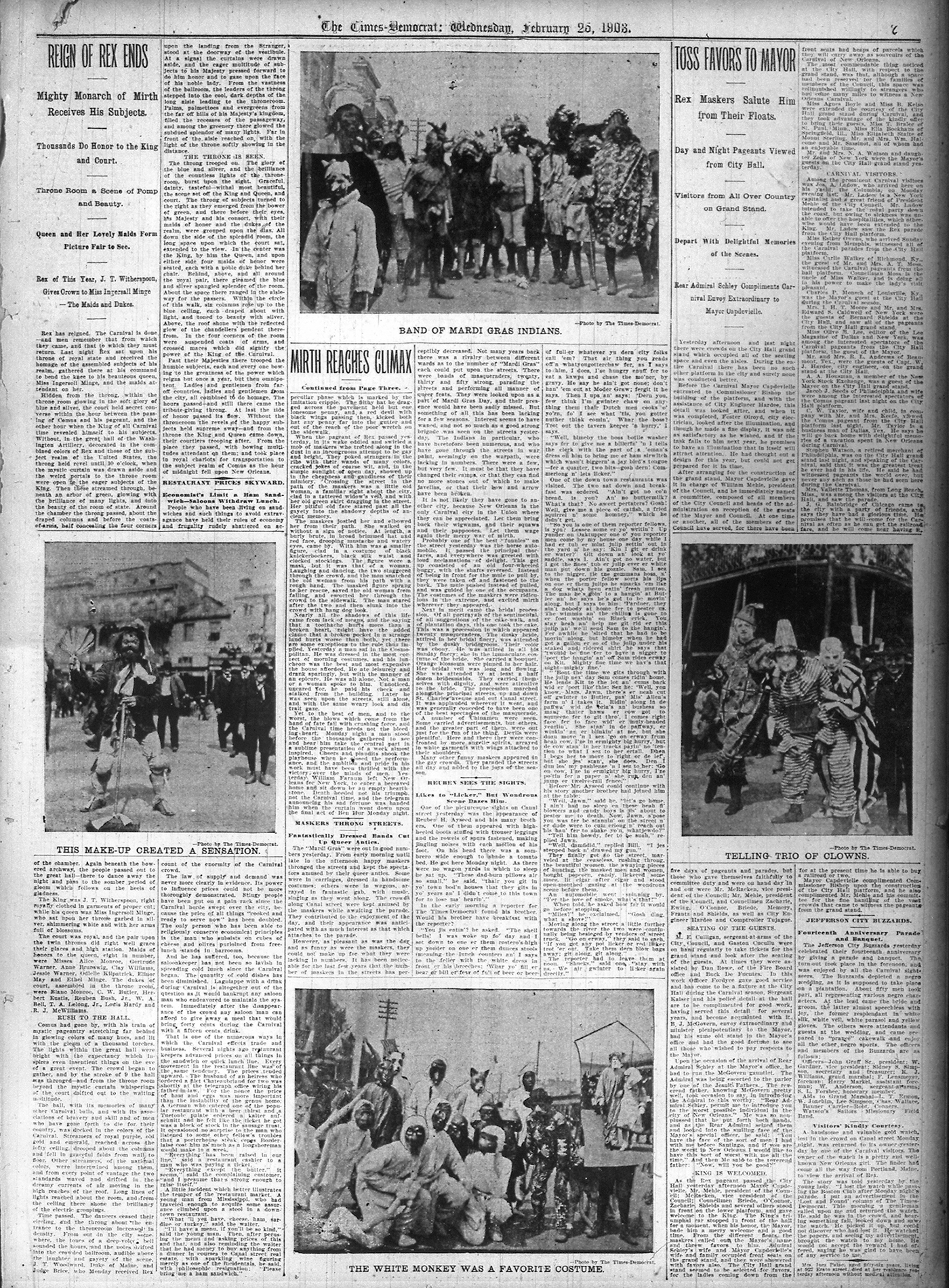
Figure 49: Times Democrat, February 25, 1903: 7. New Orleans Public Library.
And in fact, today, it is the images of roving gangs—those that took shape in the back streets during the Jim Crow era—that have come to mark the visual signature of Mardi Gras. So far, the photographs published by the Times Democrat have usually been considered in isolation; here, I want to treat them as a constellation to explore this other version of modern Mardi Gras and its visual-political legacy. The Times Democrat printed four photographs, each positioned at the center edge of the page: the top one is titled “BAND OF MARDI GRAS INDIANS,” the bottom one reads “THE WHITE MONKEY WAS A FAVORITE COSTUME.” On the left is a bearded man dressed like a pirate; the caption is “THIS MAKE-UP CREATED A SENSATION.” On the right, a “TELLING TRIO OF CLOWNS” appears in harlequin-style costumes—evoking the tradition of whiteface clowns shaped by Joseph Grimaldi in London, an inverted prefiguration of blackface.500 The Times Democrat’s captions, however, do not distinguish between the vertical reference to “Black” Mardi Gras and the horizontal reference to “white” Mardi Gras, either of which might be read into the faces depicted. Instead, the photos seem to gather different figurations of creolized carnival: vertically, gangs seemingly extending beyond the image frame; horizontally, a pirate and three clowns as quasi-transoceanic, nomadic figures. The images present street carnival in multiple forms of appearing in public: as a collective act with no front stage.
At the same time, these images feature an oddly placed punctum, something that subtly disrupts the boundary between onstage and offstage and draws attention to the entanglement of heterogeneous masking practices.501 In the photo “BAND OF MARDI GRAS INDIANS,” a Pierrot-like figure dressed in white with a long-nosed half mask appears tucked into the lower left corner; in the image of the “WHITE MONKEYS” with their stiff dark masks, a couple wearing white face veils and flowing garments is inserted along the right edge. These images within images seem to highlight the lines of flight between the different photographs, weaving a sense of flickering presence and absence into the visual presentation. One could interpret this visual rhetoric as a reflection of the hydra-headed history of “aesthetic commoning” in street carnival502—a history pushed aside by hegemonic spectacles. In this sense, we may read the page title as suggesting that this history might still gain a survie after the so-called reign of Rex.
The text, by contrast, seems to give over the graphic montage to hegemonic laughter, as becomes clear in its reference to the “BAND OF MARDI GRAS INDIANS.” The page picks up a second article from page 3 titled “MIRTH REACHES CLIMAX.” Under the subheading “Maskers Throng Streets. Fantastically Dressed Bands Cut Up Queer Antics,” the Times Democrat carnivalizes its reading of the images while inserting political context. The piece, namely, expresses regret over the supposed disappearance of the “Indians,” thus linking the photo to a well-worn trope that echoes the sociocidal removals east of the Mississippi during the 1830s and to a shift in masking practices:503
From early morning until late in the afternoon happy maskers thronged the streets and kept the spectators amused by their queer antics …
However as pleasant as was the day and as funny as were the maskers, they could not make up for what they were lacking in numbers … The Indians in particular, who have heretofore been numerous, and who have gone through the streets in war paint, seemingly on the warpath, were lacking in numbers. There were a few, but very few. It must be that they have changed their camps, or that they can find no more stones out of which to make javellas, or that their bow and arrow have been broken.
It is not likely that they have gone to another city, because New Orleans is the only Carnival city in the Union where they can be appreciated. Let them bring back their wigwams, and their squaws and their pappooses. Let them wage again their merry war of mirth.504
The Mardi Gras article on the supposed fading of the Indians references forced migration and sociocide, as well as the puritanical antimasking laws in effect elsewhere at the time, and a change in carnival fashion. What comes into view are thus not only the violent political conditions negotiated through the Indian mask, but also their linking to the carnivalesque—suggested visually by the paper-nosed figure inserted like a punctum into the photograph.
The use of stereotypical imagery of Northern Plains Indians, which the Times Democrat photo vaguely recalls, has served many purposes. Such “Amerindian” masks have been deployed for the Boston Tea Party of 1773, where settlers protested British colonial rule, in nineteenth-century antirent protests, and in twentieth century’s shaman-inflected hippie escapism. This “Indianization of misrule,” as Philip J. Deloria puts it in his book Playing Indian, had little to do with the people stereotypically quoted.505 Rather, it can be read as refiguring and exoticizing the “wild men” drawn from European, masculinist masking.506 Deloria interprets the transposition of Old World European rites of rebellion into the US setting as a kind of ongoing minstrelsy:
Rough music groups acted to reinforce traditional, customary social orders, not to play on the edges of revolution. … Old World misrule rituals remained in the customary repertoire of many colonists. Periodically rejuvenated by arriving immigrants, they could be activated and reshaped according to the needs of specific local groups.507
During the era of capitalist industrialization shaped by colonial racism and extractivism, the figure of the Indian was harnessed to signify a new, yet untouched world.508 Much like the early use of blackface in the 1830s to create the tramp persona, the “Indian” responded to a contemporary craving for a premodern, nonurban, and unruly elsewhere. In contrast to Benjamin’s contextualization of new barbarism or Kafka’s literary staging of becoming-Indian—decidedly referencing to minor, nonrepresentational modes of mimesis within then globalized mass culture—this Indianized figure operates instead as a hegemonic tool of what might be called an exoticizing “self-indigenization.”509 As a projection screen, it depends on the absence of actual “Amerindians”: their forced removal, their extermination, and the erasure of the survivors within the segregationist order that took hold also in New Orleans after the Civil War. In this obscene register of complicity, the culturally loaded figure of the “vanishing Indian,” already heavily mythologized by 1900, was dragged along as a kind of colonial spoils, as a mask to represent revolt.
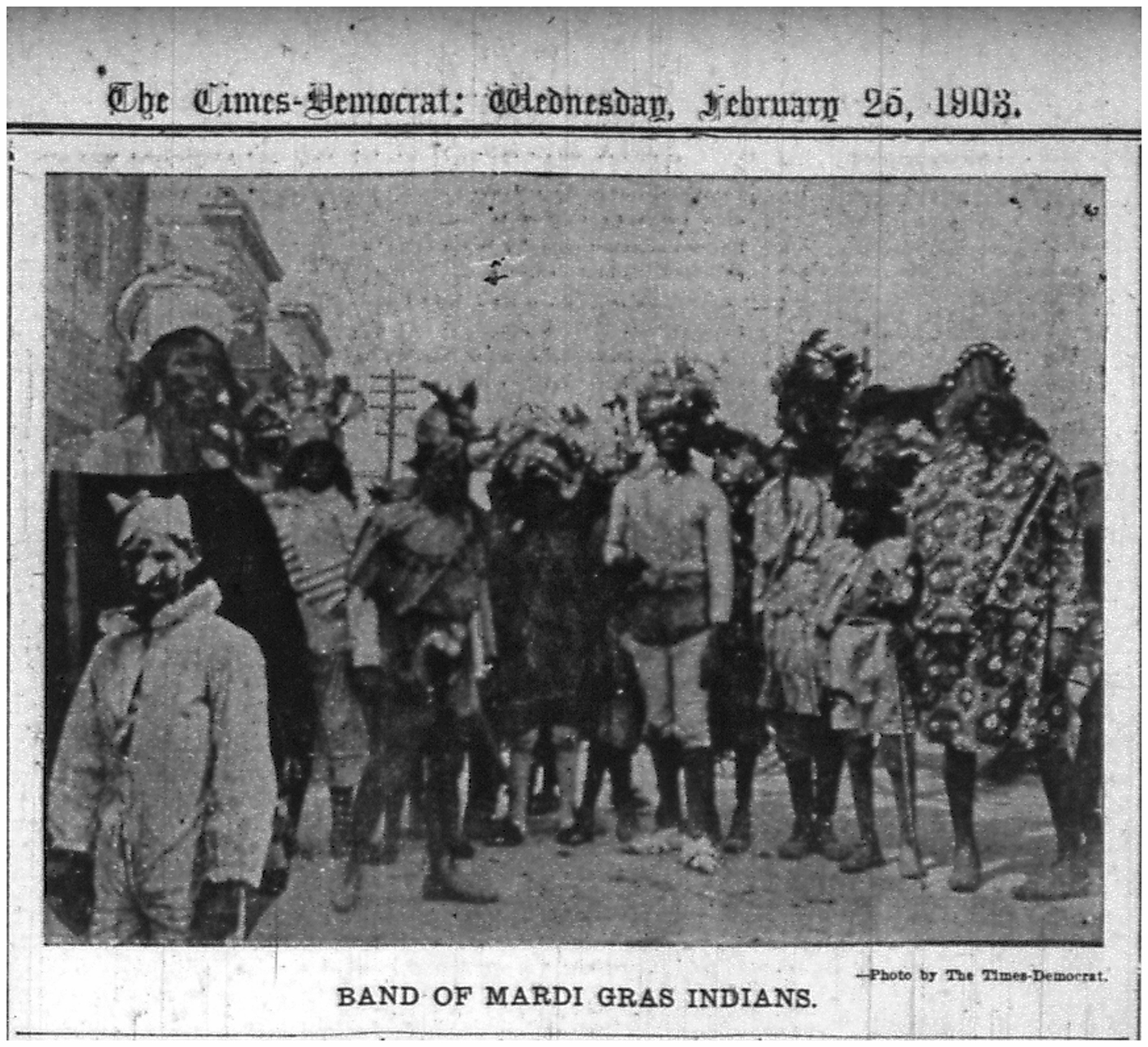
Figure 50 Band of Mardi Gras Indians, Times Democrat, Februar< 25 1903: 7 (detail). New Orleans Public Library.
In the carnival back streets, however, this figure took on an unpredictable afterlife—one that the Times Democrat’s commentary and images subtly suggest, when read against the grain. For those who, after the collapse of Reconstruction, found themselves increasingly shut out, Mardi Gras became a platform for collectively staging the promise of freedom—mediated by performative transpositions. “Playing Indian” in this sense also resonated with the masking practices of those, whose access to civic life was gradually foreclosed by Jim Crow, despite the Union’s victory and slavery’s abolition. For the people of the back streets—cultural cousins to the Atjas of Cape Town’s townships—the creolized gang figure of revolting “Indians” became an allegory of an imagined otherwise, an urban maroon existence.510
And it is precisely in this context that the image of the “BAND OF MARDI GRAS INDIANS” can be read: the earliest known photograph of a masking practice that now plays a signature role for New Orleanian Mardi Gras. Scholars often turn to this press photo from the Times Democrat as a source for tracing the genealogy of the now so-called Black Indians. Instead of focusing on origins, however, I want to ask how their street appearances relate to their specific surrounding, how they are charged discursively, what affectives they schlepp along and how they become confronted with neocolonial appropriation.
As a nomadic, street-carnival gang figure, the Indians—with Kim Vaz-Deville—emerged in modern Mardi Gras after the collapse of Reconstruction, during the Jim Crow era.511 Resisting the carnival’s shift into orderly, parade-style processions, they moved through segregated streets on their own terms, crossing unseen boundaries. To pick up on Elizabeth Maddock Dillon’s work on transatlantic “performative commons,” their creolized citation of the figure of rebellious indigeneity might be read as “a performative intellectual act: one that made the commons thinkable in both aesthetic and political terms.”512
The earliest sources depict the Black Indians as a domain of combative masculinity: in 1895, eight years before the Times Democrat published its Indian photo, “a band of hostile Indians” had clashed with “some white maskers” in a way that led to their names being recorded. “On closer examination the Indians were discovered to be colored men,” the Daily Picayune reported on February 27.513 In their book Jockomo, Shane Lief and John McCusker interpret this as “perhaps the earliest definitive news citation of a group of black men dressed as Indians in New Orleans on Mardi Gras.”514 As they show, the gang included a veteran and sons of former soldiers in the Corps d’Afrique of the Union Army, many of whom were politically active during Reconstruction.515 Pushed out of civic life in the Jim Crow era, stripped of civil rights and office, Black veterans and their descendants turned to carnival. Roaming through New Orleans, they reasserted their presence in the city: “rechanneling their shared experiences as actual warriors into a Carnival identity,” 516 as one reads in Jockomo. In contrast to the Times Democrat’s framing, these were men who had gone forth to fight for their freedom. Mardi Gras became a refuge for reimagining Black militant masculinity. This may faintly recall Kafka’s literary reflection on the yearning to “become an Indian.” But the Black Indians’ appearance in public, like that of Zulu, belonged to a specific political context. It was a context, in which underground forms of self-organization emerged, mutual aid clubs were founded—and rivalries sometimes played out in armed proxy battles for territory.517 Unlike the historical reenactment of the 1811 Slave Revolt described above, this form of nomadic, creolized “becoming-Indian,” ranked in paramilitary order from Big Chief to the front-dancing Spy Boy, aimed to elude hegemonic (mis-)representation. Bypassing the elite carnival, the Black Indians, organized into separate tribes, responded to political defeat by building parallel societies via creolized figurations.518 After the end of Reconstruction, they also gave an acoustic afterlife to the resistance against the plantation system:
Madi cu defio, en dans dey, end dans day
Madi cu defio, en dans dey, end dans day
We are the Indians, Indians, Indians of the nation
The wild, wild creation
We won’t bow down (We won’t bow down)
Down on the ground (On that dirty ground)
Oh how I love to hear him call Indian Red
I’ve got a Big Chief, Big Chief, Big Chief of the Nation
The wild, wild creation
He won’t bow down (We won’t bow down)
Down on the ground (On that dirty ground)
Oh how I love to hear him call Indian Red519
Indian Red has become part of New Orleans’s sonic branding; thanks to recordings, live shows, and the annual Jazz Fest, the song that bookends the marathon rehearsals of the Indian repertoire leading up to Mardi Gras has also entered global pop culture. At the same time, it points to both the local legacy of the maroons—who escaped the plantocracy, retreated into the wilderness, and founded independent communities—and the history of the Black Indians under Jim Crow.520 Today, many tribes have to come with U-Hauls from other neighborhoods to their old, now gentrified stomping grounds, in order to hit the streets. Against the backdrop of gentrification, Indian Red, their song about refusing to bow down, has also acquired a new signification.
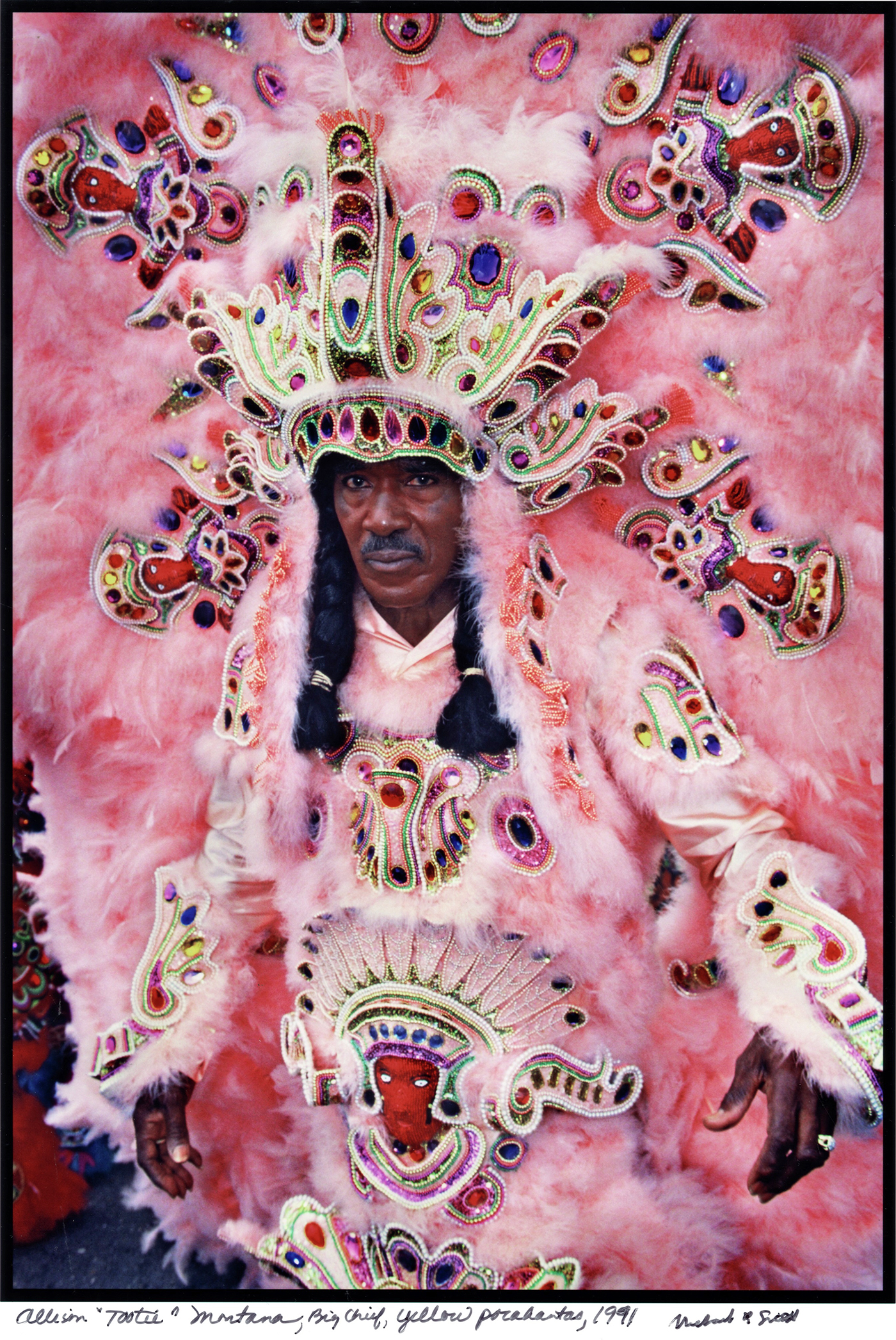
Figure 51: Allison Tootie Montana, Big Chief of the Yellow Pocahontas, 1991. The Michael P. Smith Collection. The Historical New Orleans Collection (THNOC 2007.0103.2.122). Photo: Michael P. Smith.
In contrast to the first historical photograph discussed above, the Black Indians by now appear in dazzling feathered suits adorned with handcrafted beadwork that covers and magnifies their entire bodies—radiating into their surrounding far more spectacular than the courtly pageantry of the elites and at the same time evoking a touch of revue show extravagance. The aesthetic form of their appearances also faintly relates to the transposition of blackface into ornamental glitter masks covering the whole head in Cape Town’s carnival. Painstakingly created over months, the Indian suits highlight the ties of moving bodies to their environments and to other dancers. Suit colors signify tribal relations, suit variations are aligned with rank. Moving like roving gangs that—to outsiders—unpredictably appear and disappear, the Indians share traits with early Zulu formations but have never become part of the “elevated carnival.” For decades, they have faced racist police brutality and gentrification.521 Where Louis Armstrong Park now stands on the flattened ground of Congo Square—the former meeting place for disenfranchised, displaced “Amerindians” and enslaved Africans—and Interstate 10 has sliced through the old back streets since the late 1960s, people’s relations to another are continually renewed in small bars during carnival season: through the creolized movement and sound practices, mock war dances, call and response routines—and most memorably, through Indian Red. On Mardi Gras and on St. Joseph’s Night after Ash Wednesday, the tribes meet in the streets, eventually coming together like modern-day maroons in the “echo-space” beneath I-10.522
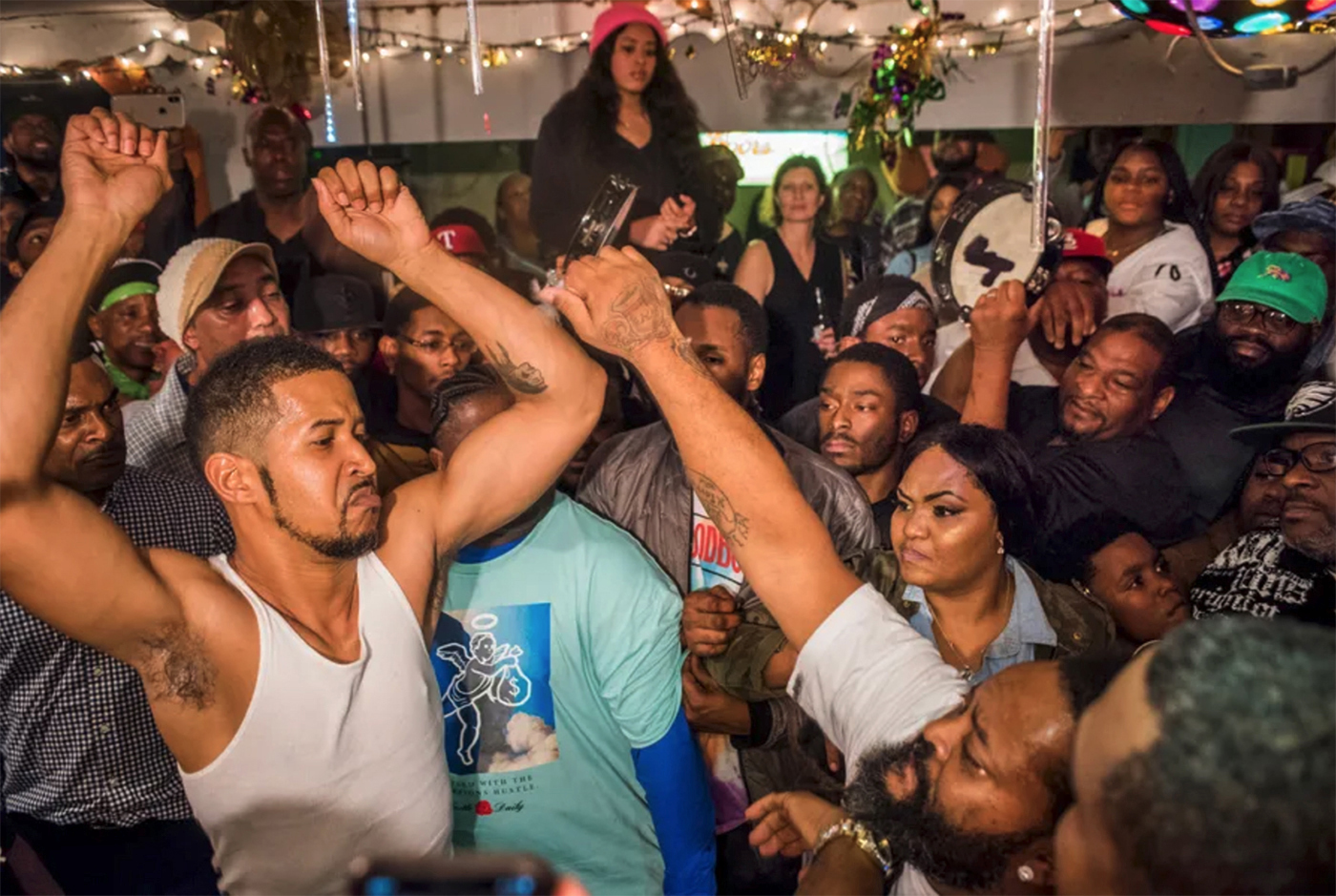
Figure 52: Big Chief Jeremy Stevenson, Monogram Hunters, meeting Big Chief Corey Rayford, Black Feathers. Mardi Gras Practice, First and Last Stop Bar, Tremé, New Orleans, 2019. Photo: Ryan Hodgson Rigsbee.
Various origin stories have been attributed to the New Orleans Indians. These stories reflect changes in dominant cultural narratives. In the 1970s, Michael P. Smith interpreted the emergence of Black Indians during Mardi Gras around 1900 as a pop-cultural citation referring to the promotional parades of the Buffalo Bill Shows, which at the time were making their way through New Orleans. Those same shows may also have left unpredictable traces among the Tresterer of Austria’s Pinzgau region, whose headdresses bear a strikingly “Indian” look. 523 Smith, who assembled the first major photographic archive of the New Orleans’s Indians, also pointed to the post-Civil War deployment of Black Buffalo Soldiers against the “Amerindian” population. In his early texts, he understood the Black Indians’ practices as a kind of mimicry directed at military adversaries within a tangled colonial constellation.524 In doing so, he highlighted how mimesis could be used to negotiate fluid alliances, enmities, and forms of complicity. Maurice M. Martinez, by contrast, stressed the link to maroon communities—where “Amerindians” and African American fugitive slaves lived together—in his 1976 film The Black Indians of New Orleans, which included the 1903 photograph. Martinez saw what some might call Indian drag as an act of political solidarity and of claiming common ancestry. He drew attention to family ties between the enslaved and the disenfranchised dating back before the Jim Crow period, even if the suits seem to cite iconic Plains Indians rather than local tribes.
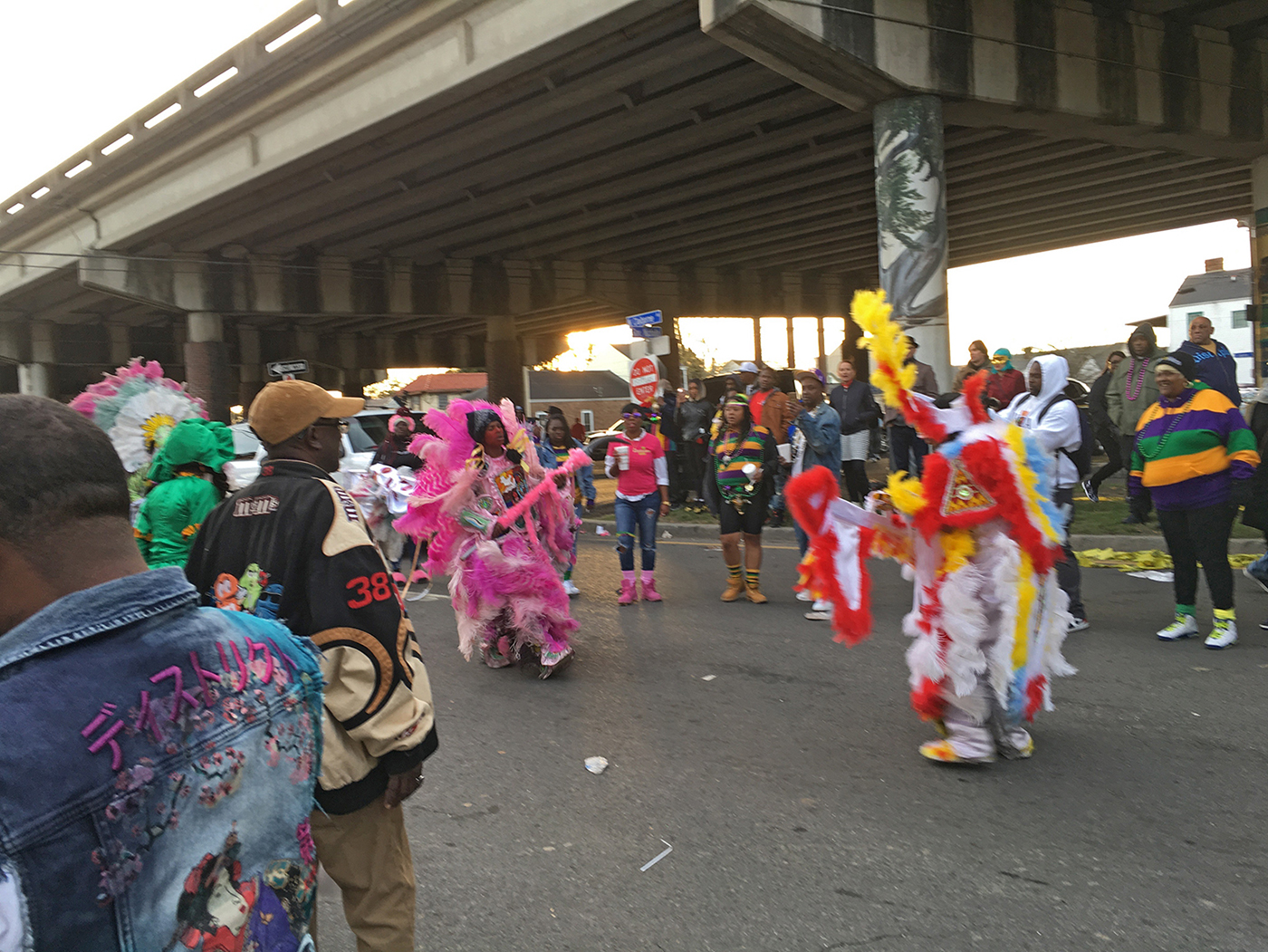
Figure 53 Spy Boys, Meeting of the Tribes, Mardi Gras, Tremé, I-10 Bridge. New Orleans, 2020. Photo: Evelyn Annuß.
As mentioned above, Deloria interprets the indigenous figure in dominant US culture as a transformation of Old World European “wild men” like the Perchten. Yet with regard to the Black Indians, Afrocentric origin stories have become increasingly prominent. Allusions to West African artisanal traditions have played a major role—exemplified by Fi Yi Yi, a Black Indian tribe led by Big Chief Victor Harris until 2024.525 In these Afrocentric references to a cultural “elsewhere,” the personification of indigenous revolt takes on a new role: that of asserting a history of one’s own.526 The obviously invented traditions of supposedly unchanging elite Old Liners such as Comus and their ilk, for their part, might have contributed to genealogical interpellations that may actually obscure entangled histories of mimetic practices and their complex performative transpositions. Yet the desire to trace African roots, especially under the contemporary pressures of modern branding, may itself hold specific risks.
In the wake of neocolonial usages of today’s discourses on decolonization,527 Black Indian masking practices face the threat of being turned into global museum artifacts. While the Indians have at times been accused of cultural appropriation on US social media, prominent European museums are buying up their most spectacular suits at steep prices as showpieces. Some of the most elaborate suits—newly designed each year for Mardi Gras and until now mainly displayed in small community-based collections, such as the Backstreet Cultural Museum founded and curated by Sylvester Francis or Ronald Lewis’s House of Dance and Feathers528—are assuming a new economic function. This shift brings not only increased competition but also changing ascriptions of meaning.
What may initially seem like long-overdue global recognition risks pulling the Indians’ masking practices out of sociopolitical context. And not least due to copyright concerns, it is reshaping relations within the tribes themselves. Their masks have become recast elsewhere, sometimes through a romanticized lens of decolonial resistance, whereas the specific context of these performances
and their repertoire have at times been superseded. Thus, single artifacts like suit patches have become subjected to the exhibition logic of autonomous art.529 The local street carnival, it seems, has entered the international museum circuit, and citations of the figure of revolt have been absorbed into a transcontinental cultural machine. “Mardi Gras Indian performances are no longer restricted to the peripheral areas of New Orleans and have moved to the world of museums and jazz festival performances,” Aurélie Godet observed early on, in 2017.530 The authenticity ascribed to the Indians also tends to obscure both their new commercial value and their new role as the “real back stage” of contemporary city marketing. Further, with their arrival in European museums, the Indians have become entangled in decolonial efforts shaped by the image problems of ivory tower institutions who must deal with their looted artifacts—efforts that, paradoxically, might do more to obscure than clarify the local agency of the Indians and their street-based meetings of the tribes.
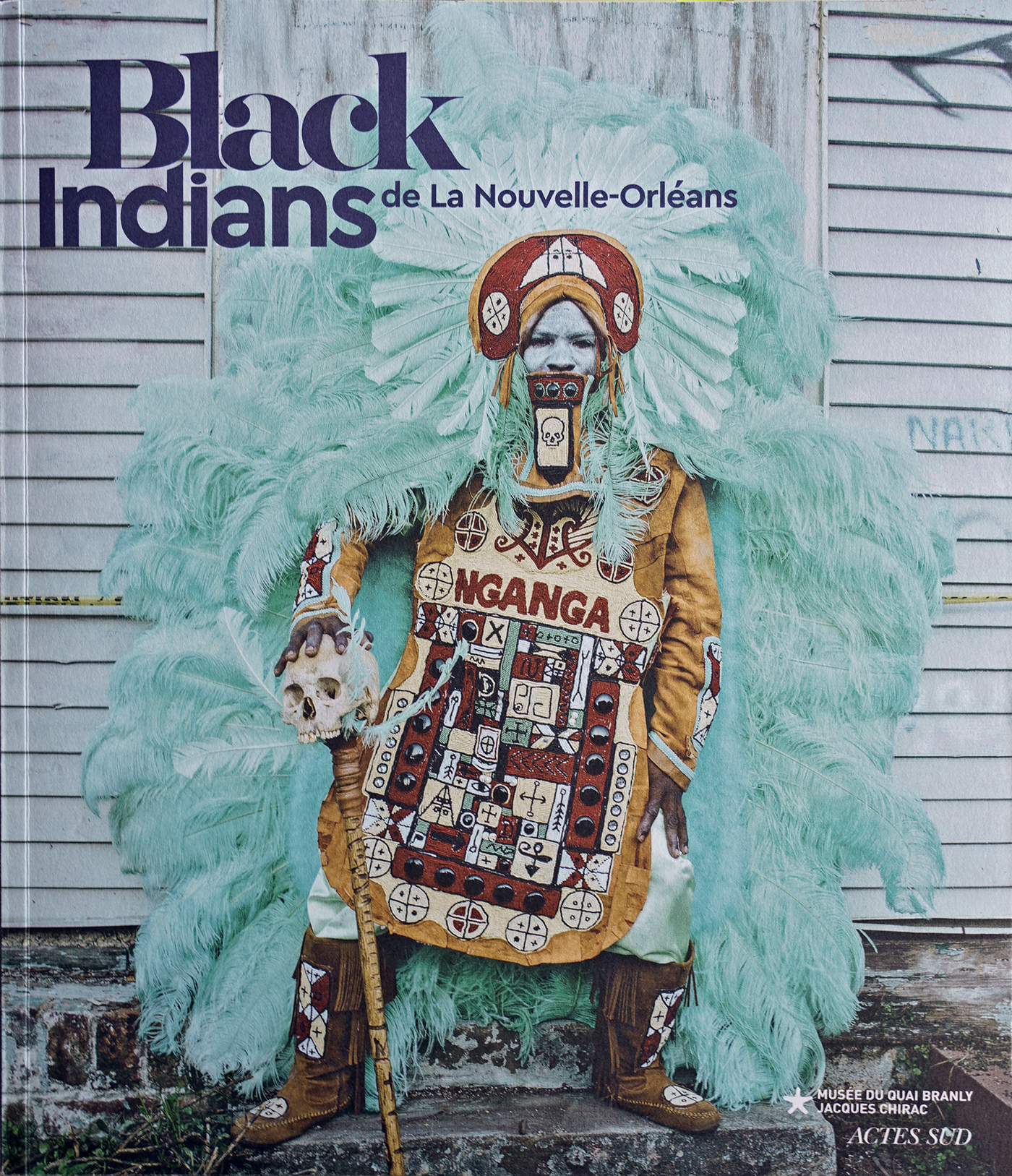
Figure 54 Catalog cover of Black Indians de la Nouvelle-Orléans, Musée du Quai Branly — Jacques Chirac, Paris, 2022.
Black Indians de la Nouvelle-Orléans was the title of a meticulously curated 2022 exhibition at the Musée du quai Branly—Jacques Chirac, France’s official ethnological museum. In downtown Paris, huge billboards featured a lone nameless Indian sitting wide-legged on the steps of a typical New Orleans-style wooden house.531 Instead of people roving the streets, the advertisement also serving as the exhibition catalog’s cover showed a single body frozen in time. What is lost in this emblematic visual staging is a sense of collective movement. The door behind the figure is apparently sealed with a white-painted board, echoing the color palette of the feathered costume and the pale-painted face staring into the camera. The mouth is hidden behind a half-mask, as if to illustrate the silence of the figure. The face is nearly eclipsed by the turquoise feathers and the richly beaded suit in brown hues, which brings together various signs with untethered meanings. The catalog cover makes it clear that what we are looking at is a curated ensemble, designed first and foremost to evoke familiar associations with New Orleans. One hand rests on a skull mounted on a wooden staff, invoking voodoo tropes. The photograph, enigmatically titled Mystic Medicine Man, “Love Medicine” by Danielle C. Miles, might also signal a claim to art photography curated for a globalized market. This kind of framing paradigmatically reflects the current shift in how Mardi Gras is received: it subjects the Indians to the logic of today’s museum world.
In Paris, the exhibition acquired a distinct political function in light of current calls for decolonization and France’s rapid loss of influence as a former colonial power in today’s Africa—a role that has rather a tangential connection to New Orleans and its French colonial past.532
While the Musée du quai Branly placed the Indians within the broader context of the Middle Passage, Klan terror, and racist minstrelsy,533 it largely avoided addressing the concrete shifts in political and social agency—whether during the Jim Crow era or in response to today’s gentrification. Instead, a focus on West African visual traditions allowed the museum to showcase its own artifacts under a decolonial banner, both in the exhibition and the accompanying conference. In the process, the museum’s collections were subtly rebranded through a framing critical of colonialism. To what extent does this interpretive framing cater to the contemporary branding strategies of museums in former empires? And to what extent do such readings obscure creolized cultural practices whose power has long lain in their rejection of dominant genealogical narratives? That said, would it really be preferable not to hold an exhibition like Black Indians de la Nouvelle-Orléans—and risk keeping the Indians’ spectacular artistry from view outside of New Orleans?
In any case, the exhibition’s curatorial concept largely leaves out entanglements with early Playing Indian pop culture and today’s creolized forms of resistance, along with questions about how segregation policies may have gained an afterlife in current gentrification and the concomitant displacement of the small neighborhood bars from which the Indians emerge. These kinds of class-specific questions of location and dislocation seem ill-suited to the terms of current European decolonial discourse and the local myth-making around indigenous knowledge, which has shaped figurations of “the Indian” since the nineteenth century. In this context, the otherwise impressive and carefully researched exhibition also gestures toward invocations of African indigeneity—maybe also an ethnologizing contemporary transposition of nineteenth-century European Indianism—and toward the epistemology of Eurocentric genealogical thinking. That may be the price for gaining international recognition for masking practices that have long been marginalized.534 As it seems today, however, the figure of “the Indian” has become projected onto Black bodies in a specific way—perhaps also as a counterweight to the media erasure of the mass deaths of nameless migrants at the borders of the EU that uncannily accompanies the Blaxploitation-coined popularity of Black Lives Matter and related imagery when mobilized within Europe.
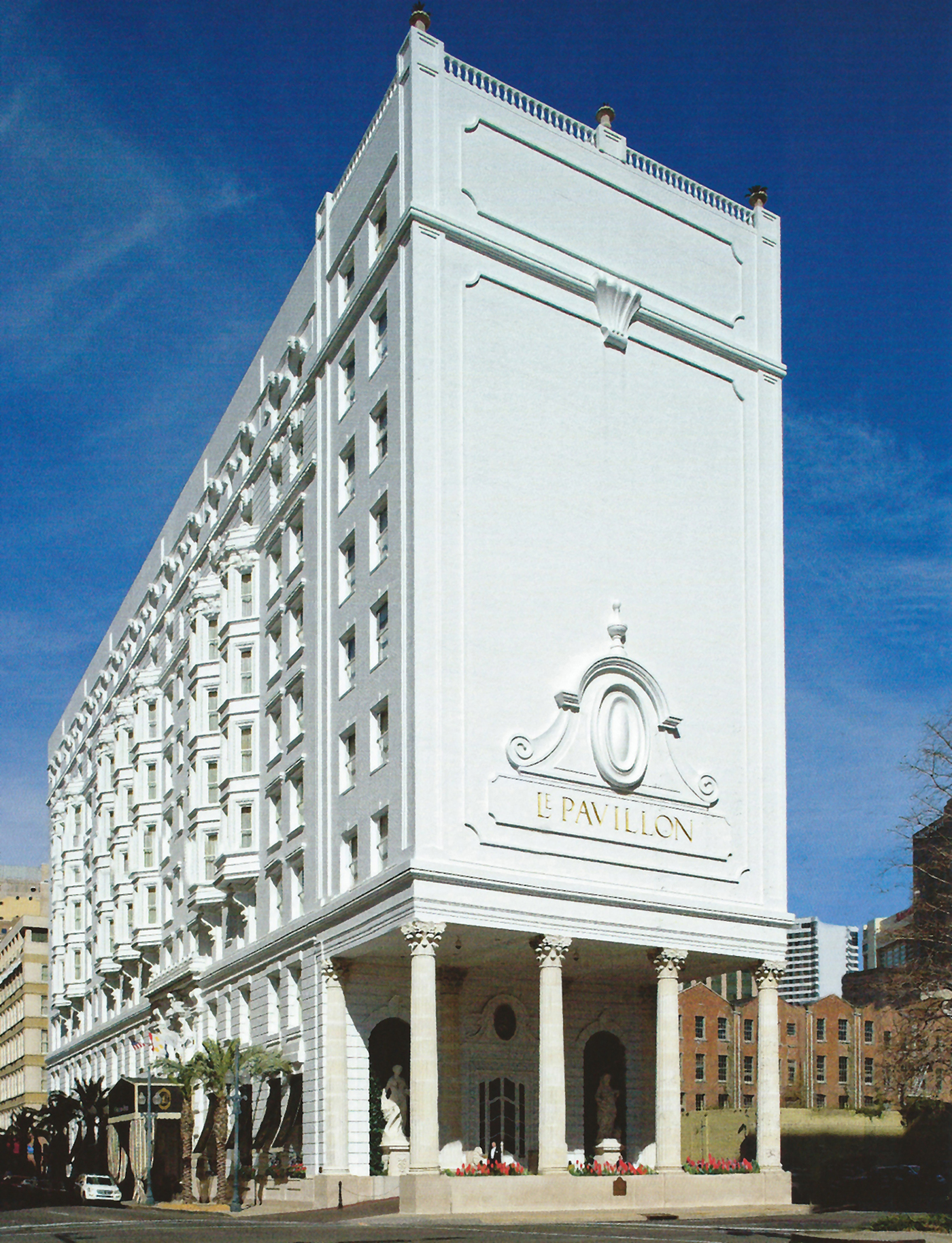
Figure 55 Le Pavillon Hotel, Poydras Street, New Orleans, Postkarte. © Le Pavillon Hotel.
What is missing in the specifically situated museal reception of the Black Indians, then, is not just the question of how a figure of revolt might be politically utilized—or, how the figure of the Indian has been reinvented as a signifier of urban, creolized maroons, for example. This omission also means that concrete references to labor or material conditions cannot be made legible.
While the Paris catalog cover foregrounds beaded imagery, the so-called downtown suits are often made of three-dimensional elements resembling ornate plasterwork or stucco. These full-body ornamental suits can be read as specifically situated materializations. They also gesture to contexts of labor, and that is, to the social environment of the Indians—in short, to the class relations that have long shaped their practices. This becomes visible in the work of Allison “Tootie” Montana: Indian icon, Big Chief of the Yellow Pocahontas, and by profession a plasterer. In 2005, shortly before Hurricane Katrina, Montana died of a heart attack at City Hall while protesting police violence against the Indians. He is remembered as transforming intertribal street clashes over territorial rights into competitions for the best suit design—and for introducing three-dimensional elements into suit-making.535 The stucco facade or ceiling work at the restaurant of the Le Pavillon Hotel on Poydras Street in today’s central business district, near the former segregated entertainment quarters of New Orleans, was modeled by Montana. It indicates a connection between plastering and sewing.536 Looking at Montana’s work, material relations become legible: a responsiveness to one’s surroundings, bound up with skilled labor. Transposed into Indian practices, these relations and their situatedness may remain largely obscured in Afrocentric genealogical narratives. To understand where the Indians come from, one might then rather need to look to the vanishing back street bars—and with them, to the specific social and labor conditions that shaped respective practices.
Yet even beyond this local New Orleanian context, new and still unforeseeable lines of flight may emerge. The African “roots” of the Indians themselves can be read as a rhizomatic blend of transcontinental entanglements—also further complicating my earlier view of creolizing. If one traces Indianized masking practices on the African continent before the Middle Passage—that is, already in the sixteenth and seventeenth centuries—this paradoxically complicates later interpretations. It undermines a unilinear retrospective Africanization of the Indian figure, both in New Orleanian local historiography as well as the Paris exhibition. This also helps challenge the idea that the world only globalized through the plantation underbelly of “primitive” accumulation.
In his 2017 study From the Kingdom of Kongo to Congo Square: Kongo Dances and the Origins of the Mardi Gras Indians, Jeroen Dewulf unsettles romantic notions of Africa as a “virgin motherland” before the transcontinental slave trade.537 Researching precreolized mimetic practices in Africa, he teases out the layered history of European expansion. Dewulf shows how Iberian-Catholic theatrical traditions were adopted by Central African brotherhoods beginning in the early seventeenth century. These brotherhoods emerged during the Christianization promoted by Alfonso I, king of the Kingdom of Kongo—predating the Middle Passage. Dewulf traces how their performances repurposed and subverted colonial autos sacramentales—Jesuit morality plays that dramatized battles between Christians and Moors, later recast with “Amerindian” or African figures.538 He argues that these danced, fraternal masking practices may have provided a cultural space of resonance for the later creolized reception of the Indian figure in the US South, introduced to the area through early maroons who escaped from Spanish “exploration” ships even before New Orleans was founded—or, through the afterlife of these practices in Caribbean carnival.539 The performative transposition of this African-Iberian substrate, he argues, was a response to the post-Reconstruction period. Mardi Gras, with its relative freedoms, offered space for forming mutual aid organizations. However, long before the Old Liner krewes and the carnival of anglophone elites, Dewulf maintains, these forms had already been carried on through Catholic Black brotherhoods on the African continent, that is, before the establishment of transatlantic slave trade routes.540 Around 1900 at the latest, he then concludes, they were reactivated under new social conditions and translated into the carnival setting in New Orleans.
“Time and again,” he writes in Black Brotherhoods, “scholars narrowly reduced anti-colonial resistance to the attachment to pre-colonial traditions and failed to understand that, in many cases, the appropriation and reinvention of the idiom of the colonizer was a much more effective strategy in dealing with colonial aggression.”541 Indeed, on second glance, the suits in the earliest known Mardi Gras photograph of the Indians in the Times Democrat seem to remotely allude to Orientalist aesthetics. Along with the gendered dynamics of the Indians’ masking practices, this may lend support to Dewulf’s brotherhood thesis. Highlighting alternative flight lines of mimetic amalgamations, Dewulf thus challenges simplified understandings of creolization that begin with the idea of untouched precolonial territories in Africa and Europe. What emerges instead is a sense that transcontinental contacts and entanglements were never solely shaped by European colonial hegemony. Accordingly, the creolized afterlife of what may have been a Central African “appropriation” of a European, male-coded theatrical genre also pushes back against the culturalist-retrotopian narratives of decolonization mobilized not least in the global marketing of the Indians. What in Paris seemed to be hard-won recognition of the Indians’ masking practices—practices that were indeed policed and suppressed for over a century—may undermine their political potential: to forge multidirectional transoceanic modes of relating, defying the ongoing dirtiness of hegemonic societal conditions.
As Saidiya Hartman underscores in Lose Your Mother, the descendants of the Middle Passage did not come from kings and queens of some mythic ancestral continent.542 They came instead from African subalterns—those brutally captured during European expansion, sold, marched across West Africa, locked in dungeons, and shipped off into the plantation system. As Sylvia Wynter also shows, people had already been marked as “without lineage” in the Kongolese caste system, consigned to enslavement, and later ruthlessly exploited by a global bourgeoisie. In her talk with David Scott, she explains: “The opposite to slave is not only being free: the opposite to slave is also belonging to a lineage.”543 And in her essay “1492” she states:
In other words, by making conceptualizable the representation, in the earlier place of a line of noble hereditary descent, of a bioevolutionarily selected line of eugenic hereditary descent, the symbolic construct of “race” mapped onto the color line has served to enact a new status criterion of eugenicity on whose basis the global bourgeoisie legitimates its ostensibly bioevolutionarily selected dominance—as the alleged global bearers of a transnational and transracial line of eugenic hereditary descent—over the global nonmiddle (or “working”) classes, with its extreme Other being that of the “jobless” and “homeless” underclass, who have been supposedly discarded by reason of their genetic defectivity by the Malthusian “iron laws of nature.”544
Even so, the creolized figure of Indian-style revolt perhaps gives rightful place to a memory of the underclass that is more multidirectional than linear. The Black Indians, at any rate, evoke both unpredictable transoceanic relations and the sociocidal legacy of colonial extractivism cutting through both African and Indian reconfigurations. A reading of Mardi Gras that underscores multidirectional memory, moreover, does latently inform the parts of the Paris exhibition curated by Steve Bourget and his team that bring gender into play.545
Thanks to the work of cocurator Kim Vaz-Deville, references to minor feminine figures, who have only recently started gaining broader attention, accompany the exhibition of Black Indian suits: to wit, the Baby Dolls. Loosely associated with the Indians, these nomadic Mardi Gras figures do not form a single tribe, nor do they appear as Queens accompanying a Big Chief. Rather, they disrupt notions of patrilineal African heritage and heroism. Even their suits on display in Paris as sculptural costumes suggest queer-feminist, cross-cutting modes of performative transpositions. In doing so, they challenge a regime of ethnologizing validation that has dominated Europe since the nineteenth century and continues to shape its museum culture—one that the Black Indians may be encountering in the wake of their globalized recognition. It is through the Baby Dolls, after all, that creolized masking practices become legible not as “ethnic drag,” but as a dirty dragging from below—something well worth recalling in view of the current right-wing carnival.
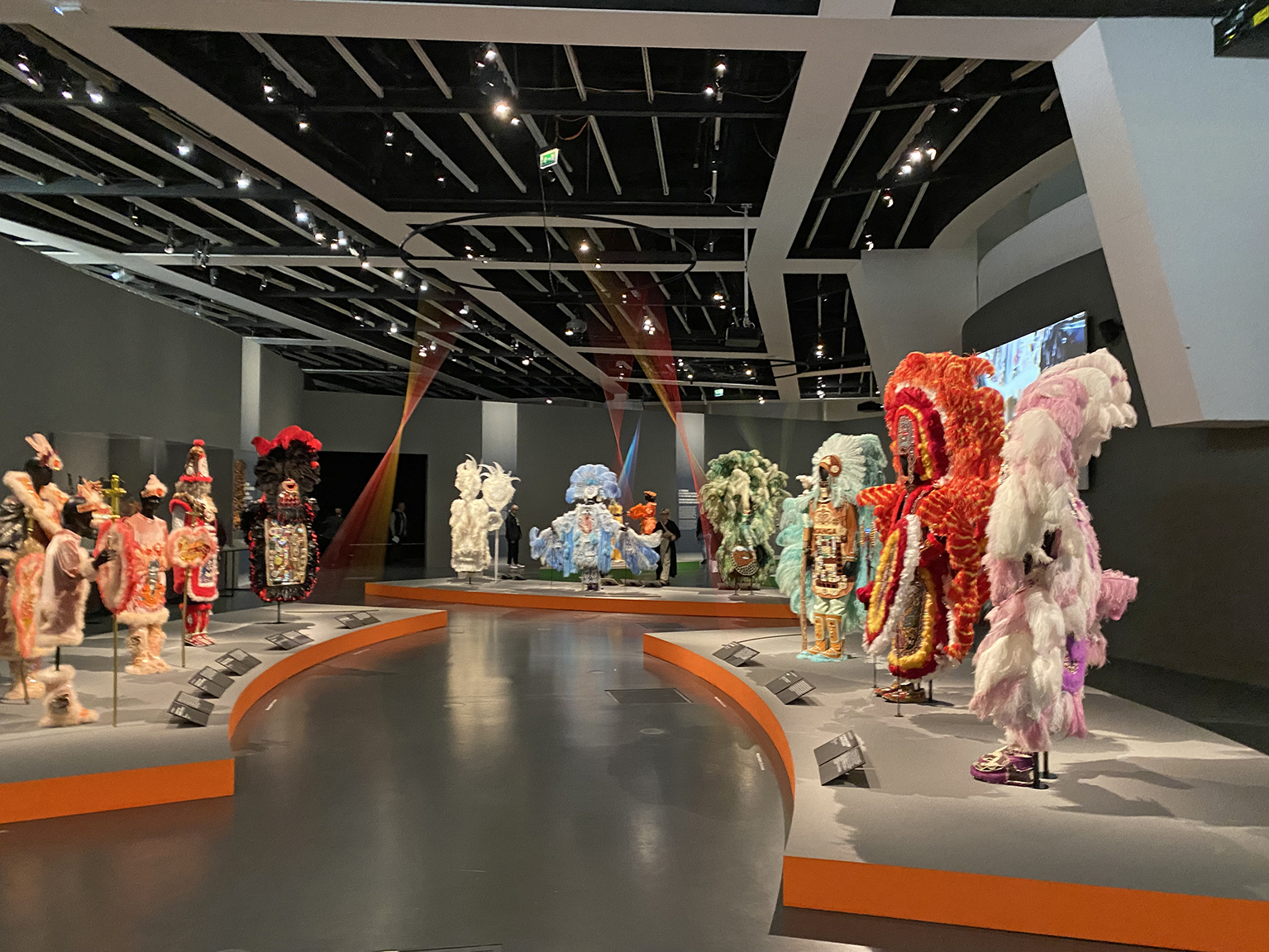
Figure 56: Exhibition Black Indians de la Nouvelle-Orléans, Musée du quai Branly — Jacques Chirac, Paris, 2022. Foto: Evelyn Annuß.
Performing Otherwise (Baby Dolls)
By hearsay, they appear as a feminized, queer transfiguration of mob revolt: a kind of many-headed hydra of the back streets. As infamous chorines, they bear no individual names, no marks of rank that would slot them into a hierarchy.546 Their backstories live almost entirely in the realm of oral fabulation. In local carnival historiography, these “worldly women” were overlooked long after their first appearances and were barely recognized outside their immediate environment,547 especially since they appeared “only” by dancing—as loose ambient figures. At first, they were not pictured at all; yet as Vaz-Deville notes, they embodied “one of the first women’s street masking practices in the United States.”548 As the Americanized post-Reconstruction elite carnival evolved alongside increasing segregation, masked women were associated with prostitution.549 For these chorines, white elite parade floats and balls were unquestionably off limits. Branded as dirty, they were not deemed photographable by the new media of the time, mostly occupied with “elevated” spectacles. Still from the back streets, they were sung into being as figurations of sexualized desire in the era’s ragtime—and linger, specter-like, in today’s sound archives.550 Though later temporarily forgotten, they belonged to the nomadic gangs of high society’s castoffs who, during Jim Crow apartheid, showed up outside official parades—interwoven with the emergence of mutual aid and pleasure clubs.
Unlike King Zulu with his procession or the Indian Big Chiefs and their entourage, they enter the scene as “queer” escorts of a creolized spatial claiming: not as bystanders,551 but as moving, unruly bodies—inviting “tout-monde,” as Glissant would call the people in the streets, to dance along. They appear as a diffuse choral assembly, opening up space for others—for potentially unbounded gatherings. As a kind of supporting crowd, they move on their own terms. They do not invoke heroic gestures. Rather, they provide a collective act of care—celebrating the streets as sites of possible engagement. And it is here, in the streets, where their resisting potential is situated.
Their performance shifts between giving space and briefly dancing themselves out of their surrounding in solo bursts—translating their loose, collective assembly into a repertoire of unique interplays and counterplays of bodily movements. They show up and vanish unpredictably—echoing the moves of all kinds of beings in syncopated jumps, reaching beyond the people immediately present. When they touch the street while dancing, they underscore their embeddedness within this open environment. These days, they also perform for the phone cameras of the audiences they pass by, bridging the here-and-now with an elsewhere. Well beyond the local streets, they evoke the joy of spontaneous gatherings.
Dancing, they appear as minor figures who give rise to collective constellations—fluid, open, and ever-shifting. In doing so, they counteract the transposition of the proscenium stage into street carnival by the so-called Old Liner krewes of high society. It is said, that their name once directly referred to their jobs as sex workers and was later reclaimed by middle-class women as a sign of feminist empowerment.552 As the tale goes, the Baby Dolls were first called so by their pimps in the 1910s and came out of Black Storyville, the segregated red-light district once known as Coon Town, just steps from what is now New Orleans’s central business district, near Le Pavillon Hotel and Lee Circle.553 Baby Dolls is not just a cutesy nickname; it marks the specific labor conditions of women who, after abolition, had nothing but their bodies to sell—some of whom were hyperexploited like living dolls in brothels known as circuses.554
“If they were not making a scene,” Kim Vaz writes of their carnival mode, “Baby Dolls were where the scene was happening.”555 The moving spatiality of the Baby Dolls lacks any frame, any fixed vanishing point. That they have become dance icons of New Orleans Mardi Gras—and are now getting scholarly attention thanks to Vaz’s work—signals a renewed political interest in what Saidiya Hartman elsewhere names wayward lives: “At the turn of the twentieth century, young black women were in open rebellion. They struggled to create autonomous and beautiful lives, to escape the new forms of servitude awaiting them, and to live as if they were free.”556
Branded under Jim Crow as both the “lowest of the low” and as marketable commodities, the Baby Dolls evoked the lingering echo of sexualized violence and its associated forms of blaxploitative visibilization in a city that was once the epicenter of the Southern human trade until the fall of the plantation system.557 Dancing collectively in the streets, however, they also staged a kind of anarchic street performance—an enactment of potential ungovernability and shared agency. They emerged as both companion figures and counterpoints to subaltern masculinity, in the very moment that gender relations had begun to shift. Their acts of giving space can be seen as loose forms of another kind of mutual aid: a performative promise in creolized drag not to be governed as under Jim Crow.558
Without referring to the Baby Dolls themselves, Hartman describes such collective modes of performing as “the practice of the social otherwise, the insurgent ground that enables new possibilities and new vocabularies.”559 She places a “choreography of the possible … which was headless and spilling out in all directions,”560 in the neglected zones known as “the ward”—“urban commons where the poor assemble”:561 spaces where the longing for another world are performed in “wayward practices.”562 From this perspective, the nomadic, choral apparitions of the New Orleans Baby Dolls evoke a queer episteme of nongenealogical, transoceanic, ostensibly minor—dirty—mimesis, carrying a potential for a decidedly political desire.
Doing justice to the Baby Dolls may mean not retroactively individualizing them, that is, not countering their role as collective minor figures. Therefore, this is not about giving each one a personal backstory or asingular voice, in a well-established fashion of counterhistory, nor about making them into vessels of identification through fabulated oral history. Rather, this is to bring into view the “environmental politicality” of their street appearances—opening up space to gather and exposing a collective capacity for joyful relationality. As a loose and moving chorus, the Baby Dolls help to imagine and experience entanglements that resist the violence of segregationism, of Jim Crow apartheid and its afterlife—still blocking other societal ways of relating.
In the aesthetic form their public appearance takes, they raise the question of which specific modes of production create existing separations in the first place. As indicated by their name and outfits, the Baby Dolls’ apparitions refer to a context of gendered human commodification shaped by the plantation system and furthered by Jim Crow.563 In a city where the sex industry, tied to carnival, became a tourist attraction, they deliberately and ostentatiously drag along particular historical articulations of human commodification. Their outfits might read as stylized exaggerations of those of sex workers from past eras. Thus, they reflect the gender politics implied in what Mbembe, pointing to the production of precarious lives and “dirty” labor, calls the “Black condition.”564 In this way, they expose the gendered aftereffects of colonial extractivism and racial-capitalist hyperexploitation, that is, the subjection of people to become bare labor.565 Through their carnivalesque appearance, they confront the fetish character ascribed to Black bodies under the American plantation system and its aftereffects. Staging themselves collectively as unruly bodies, however, they may hint to sensing a different life for tout-monde.
The Baby Dolls were first reported to appear at New Orleans’s Mardi Gras around 1912.566 Supposedly armed, dressed in ultrashort satin skirts, wearing ruffled old-style baby bonnets and carrying baby bottles filled with alcohol, they showed up in gangs during Mardi Gras—throwing money around and hiring jazz bands, defiantly challenging their living conditions.567 At a time when it was seen as unseemly for white women to mask, the Baby Dolls turned the back streets of New Orleans into stages for playful “impromptu street corner competitions” (Vaz) and open dance floors. Some of their dance moves—called drags—made visible the act of schlepping along. And with their satin suits—which also embraced older, as well as fuller, bodies—with their Victorian-style bonnets, they appeared as counterfigures to fantasies of feminine purity that thrived under industrial capitalism, middle-class family values, and racist segregation. As dancing chorines, they embodied a challenge to what Sylvia Wynter elsewhere sharply terms “lineage-clannic identity.”568 The Baby Dolls responded to the subaltern condition of attributed kinlessness with a danced enactment of relations beyond genealogy.
They thus outshined the “elevated carnival” and the patriarchal white ball culture of New Orleans, where face masks are still reserved for men and so-called debutantes appear as decorative stage props for elderly gentlemen. Whereas the balls of New Orleans’s elite to this day promote marriageable young women in service to their families and as figurations of white, supposedly fragile virginity tinged with plantation nostalgia, the Baby Dolls were already defying such stagings of femininity in the 1910s. By invoking the flipside of the sanitized Southern mythology—actual conditions of extreme, often sexualized exploitation—they schlepp along a concrete sense of both the production of bare labor and the necessity of collective agency. Through their repertoire, they reject devaluation and open up the possibility of something beyond the bioeconomic conceptualization of the human. From the 1930s, with the emergence of a new consumer culture and the Jazz Age, images of the Baby Dolls began to circulate. Eventually, they gained broader public exposure through tourism magazines and New Deal social reform projects.569 In 1948, Holiday Magazine printed one of several Baby Doll photos taken by Bradley Smith during Mardi Gras.570 These photos emphasize gender fluidity and gang mobility. But to be pictured also meant serving as a projection screen for desires of dirtiness produced by puritanical norms under the carnivalesque state of exception—and it meant becoming a target of hygiene regulations, ideologies of social improvement, and bureaucratic control. With growing integration, rising standards of respectability, and intensified gentrification, the Baby Dolls then gradually vanished from sight. Supposedly, they first disappeared when the I-10 was built through the back streets of New Orleans, turning those neighborhoods into concrete wastelands and suburban access roads under the banner of modern urban planning. The disappearance of the Baby Dolls recalls how parts of the former Back o’ Town might have begun to lose their role as a gathering place—and perhaps also the cost that came with integrating into the suburbs elsewhere. It indicates the dominance of new infrastructures, of socially engineered environmental change and its price.571
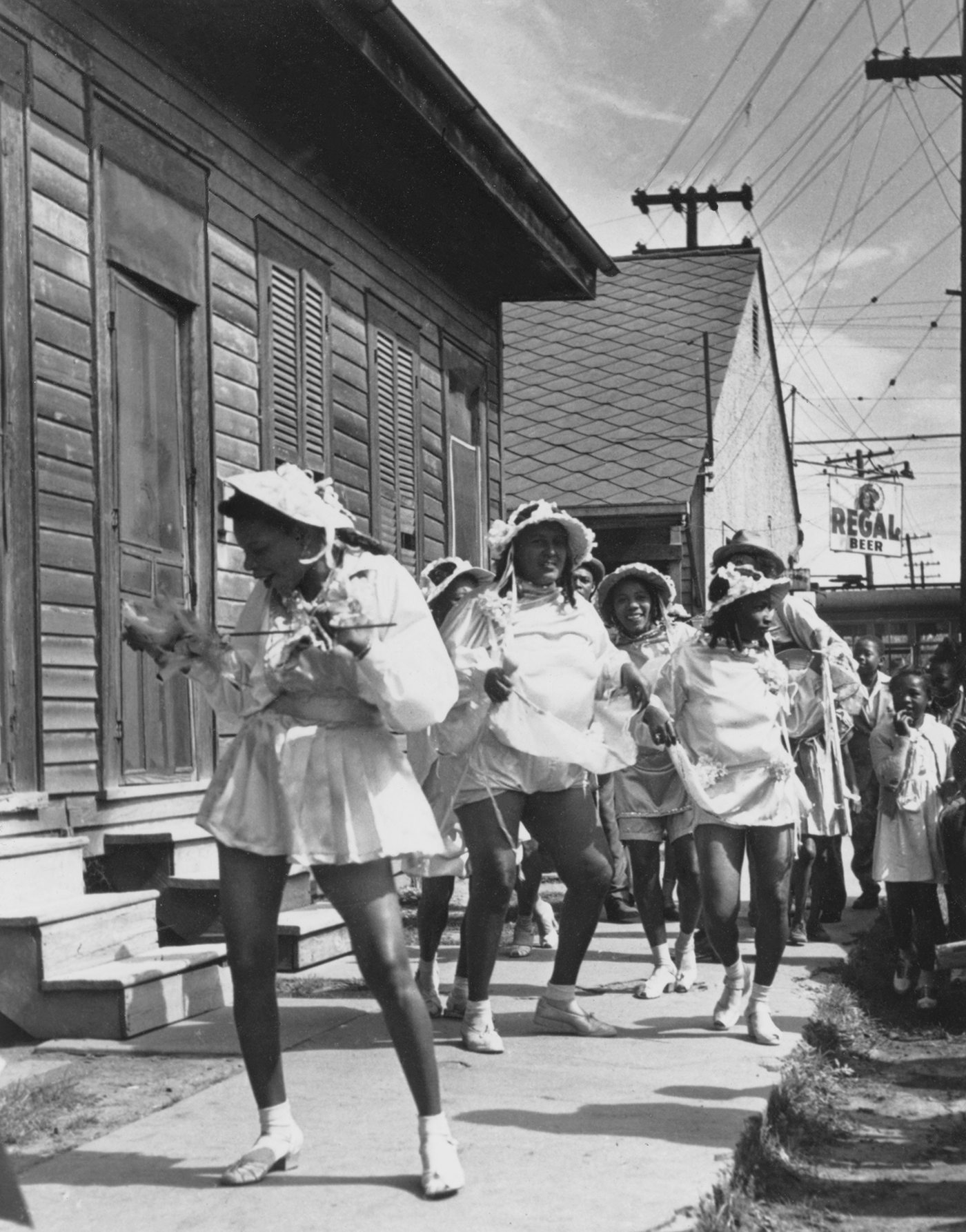
Figure 57: Baby Dolls, New Orleans, 1944. The Historical New Orleans Collection (THNOC MSS 536.33.3.1). Photo: Bradley Smith.
That the Baby Dolls made a comeback after the turn of the millennium—right there under the bridge of former Back o’ Town—suggests a lingering desire to bring the unfulfilled promises of other social possibilities back into memory through performing, against all odds.572 The Baby Dolls are said to have been reactivated from a bar in Tremé: the Mother in Law Lounge, located right next to the I-10 freeway bridge that was completed in 1969. The push is said to have come from the lounge’s owner at the time, Antoinette K-Doe, who was deeply involved in all sorts of mutual aid work. In New Orleans, she was best known for dragging around a life-sized doll of her late husband, rhythm and blues singer Ernie K-Doe. Antoinette even ran him in effigy for mayor after Hurricane Katrina, to protest against corrupt reconstruction policies that hit the back streets hardest.
Dancing out the door of the Mother in Law Lounge or other venues and into the street like living dolls—making an entrance into the public scene and jumping the rails—the Baby Dolls evoke performative entanglements and transpositions.573 Time and again, they show up as choruses of grief and protest at jazz funerals. Their dancing pushes back against police violence, whose main target is often young Black men: those hit the most by mass incarceration and prison industry exploitation. With their syncopated jumps, the Baby Dolls aim beyond the defense of their own immediate interests toward a collective gesture: making the New Jim Crow itself dance, to borrow from Marx.
These days, they show up in varying constellations at funerals, during Mardi Gras, and on St. Joseph’s Night—seizing on gatherings in the gentrified back streets as their stage. That they have gained popularity beyond these contexts may suggest a shift in the value of sexual capital, perhaps even pointing to the neoliberal aestheticization of sex work and today’s image-driven feminized selfifications.574 Yet if blackface and blaxploitation can be read as articulations of hypercommodified racialized visibility, the Baby Dolls show how their bodies are shaped not simply by personal autonomy but by the social conditions in which they are embedded. Their danced appropriation of visual gender codes from the Jim Crow era lays claim to a different kind of physical use value, one that defies being reduced to sexualized capital. From this perspective, they are a poor fit as icons of decontextualized individual empowerment. Much like blackface at the South African Cape around 1900, which has morphed today into full-head ornate glitter makeup, their moving bodies confront the historical dirtiness of the very societal conditions in which they move. In doing so, the Baby Dolls mediate a broader notion of gender bending, while performing in the streets. They have always featured bodies that do not represent normative femininity—whether read as female or male.575 Back in the Jim Crow era, which in many ways prefigured apartheid elsewhere, the Baby Dolls seem to have acted as an open chorus and refuge for anyone deemed sexually deviant—which is to say, queer.576
Challenging the kind of New Orleans exceptionalism critiqued by Thomas Adams and Matt Sakakeeny—which limits historiography to local framing—the Baby Dolls show a loose kinship with other carnivalesque forms of appearance.577 Dewulf, for instance, traces the diabladas—whose name, as we will see, echoes in the Baby Dolls’ punning performances—back to comic companion figures in Latin American carnival. These figures themselves evoke early Central African adaptations of autos sacramentales during Iberian Catholic colonialism. As Dewulf argues, this kind of performative transposition gained an afterlife in the masking practices of Black brotherhoods across diasporic histories of forced migration.578 The Baby Dolls’ bonnets, on closer inspection, are even faintly reminiscent of the Orientalized headdresses seen in autos sacramentales that first referenced the figure of the Moor—later morphing into “Indianist” figurations. In this context, the Baby Dolls conjure up clownish, comic, queer figures, tied rhizomatically to cross-dressing, blackfacing, and playing Indian—figures long performed mostly by male bodies, and continually restaged in new contexts. They speak to the transoceanic entanglements of mimetic techniques negotiating societal conditions.
Reading the Baby Dolls, then, is not about origin stories but about researching performative transpositions. It is about investigating collective modes of mimetic appearing whose functions are context-specific yet stretch beyond the local and the immediate here and now—toward a queer, creolized dragging that opens up the possibility of previously unforeseeable acts of relating. The ongoing right-wing carnival—during the pandemic, Klan hoods in supermarkets to mock mask mandates—stages a rehearsal for today’s disruptive yet authoritarian politics. In contrast, the Baby Dolls’ street performing gestures to nonlinear, global oddkinships. That can be exemplified with regard to the Latin American feminist strike movement and the queer guerilla performances of Marika Antifascista during the carnival of La Legua, Chile. Wearing short satin skirts and stylized headpieces with pink horns, they dance through the streets as antifascist protest figures.579 Streamed and shared around the world via social media, they seem to visually echo the Baby Dolls’ outfits. In resisting the current gendered backlash of a new, sprawling, globally networked broligarchic authoritarianism, these “little antifa devils” also summon memories of resistance to the 1970s Chilean coup—signaling the early alignment of neoliberalism and fascism. The Baby Dolls’ kindred street performing, then, calls attention to potential political lines of flight that have long remained unthinkable.580
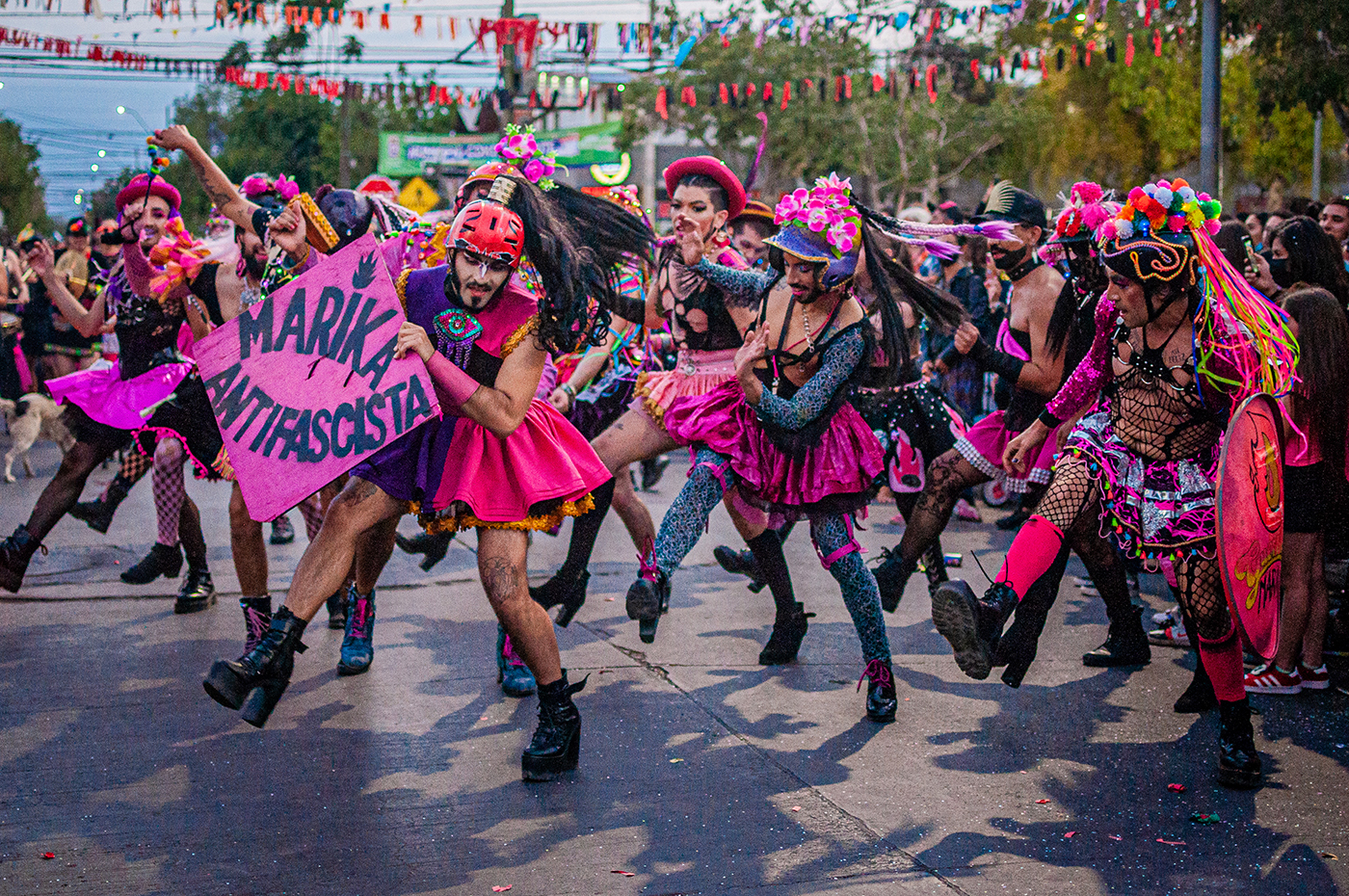
Abbildung 58: Marika Antifascista, La Legua, Chile, 2021. Photo: Elianira Riverors Piro.
Marika Antifascista has no direct link to the contemporary Mardi Gras Baby Dolls. Nor do their dancing or their far-flung cousins map out a blueprint for political organizing. However, this dancing as if they were free gestures toward unforeseen encounters that stretch beyond simple face-to-face relations. From this decidedly nongenealogical, aterritorial perspective, it makes sense to further fabulate distant entanglements: such as with the red-costumed devil figures in Cape Town who flank the local Indians, the Atjas. Perhaps the Baby Dolls even echo the stage entrance and etymology of Hellequin—the minor, comic figure from “hell” in European popular theater. Soot-smeared and personifying precarity, the figure known elsewhere as Harlekin, as Rudolf Münz points out, does not step onstage in an orderly fashion; likely entering the world of the comici dell’arte—however untraceably—via the charivaris and diableries in the sixteenth century,581 their mode of making an entrance is jumping: the leap that shatters theatrical framing.
From the dancing Baby Dolls, one thus can easily make connections to all sorts of dragging, as a kind of schlepping in leaps. This includes their distant kinship with Old European Perchten parades. In Gastein, Austria, the Perchten are accompanied by a Hanswurst couple. Evoking Venetian carnival, the so-called Bajazzl each lead a Poppin on a leash—a doll said to bring fertility, which they hurl at young girls.582 The Baby Dolls’ “unruly bodies” may parody such masculinist sexualizations of carnival throws—Kamelle and all—but they also remind us that mimetic appearances can be hijacked. The amalgamations of performative transpositions they conjure are indeed dirty—too slippery to police.583 No one can pin down exactly where these constantly moving figures “really” come from or what they “stand for.” As creolized figurations, they show that referencing is not a “straight practice.” In their ever-changing ways of entering the street—in nomadic forms of touching across—they evoke a desire to collectively do justice to the “rags”584 by queering them.
On closer inspection, they upend genealogical stories and binary conceptions of gender. Their outfit—aligned with Mardi Gras’s carnivalesque traditions—brings a pun to the scene. Their satinwear plays with the demonization of their bodies, fusing fabric (satin) and designation (Satan)—a label akin to Hellequin. Read as “little devils,” diablitas,585 the Baby Dolls interweave references to newborns and sexualized femininity into living dolls that seem to take on a life of their own. They enact a practical knowledge of nonreproductive, deterritorializing, queer temporality, inherent in their appearance and scene-making. This temporal knowledge runs counter to the crude historicist logic of straight, linear “clannic identity” prized by the patriarchal high society Old Liners and their retrograde pageants. The Baby Dolls, instead, perform what might be called a temporal dragging of transoceanic entanglements. Their paradoxical appearance, as oversexualized babies in female-outfitted grown bodies, brings a nongenealogical concept of temporality to work. They articulate an implicit understanding of the intertwined temporalities that come with performative transpositions. By ripping masking practices out of context and putting them to new use, the Baby Dolls show how to blow off epistemologies of lineage-based identity and the territorial claims that come with it. Through danced citations, they bring to life an “alternative theatricalization of kinship.”586
Obviously, this kind of dragging carries a spatial charge that goes beyond dancing in the here and now of the New Orleans back streets. Like the Indians, the Baby Dolls are part of a larger cast of figures in creolized carnival. As early as the 1880s, they show up in Martinique and Trinidad as a three-in-one character: a doll, a child, and a “fallen” woman.587 While in New Orleans the baby doll and the staging of womanhood have long fused into an embodied persona, in Caribbean carnival, people carry white, blue-eyed baby dolls and use them to mock-shame bystanders as presumed fathers, demanding child support.588 This kind of street theater—akin to the carnivalesque tradition of festive begging—also links back to Kewpie: the drag icon from District Six, whose image in a baby doll outfit opens this book and whose name echoes a baby doll frequently celebrated in contemporary US pop songs. Together, these references show that dragging is always socially situated, while also offering the transformative potential of metamorphic translation—gesturing toward the possibility of global political change.
In their dancing, the Baby Dolls claim their fight against different forms of apartheid. They perform and allegorize what is known in New Orleans as second lining. Etymologically, second lining is not just about following the parade or dancing in tow; it is about seconding: dancing together in chorus and counterpoint. The Baby Dolls’ second lining thus opens space for minor, singular performances, dancers stepping in and out, while these fluid transitions of movement weave into constellations where, at least for a while, all kinds of people can find room. The Baby Dolls come in the streets as nomadic support characters. They accompany other gangs, yet outside anyone’s control. Dirty conditions notwithstanding, their dancing in drag also gestures indirectly toward the queer afterlife of that fabulous, transoceanic hydra invoked by Rediker and Linebaugh.589 In deterritorializing public space and laying claim to the right to remain, to move, and to be free for tout-monde, they do not stand for heroic gestures, as if they might bring about change in one go. Instead, they stir a faint memory of all kinds of loose, infamous people—whose origins might not be traceable, yet who may leap up elsewhere—who, just by appearing, resist dominant separations and identitarian politics. Through their space-giving movement, the Baby Dolls become legible as carnivalesque allegories of resistance to old and new practices of boundary-making, while highlighting the scandal of violence shaping both past and present. Their dirty dragging—trailing “behind actually existing social possibilities,” as Freeman puts it elsewhere590—may also take aim at the present-day masked uprisings that push for new apartheid regimes, drawn along arbitrary lines of color and gender. Read thus, the Baby Dolls do not just take the streets; through a kind of performative materialism, they are giving rise to a sense of other possible ways of relating—from under the bridge, from a wrecked place that still, faintly, evokes the ruins of former fairy lands like Kewpie’s District Six. Moving, jumping, leaping, the Baby Dolls radiate this political and epistemic potential of dancing-with as an affective resource of collective joy—spilling outward, to be taken up anew, figured differently and emerging again elsewhere …
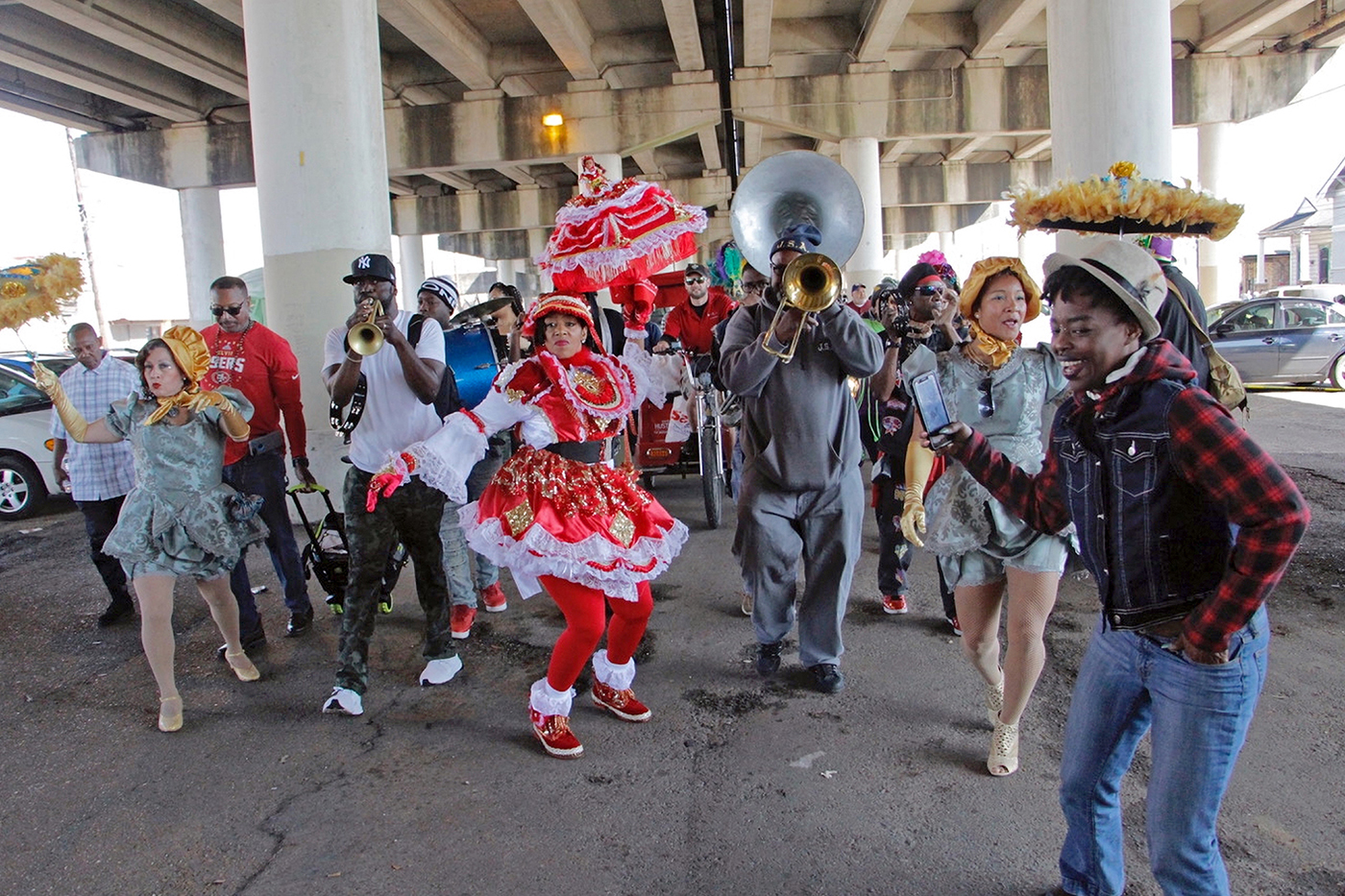
Figure 59: Baby Dolls, under the bridge, Tremé, New Orleans, 2024. Photo: Aurélie Godet.
… movement happens588
Endnotes
-
See Gill, Lords of Misrule, 1997: 168; Cockrell, Demons, 1997: 36, here with reference to Black Mardi Gras Kings documented since 1826. On the history of the Pythian Temple, opened in 1909 and located on what is now Loyola Avenue, whose entertainment offerings and business spaces served those excluded under segregation, see Keith Weldon Medley, “The Birth of the Pythian Temple,” The New Orleans Tribune, October 24, 2017, https://theneworleanstribune.com/2017/10/24/the-birth-of-the-pythian-temple/, accessed September 24, 2024.↩︎
-
See https://sheetmusicsinger.com/highbrownsongs/royal-coon/, accessed September 24, 2024.↩︎
-
Chude-Sokei, The Last “Darky,” 2006: 124.↩︎
-
See especially the 1913 film Lime Kiln Field Day, made with an all-Black cast and restored by the Museum of Modern Art in New York; www.youtube.com/watch?v=U-IdQ9APUHI, accessed September 4, 2024.↩︎
-
See the autobiography of Louis Armstrong, who contextualizes the term locally, and whose own appearance in 1949 as Zulu King was controversial nationwide at the time (Satchmo, 1954). Zulu was likely also the name given to the flambeaux carriers, the Black, unmasked torchbearers in the context of the “elevated” white uptown carnival. See also McQueeney, “Zulu,” 2018: 144. Felipe Smith refers to Zulu as “a slur against bebop musicians” and “dark-skinned New Orleanians”; see “Things,” 2013: 23.↩︎
-
On the mourning traditions of the mutual aid clubs and burial societies, see Atkins, “From the Bamboula,” 2018: 97; Celestan, “Social Aid,” 2022. For a broader historical perspective beyond New Orleans, see also Hartman, Anarchy,” 2018: 471: “Mutual aid did not traffic in the belief that the self existed distinct and apart from others or revere the ideas of individuality and sovereignty … This form of mutual assistance was remade in the hold of the slave ship, the plantation, and the ghetto. It made good the ideals of the commons, the collective, the ensemble, the always more-than-one of existing in the world. The mutual aid society was a resource of black survival. The ongoing and open-ended creation of new conditions of existence and the improvisation of life-enhancing and free association was a practice crafted in social clubs, tenements, taverns, dance halls, disorderly houses, and the streets.”↩︎
-
Chude-Sokei is alluding here to Garber’s Vested Interests (1992) and discussing various codings of Blackness in the transatlantic context; The Last “Darky,” 2006: 138. Nyong’o argues that minstrelsy “refuse[s] to imagine an America without blacks”; see Amalgamation Waltz, 2009: 132. The Zulu citation can thus be read as a carnivalization of segregation under globalized conditions of Black hypervisibility.↩︎
-
See Leathem, Gender and Mardi Gras, 1994: 151, 156—157; Kinser, Carnival, 1990: 234.↩︎
-
On the status of the Zulu Queens, see Leathem, Gender and Mardi Gras, 1994: 157; Felipe Smith, “Things,” 2013: 27.↩︎
-
See Roach, Cities, 1996: 20—21. See also Cockrell’s remark that blackface is “not to be taken at (white)face value, but at burlesque value”; Demons, 1997: 57.↩︎
-
Roach, Cities, 1996: 18—19.↩︎
-
Roach, Cities, 1996: 24. On Esu, see Gates, Signifying Monkey, 1989: 31—42. Chude-Sokei reads the West African trickster figures and their afterlives differently: “But because s/he is a liminal figure, s/he is also easily counterrevolutionary.” The Last “Darky,” 2006: 113.↩︎
-
Roach, Cities, 1996: 24.↩︎
-
Roach, Cities, 1996: 4.↩︎
-
On statements from the NAACP beginning in 1956, and subsequent campaigns that ultimately led to a temporary suspension of the Zulu blackface, see McQueeney, “Zulu,” 2018: 151—155. ↩︎
-
On retrospective critiques of a simplistic politics of respectability, see Nyong’o: “since white supremacy affected African Americans as a group, the politics of respectability and uplift cannot be read simply as a ‘middle-class’ imposition upon the black working class. Respectability came to the fore as response to potentially degrading behavior and spectacle. … Carnival masks and one’s Sunday best are both moments in the cycle of plebeian life. And furthermore, the work of gender in these matters must be emphasized: working class masculine culture cannot be made to stand in for working class culture as such.” Amalgamation Waltz, 2009: 116—117.↩︎
-
See Trillin, “A Reporter,” 1964: 119.↩︎
-
See Felipe Smith, “Things,” 2013: 30—32 and 34.↩︎
-
In 2006, after the flooding of primarily poor neighborhoods caused by infrastructure failure during Hurricane Katrina, twenty “authentic” Zulu warriors, “dressed in traditional garb and wielding spears and shields,” were flown in from South Africa to lead the parade; see Ray Koenig, “African Zulu Warriors to Lead Off New Orleans Parade,” Times Picayune, February 8, 2006; see also McQueeney, “Zulu,” 2018: 140. In the 1970s, by contrast, the Zulu Club emphasized that there was no connection to the South African Zulus; see Felipe Smith, “Things,” 2013: 30. On modern retraditionalizations of the South African Zulus as framed by African American scholarship, see Kruger, The Drama, 1999: 27, with attention to how they were represented in the United States as early as the beginning of the twentieth century: 31.↩︎
-
McQueeney, “Zulu,” 2018: 149. ↩︎
-
McQueeney, “Zulu,” 2018: 149.↩︎
-
Felipe Smith, “Things,” 2013: 32. ↩︎
-
Felipe Smith, “Things,” 2013: 26.↩︎
-
See https://actionnetwork.org/groups/take-em-down-nola, accessed September 24, 2024. On the preceding 2017 action “to bury white supremacy,” see Maxson, “Second Line,” 2020.↩︎
-
On Take ‘Em Down NOLA—described by Reed as “a group organized through the Center for the Study of Race, Politics and Culture at the University of Chicago”—see Antiracism, 2018: 106; see also A. Reed, “The Myth of Authenticity,” 2019: 321—322. The local campaign was preceded by an article in the New York Times, perceived on the ground as denunciatory, written by a white journalist who, through selective quotations, portrayed the founder of the Backstreet Cultural Museum, Francis Sylvester, as a supposed minstrel apologist. See “A Black Group Says Mardi Gras Blackface Honors Tradition. Others Call it ‘Disgusting,’” New York Times, February 14, 2019, https://www.nytimes.com/2019/02/14/us/zulu-parade-new-orleans.html, accessed September 24, 2024. ↩︎
-
See Jeff Thomas, Unmasked: New Orleans Community Responds to Zulu’s BlackFace Tradition.”Black Source Media, March 17, 2019, https://blacksourcemedia.com/unmasked-new-orleans-community-responds-to-zulus-blackface-tradition/; accessed September 12, 2024.↩︎
-
https://www.theadvocate.com/pdf_b6d10476-2fe7-11e9-b806-dbef4afb21d9.html, accessed September 24, 2024.↩︎
-
On the revolt of 1811, which took place during carnival, see Rasmussen, American Uprising, 2011; Gill, Lords of Misrule, 1997: 33; Roach, Cities, 1996: 253. On the reenactment initiated by a New York artist who works under the name Dread Scott, see the dedicated website www.slave-revolt.com/, accessed September 12, 2023.↩︎
-
On Duke, see Roach, Cities, 1996: 273—277. See also the photographs of Duke in SA uniform carrying a sign (Gas the Chicago 7), taken by Michael P. Smith at Tulane University in New Orleans (The Historical New Orleans Collection, 2007.0103.1.1.367).↩︎
-
On the history of the monument designed by Alexander Doyle, which around the turn of the century served as a gathering site for a lynch mob, see Gill, Lords of Misrule, 1997: 162.↩︎
-
For the Krewe of Choctaw see https://www.kreweofchoctaw.com/.↩︎
-
Lhamon, Jump Jim Crow, 2003: 23.↩︎
-
See Alexander, New Jim Crow, 2012; Gilmore, Abolition Geography, 2022. ↩︎
-
A. Reed, “Antiracism,” 2018: 106. See also Lott: “part of the tony disgust that grew up around minstrelsy was simply a revulsion against the popular”; Love and Theft, 1993: 98. On the critique of “presentist views about minstrelsy, that have … polluted our understanding of the early period,” see also Cockrell, Demons, 1997: xi. In South Africa, too, criticism was voiced against the roughly contemporaneous iconoclasm of the related Rhodes Must Fall movement; see Mbembe, “Closing Remarks,” 2018.↩︎
-
On critiques of US exceptionalism in Afropessimist perspectives (e. g., Wilderson III, Incognegro, 2015; Afropessimism, 2020), see Thomas, “Afro-Blue Notes,” 2018; for an earlier view, see also Gilroy, Black Atlantic, 1995; Postcolonial Melancholia,2005. On critiques of the mythicization of Africa, see also Hartman: “it is absolutely necessary to demystify, displace, and weaken the concept of Africa in order to address the discontinuities of history and the complexity of cultural practice.” Scenes of Subjection, 1997: 74.↩︎
-
On second lining in New Orleans, see Michael P. Smith, Mardi Gras Indians, 1994; Regis, “Blackness,” 2001; “Second Lines,” 1999. On critiques of royalized origin stories, see Hartman, Lose Your Mother, 2008: 46, 87.↩︎
-
On the figure of Zwarte Piet, who traditionally accompanies the Dutch St. Nicholas on December 6 in colonial costume and blackface, see Bal, “Zwarte Piet’s Bal Masque,” 1999: viii. On the narrative of the Zulus’ sea voyage to New Orleans, see McQueeney, “Zulu,” 2018: 146.↩︎
-
On the globalization of touring productions at the time, see Balme and Leonhardt, “Introduction” and the special issue “Theatrical Trade Routes” in the Journal of Global Theater History 1, no. 1, 2016.↩︎
-
On critiques of regionalist exceptionalism, see Adams and Sakakeeny, Remaking New Orleans, 2019, especially the introduction: 1—32.↩︎
-
See https://www.krewedujieux.com/, accessed September 11, 2024. On the “zulu-esque cast of character,” see L. J. Goldstein: “We take these Jewish stereotypes that are thrown at us and we embrace them and roll around in them …. Like a pig in the mud!” www.tabletmag.com/sections/news/articles/the-krewes-and-the-jews, accessed September 24, 2024.↩︎
-
See https://www.youtube.com/watch?v=TxHR2uBnYro, accessed September 11, 2024.↩︎
-
See Breunlin et al., House of Dance and Feathers, 2009. ↩︎
-
On the disastrous reconstruction policy, see Lipsitz, “New Orleans in the World,” 2011. For criticism of the lack of structural critique in corresponding volunteer activities after Katrina, however, see Vincanne Adams, “Neoliberal Futures,” 2019. On post-Katrina Mardi Gras, see Wade et al., Downtown Mardi Gras, 2019. Since then, the second lines have also increasingly attracted heterogeneous crowds.↩︎
-
As was already quoted, with reference to Comus, by the Times Democrat on February 25, 1903.↩︎
-
On Grimaldi, who shaped the whiteface clown and also performed as a female impersonator, see Gibbs, Temple of Liberty, 2014: 130. On the rural etymology of the clown, corresponding to the figure of Arlecchino, see Linebaugh and Rediker, Hydra, 2000: 333.↩︎
-
On the relationship between presence and absence see Menke’s contributions to studies on stage entrances: ON/OFF, 2014; “im auftreten,” 2016. On the punctum as it “pricks” the observer, see Barthes, Camera Lucida, 1981: 25-27; on its “ability to allow metonymies,” see also Wolf, “Das, was ich sehe,” 2002: 99. For criticism of Barthes’ particularistic image readings, however, see Moten, In the Break, 2003: 208—here referring to Barthes’ comment on the photo of the dead Emmett Till after his murder by white supremacists; Barthes, “The Great Family of Man,” 1972: 101.↩︎
-
As was put in a transatlantic context by Dillon, New World Drama, 2014: 18.↩︎
-
On the “Indian removals” and sociocidal settlement policy, see Bowes, Land Too Good, 2016.↩︎
-
Times Democrat, February 25, 1903: 7. ↩︎
-
See Deloria, Playing Indian, 2022: 28. On the specifics of German Indianism, see the chapter on “Winnetou’s Grandchildren,” in Sieg, Ethnic Drag, 2009: 115—150; on its ambivalence, Balzer, Ethik der Appropriation, 2022; with reference to the Austrian Tresterer, Kleindorfer-Marx, “Jetzt kommen gar Indianer,” 2018. Linebaugh and Rediker, by contrast, point to a different form of “going native” in the Americas in the seventeenth century: “In search of food and a way of life that many apparently found congenial, a steady stream of English settlers opted to become ‘white Indians,’ ‘red Englishmen,’ or—since racial categories were as yet unformed—Anglo-Powhatans.” Hydra, 2000: 34.↩︎
-
Deloria, Playing Indian, 2022: 25. The translocal potential for resistance is also emphasized by Wynter, with reference to the colonized “co-identifying themselves, transethnically, as, self-definingly, Indians.” Wynter, “1492,” 1995: 41.↩︎
-
Deloria, Playing Indian, 2022: 24.↩︎
-
See Deloria, Playing Indian, 2022: 180. ↩︎
-
For my discussion of Benjamin and Kafka, see the second chapter.↩︎
-
On Black Indians, see Breunlin, Fire in the Hole, 2018; Breunlin et al., House of Dance and Feathers, 2009; Dewulf, From the Kingdom, 2017; Godet, “Playing with Race,” 2016: 264—269, “La recherche,” 2022; Lief and McCusker, Jockomo, 2019; Musée du quai Branly—Jacques Chirac, Black Indians, 2022, with the research overview especially in Godet, “La recherche,” 2022; Vaz-Deville, “Les Black Masking Indians,” 2022; Smith, Mardi Gras Indians, 1994.↩︎
-
See Vaz-Deville, “Les Black Masking Indians,” 2022. Playing Indian was part of the local Mardi Gras in New Orleans in the nineteenth century, as historical sources show. In the 1830s, Indians appeared in the street carnival alongside Harlekin and Turk figures, according to Lief in Lief and McCusker, referring to historical sources. Jockomo, 2019, 84.↩︎
-
Dillon, New World Drama, 2014: 214; see also: 204—205.↩︎
-
Daily Picayune, February 27, 1895; quoted in Lief and McCusker, Jockomo, 2019: 75.↩︎
-
Lief and McCusker, Jockomo, 2019: 75—76.↩︎
-
Lief and McCusker, Jockomo, 2019: 97—99.↩︎
-
Lief and McCusker, Jockomo, 2019: 104.↩︎
-
On the expanded understanding of abolition that came with these efforts, see Gilmore, Abolition Geography, 2022. On the survival of slavery in segregation see also Hartman: “The plantation was not abolished, but transformed … extending the color line that defined urban space, reproducing the disavowed apartheid of everyday life.” “Anarchy,” 2018: 476.↩︎
-
On politics of retreat as a legacy of marronage, see Harney and Moten, Undercommons, 2016. A ban on feathers is documented as early as 1781, likely targeting precursors of these practices; see Gill, Lords of Misrule, 1997: 30.↩︎
-
Quoted in Shane and McCusker, Jockomo, 2019: 10; for the history of Indian Red, whose composition in the early twentieth century is attributed to the Big Chief of the Creole Wild West, Eugene Honore, see also Appendix II: 134—136. On Indian Red, see the early study by Lipsitz, “Mardi Gras Indians,” 1988: 108. Dewulf traces Indian Red from the Spanish to a battle song of Black brotherhoods, “From Moors to Indians,” 2015: 38—39.↩︎
-
Maroons derives from the Spanish cimarrón, meaning wild or unruly, and refers to those who escaped colonial rule by forming creolized fugitive communities; on the interdependence of creolization and marronage see Martin, Jazz, 2008: 111; on the resignification of the term, which was originally colonial and racist, see Därmann, Undienlichkeit, 2020: 27. Michael P. Smith reads the Indians as “contemporary urban maroons”; Mardi Gras Indians, 1994: 13. “Madi cu defio” apparently creolizes “M’allé couri dans deser” and could be translated as “I am going into the wilderness”; see Cable, “Creole Slave Songs,” 1886: 820; see also Kein, Creole, 2000: 124. Indian Red, interpret in this light, is about retreating into the landscape.↩︎
-
On the depiction of Tremé, carnival, and urban politics, see also David Simon and Eric Overmyer’s HBO series Tremé (2010—2013), as well Godet’s analysis in “Multiple Representations,” 2017. On the gentrification of Tremé and the impact of Interstate 10 on the epicenter of Back Street Mardi Gras around Claiborne Avenue, see Vaz-Deville’s introduction to Walking Raddy, 2018, xiv; “Iconic,” 2018: 149. ↩︎
-
On the “echo-space” below the I-10 bridge, see Carrico, “Miss Antoinette K-Doe,” 2018: 209. ↩︎
-
See Kleindorfer-Marx, “Jetzt kommen gar Indianer,” 2018. ↩︎
-
For material on the Buffalo Soldiers, see Smith, Mardi Gras Indians, 1994: 95. The Michael P. Smith Collection is held in the Historic New Orleans Collection (THNOC). The Buffalo Bill Show is discussed in Gill, Lords of Misrule, 1997: 140; Lief and McCusker, Jockomo, 2019: 69—72; and Lipsitz, “Mardi Gras Indians,” 1988: 104. ↩︎
-
On Fi Yi Yi, see Breunlin, Fire in the Hole, 2018; Bourget, “Victor Harris,” 2022. On the correspondence with Yoruba traditions, see Joubert, Igba ayé, 2022. For criticism of antimodern Afrocentric commodifications of identity in the context of New Orleans and the related fetishizing of supposed authenticity, see also the introduction by Adams and Sakakeeny: “All that makes New Orleans worthy of value and preservation is in its oppositionality to national values of progress and modernism. This antimodernism can become uneasily equated with racial primitivism, as when the performance traditions of Black New Orleanians are portrayed solely as vestiges from an African past rather than complex and cosmopolitan cultural formations … An oddly Volksgemeinschaft island of twenty-first-century social analysis, New Orleans continues to generate research that fetishizes collective meanings and the bonds of sociability as truly organic.” Remaking New Orleans, 2019: 5.↩︎
-
“In this encounter Africa was a transformative force, almost mythico-poetic—a force that referred constantly to a ‘time before’ (that of subjection),” as Mbembe suggests with regard to US discourse, Critique, 2017, 26.↩︎
-
For critique, see Táíwò, Against Decolonization, 2022.↩︎
-
See https://www.backstreetmuseum.org/sylvester; http://houseofdanceandfeathers.org/, accessed September 24, 2024.↩︎
-
See, for example, the handling of beaded patches from a Black Indian suit by Demond Melancon— displayed at the wall as an autonomous art piece—in the opening exhibition of the Haus der Kulturen der Welt in Berlin under the direction of Bonaventure Soh Bejeng Ndikung; see Casimir et al., O Quilombismo, 2023: 98—99.↩︎
-
Godet, “Multiple Representations,” 2017: 230—231.↩︎
-
See https://www.quaibranly.fr/en/exhibitions-and-events/at-the-museum/exhibitions/event-details/e/black-indians-from-new-orleans-39606, accessed September 24, 2024. ↩︎
-
For Mardi Gras and French colonial history, see Godet, From Anger to Joy, 2024.↩︎
-
See the framing of the Paris exhibition with large-scale contemporary works on the Ku Klux Klan by Vincent Valdez, Michael Ray Charles, and Philip Guston; Musée du quai Branly—Jacques Chirac, Black Indians, 2022: 62—67, 78—83, 94—97.↩︎
-
On the connection between recognition and gentrification of the Indians prior to the Paris exhibition, see Lief and McCusker, Jockomo, 2019: 120.↩︎
-
On the “Downtown Style,” which differs from the figurative elements of the uptown suits, see Lief and McCusker, Jockomo, 2019: 17.↩︎
-
Thanks to Big Chief Darryl Montana, who in 2019 brought me to the Le Pavillon Hotel to show me the stuccowork of his father and its correspondence with the design of the Indian suits. On his sewing and masking, see Sascha Just’s documentary Big Chief, https://saschajust.com/featured_item/big-chief/, accessed February 18, 2024.↩︎
-
See Dewulf, From the Kingdom, 2017; see also “From Moors to Indians,” 2015; “From the Calendas,” 2018; “Black Brotherhoods,” 2015. On centuries-old trade relations between the African and European continents predating the Middle Passage, and related criticism of the “myth of first contact,” see also McClintock, Imperial Leather, 1995: 227.↩︎
-
See Dewulf, From the Kingdom, 2017: 91—93; Harrasser, “Borrowed Plumes,” 2025.↩︎
-
On sangamentos and mock war dances, see Dewulf, From the Kingdom, 2017: 37—40, 189—198.↩︎
-
For a description of a Black carnival king accompanied by “Indians” from 1823, see also Lief and McCusker, Jockomo, 2019: 82.↩︎
-
Dewulf, “Black Brotherhoods,” 2015: 31.↩︎
-
On the relationship between ascribed kinlessness and enslavement, see Hartman, Lose Your Mother, 2008: 5, 86—88.↩︎
-
Scott: “Re-enchantment,” 2000: 148; see also Edwards, “Wynter’s Early Essays,” 2001. On global history and the differentiation of various forms of enslavement, see Zeuske, Handbuch Geschichte der Sklaverei, 2013; on the adoption of African elements of superexploitation in the early Iberian-African Atlantic: 690, 848.↩︎
-
Wynter, “1492,” 1995: 39-40. ↩︎
-
On decentering remembrance, with a focus on the entanglements of colonial history and antisemitism, see Rothberg, Multidirectional Memory, 2009. On the reflexive role of minor figures (“Nebenfiguren”), see Menke, “hidden,” 2024.↩︎
-
See Hartman’s concept of “chorines” as minor figures, which she develops from the chorus line, that is, from the enclosed stage space (“to dance within an enclosure”: 347); she defines choric performance forms as nonheroic figurations of mutual aid and collective action, as a performative promise of a different, nonhegemonic sociality, Wayward Lives, 2020: 345—349. ↩︎
-
Vaz-Deville, Walking Raddy, 2018: 1.↩︎
-
Vaz, Baby Dolls, 2013: 6.↩︎
-
See Brock, “Baby Doll Addendum,” 2018; Vaz, Baby Dolls, 2013: 51. ↩︎
-
See Vaz, Baby Dolls, 2013: 46—48; Bratcher, “Operationalizing,” 2018; Brock, “Addendum,” 2018. ↩︎
-
On the term—albeit in reference to complicit behavior under National Socialism—see Barnett, Bystanders, 1999.↩︎
-
See Vaz, Baby Dolls, 2013: 14. ↩︎
-
On the history of Storyville, built in 1897 as prostitution and gambling aimed at mass tourism were legalized, which was a segregated district and presumably “the toughest environment Black women had encountered since enslavement,” see also Vaz, Baby Dolls, 2013: 18, 66; Rose, Storyville, 1978. On the differing commodity character of bare labor in the context of plantation and prostitution, see Hartman, Wayward Lives, 2020: 25; on the persistence of violence in social relations, see Roach: “The question is not if slavery still exists but whether people treat each other as if it did.” Cities, 1996: 231.↩︎
-
See Atkins on Naked Dances in the brothels and the transposition of dancing into cultural techniques of survival: “Through dancing, the Baby Dolls (and groups like them) demarcated the space they inhabited and used their bodies to generate a sense of collective survival.” “From the Bamboula,” 2018: 101—102, 104. Their sexualized forms of appearing in public allegorize resistance to what Zeuske refers to as the production of “naked capital.” Handbuch Geschichte der Sklaverei, 2013: 613.↩︎
-
Vaz, Baby Dolls, 2013: 8; see also Walking Raddy, 2018; on the precarious history of transmission, see the recently published “Les Baby Dolls,” 2022. The Baby Dolls examined here are—contrary to what some stylized choreographies found online might suggest—first and foremost unruly figures. In 2013, the Louisiana State Museum in the Presbytère dedicated an exhibition to them for the first time: They Call Me Baby Doll: A Mardi Gras Tradition, https://louisianastatemuseum.org/museum/presbytere, accessed September 11, 2024. See Atkins on the Baby Dolls’ repertoire, “From the Bamboula,” 2018. At the Backstreet Cultural Museum, Sylvester Francis presented their outfits alongside the suits of the Indians and references to the tradition of jazz funerals and the Northside Skull and Bone Gang around Big Chief Bruce Sunpie Barnes (Les squelettes sont en marche, 2022)—a gang that, on Mardi Gras Day at dawn, goes door to door through Tremé, opening the carnival of the back streets, https://www.backstreetmuseum.org/general-2; https://www.youtube.com/watch?v=N-INwiutEG0, accessed September 11, 2024. ↩︎
-
Quoted from the opening of Hartman, Wayward Lives, 2020: xiii. ↩︎
-
On the afterlife of sexualized auction spectacles in the context of prostitution, see Roach, Cities, 1996: 224—233. On the relationship between port city and plantation, which produces both these forms of sexualized violence and forms of resistance, see Linebaugh and Rediker, Hydra, 2000: 46.↩︎
-
On the critique of “being governed in such a manner,” see Foucault, “What is Critique?,” 1996, 392; see also Butler, “What is Critique?,” 2002.↩︎
-
Hartman, Wayward Lives, 2020: 227—228.↩︎
-
Hartman, Wayward Lives, 2020: 234.↩︎
-
Hartman, Wayward Lives, 2020: 4.↩︎
-
Hartman, Wayward Lives, 2020: xiii. ↩︎
-
Dillon refers to the historical racialization of slavery: “making a body black … meant turning it into property”; New World Drama, 2014: 139. Nyong’o, in a different context, speaks of the transformation of hypervisibility “into a dignified shamelessness” and contrasts corresponding forms of public performance with the pain porn of feminized depictions of victims; Amalgamation Waltz, 2009: 101.↩︎
-
Mbembe, Critique of Black Reason, 2017: 15. ↩︎
-
On the concept of “bare labor—labor stripped of the resources of social life and the capacity for social reproduction,” see Dillon, New World Drama, 2014: 35, also 132. On gender-specific forms of bare labor, see Federici, Caliban, 2004.↩︎
-
On the historical background of the Baby Dolls, see Johnson, “Fighting for Freedom,” 2018.↩︎
-
See Atkins, “From the Bamboola,” 2018: 90; Vaz, Baby Dolls, 2013: 26; Vaz-Deville, Walking Raddy, 2018: 2.↩︎
-
Wynter, “1492,” 1995: 33. On the critique of genealogical ideologies of domination and their divisive function, see also Wynter in Scott, “Re-enchantment,” 2000: 148. On the “kinlessness” of the enslaved, see Mbembe, Critique of Black Reason, 2017: 33—34. On the critique of genealogical thinking, see also Erasmus, Race Otherwise, 2017: 125—132.↩︎
-
With reference to the complementary, parallel universe of Hollywood white female child stars such as Shirley Temple and their clean baby-sex aesthetic, see Vaz, Baby Dolls, 2013: 24; “Unruly Woman Masker,” 2018: 132. See also Merish, “Cuteness and Commodity Aesthetics,” 1996; in a current context, see also the DFG research project by Kai van Eikels Performance und die Macht des Schwächeren: Unpünktlichkeit, Ersetzbarkeit, Niedlichkeit, https://gepris.dfg.de/gepris/projekt/517032562, accessed September 11, 2024. ↩︎
-
“Marching clubs, both white and Negro, hold small independent parades of their own starting early Mardi Gras morning. Costumes of marchers range from Jack and the Beanstalk to bonnetted Baby Dolls.” This is the caption to a Baby Doll image by Bradley Smith in Basso Hamilton’s “Boom Town, Dream Town: New Orleans Retains its Old-World Charm, but Its Biggest Effort Today Is to Become a No. 1 Seaport,” in Holiday: The American Travel Magazine 3, no. 2, 1948: 26—41 and 124—126, on 34.↩︎
-
On the deterritorialization of the street in the context of control societal developments and the new relevance of private logistics companies under conditions of globalized capitalism, see Sebastian Kirsch’s current FWF research project Straßenszenen/Street Scenes, https://www.fwf.ac.at/forschungsradar/10.55776/J4833, accessed September 11, 2024; see also his book Chor-Denken, 2020: 507.↩︎
-
See, for example, Baby Doll Cinnamon Brazil Black (centered in Figure 59)—dancing in a costume mixing Indian and Baby Doll suits under the bridge: https://www.youtube.com/watch?v=2xadO5ipX4w, accessed September 24, 2024.↩︎
-
See Florence, “The World That Antoinette K-Doe Made,” 2018; Carrico, “Miss Antoinette K-Doe,” 2018.↩︎
-
See Illouz and Kaplan, What Is Sexual Capital?, 2022: 64—103. ↩︎
-
See Vaz, Baby Dolls, 2013: 7; “Iconic,” 2018: 147. See also Atkins, “From the Bamboula,” 2018: 90; Honora, “Dancing Women,” 2018: 195—196. Pacey assumes that the official incorporation of the so-called moffies into the Cape Town carnival corresponds with and predates developments in the New Orleans Mardi Gras; “Emergence,” 2014: 119—120.↩︎
-
On “male Baby Dolls,” see Vaz Deville, Baby Dolls, 2013: 86—91. See also Godet, “Gender Bending,” 2025. On the history of Black queerness and the heteronormativity of respectability politics in the context of the Civil Rights movement, see Russel, “The Color of Discipline,” 2008. On the “bourgeois, neo-Victorian ideals of the African American middle class” and the “anti-erotic prudery of racial uplift” as opposed to the “naked mask,” see also Chude-Sokei, The Last “Darky,” 2006: 202—203.↩︎
-
See Adams and Sakakeeny, Remaking New Orleans, 2019.↩︎
-
See Dewulf, From the Kingdom, 2017; on the diablitos, see From the Calendas, 2018: 17; on the kinship of diabladas, morenos and Indians, see—in the context of the Bolivian carnival—also Lecount Samaké, “Dancing for the Virgin and the Devil,” 2004.↩︎
-
On Marika Antifascista, queer carnival, and the connection to the feminist strike movement in Latin America, see Cabello and Diaz, “Die Straße wird queer,” 2023, https://tdz.de/artikel/593b6dfb-a0eb-48a5-a772-5ba3d88a4f2c, accessed September 11, 2024. These open collectives are referred to as cuerpo-territorio; see Gago, Feminist International, 2020 (Chapter 3, “Body Territory”: 60—77). Building on Echeverri (Territory, 2005), see also Govrin, Politische Körper, 2022: 173—221, on 216. On transversal practices of care, see Lorey, Demokratie, 2021: 161—198; Democracy, 2022.↩︎
-
On the connection between Baby Dolls and activist protest in the Caribbean, see Marshall, “Diasporic Baby Dolls,” 2021: 10—12. ↩︎
-
See Münz, Das “andere” Theater, 1979: 102. ↩︎
-
See Hutter, “Salzburger,” 2002: 12.↩︎
-
In reference to the Jim Crow persona, see Lhamon, Jump Jim Crow, 2003: 23.↩︎
-
Benjamin, The Arcades Project, 1999, 460, N1a, 8 (in German, Lumpen: Das Passagen-Werk, V.1, 1991: 572; N 1a, 8).↩︎
-
See Vaz, Baby Dolls, 2013: 96.↩︎
-
Dillon, New World Drama, 2014: 189.↩︎
-
See Marshall, “Diasporic Baby Dolls,” 2021: 3; McIntyre, “Baby Doll,” 2021: 3, 12; Franco, “Women Maskers,” 2018. For the Black Indians, similar correspondences can be identified in relation to the Jonkonnu festivals in the Bahamas; see Sands, “Carnival Celebrations,” 1991. On the Trinidad carnival, see also Hill, Trinidad Carnival, 1972.↩︎
-
See Marshall, “Diasporic Baby Dolls,” 2021: 5. See also Michael P. Smith’s photo from Mardi Gras in New Orleans, 1986, which still depicts a Baby Doll with a doll; Mardi Gras Indians, 1994: 74.↩︎
-
See Linebaugh and Rediker, Hydra, 2000.↩︎
-
Freeman, Time Binds, 2010: xiii; on allegorical temporality: 69—71.↩︎
-
Gilmore, Golden Gulag, 2007: 248.↩︎