
Liebe Leser*innen!
Wir heißen Sie herzlich im neuen Semester willkommen und informieren Sie hier wieder mit Neuigkeiten und den bevorstehenden Veranstaltungen unseres Instituts in diesem Monat.
Zunächst gratulieren wir unserem Kollegen Ioannis Christidis zur Einwerbung seines ESPRIT-Projekts "Befreiung performen? SWANA-EDM auf europäischen Dancefloors"!
Wir gratulieren auch unserer Kollegin und ehemaligen Studierenden Elnaz Mohammadzadeh, die für ihre Abschlussarbeit im Masterstudium Ethnomusikologie "Musik und Tanz in Ost-Khorasan, Iran: Ausdrucksformen, Weitergabe und Geschlechterperspektiven" den Würdigungspreis 2026 der mdw verliehen bekommen hat.
Am Donnerstag, den 15. Oktober, finden gleich zwei Masterprüfungen unserer Studierenden statt: die wissenschaftliche Masterprüfung von Mira Perusich um 14:00 im Gerlinde Haid-Saal (SEG17A) und die künstlerische Masterprüfung von Parmis Rahmani um 18:30 im Konzertsaal des Future Art Labs (AWV0249).
Mit dem Wintersemester 2026 hat nun schon eine zweite Kohorte von fünf Studierenden im einzigartigen "Afghan Music Education in Exile Program" unseres Institut ihr Studium begonnen. Wir heißen sie herzlich an der mdw willkommen!
Von 31. Oktober bis 2. November findet das Symposium "Ancestral Futurities: Encounters with Heritage in Contemporary Dance and Choreographic Practices" statt, veranstaltet von Beatriz Herrera Corado in Kooperation mit dem Tanzquartier Wien.
Am 2. November hält Ira Khonen Temple den Workshop "Community, Archive, Lineage: Belonging to Yiddish folk music through rupture and repair" ab.
Unsere Kollegin Isabel Frey hat den Beitrag "Sounding Together: A Conversation with Musicians from the Jewish-Palestinian Peace Initiative Standing Together Vienna" in der neuen Forum-Rubrik im Journal Music & Minorities veröffentlicht.
Weitere Termine zum Vormerken:
- 5. November 2026, 13:30: Gastvortrag "Vom Kuhschrei zum Jodeldiplom: Schweizer Jodel zwischen gestern und heute" von Lea Hagmann
- 6. November 2026, 18:30: Filmvorführung und Q&A "Beyond Tradition. Kraft der Naturstimmen"
- 11. November 2026, 18:30: Feierliche Eröffnung des Gerlinde Haid-Saals
- 12. & 13. November 2026: Jahrestagung des Österreichischen Volksliedwerks
Studium
Neue Studierende im "Afghan Music Education in Exile" Programm

Mit dem Wintersemester 2026 hat nun schon eine zweite Kohorte von fünf Studierenden im einzigartigen „Afghan Music Education in Exile Program“ unseres Instituts ihr Studium begonnen. Angesichts des Musikverbots der Taliban, das auch tertiäre Musikausbildung betrifft, zielt dieses Programm darauf ab, Musikstudierenden aus Kabul ein Weiterstudium an der mdw zu ermöglichen. Die Studierenden werden vom Students at Risk-Fonds des ÖAD und der ÖH finanziert. Wir heißen sie herzlich an der mdw willkommen!
Symposium
"Ancestral Futurities: Encounters with Heritage in Contemporary Dance and Choreographic Practices"
organisiert von Beatriz Hererra Corado in Kooperation mit dem Tanzquartier Wien
Samstag, 31. Oktober bis Dienstag, 3. November 2026, Tanzquartier Wien Studios

The symposium explores how artists engage with cultural heritage, dance practices, and rituals connected to ancestrality through theoretical and methodological perspectives. It provides a platform to share and discuss strategies and methodologies for dance research and creation in order to expand and challenge the dominant dance canons. The program includes scholar and artistic engagements organized in panel discussions, lectures, and studio labs. It creates a space to acknowledge the diversity of bodily epistemologies, highlighting how social, political, spiritual, and “ancestral” movement practices inform, challenge, reshape, and expand contemporary dance and choreography. The aim is to collectively generate an ongoing questioning of what we label as traditional and contemporary and investigate ways of creating relationships among translocal experiences and their transmissions.
Keynote lectures von Şebnem Sözer Özdemir and Urmimala Sarkar
Diese Veranstlatung wird vom Gender|Queer|Diversity call unterstützt.
Workshop
Community, Archive, Lineage: Belonging to Yiddish folk music through rupture and repair
mit Ira Khonen Temple
Montag, 2. November, 15:00–17:00, Gerlinde Haid-Saal (SEG 17A)

In this workshop we’ll talk about finding, selecting and performing repertoire in Yiddish, from the nuts and bolts to the whys and wherefore. We’ll look at some of Ira’s translations and adaptations on their recent album Strange Tongue and discuss some of the differences between literary translation and translation for performance. Also discussed: Why and how to queer a text? And how do the “non-performance” elements that surround a text (for example its author and composer, history, past usages, meaning) become part of the performance itself?
Ira Khonen Temple is a songwriter, accordionist and cultural organizer. A founder of the radical-traditional Yiddish music group Tsibele, Ira was also a longtime music director for the Aftselakhis Spectacle Committee Purimshpil and member of New York’s activist street band The Rude Mechanical Orchestra. Ira performs on and off Broadway, playing recently in Cabaret and Fiddler afn Dakh. Their first solo album “Strange Tongue - Mistame-Loshn” was released by Borscht Beat Records this October. The album is a collection of traditional Yiddish songs, reimagined and expanded in English - marrying queer, trans songwriting with the urgent, living breath of Yiddish culture as it is vibrantly practiced today in Brooklyn.
Veröffentlichung
"Sounding Together: A Conversation with Musicians from the Jewish-Palestinian Peace Initiative Standing Together Vienna"
von Isabel Frey, Music & Minorities, Vol. 5 (2026)
mit Marwan Abado, Natalie Adler-Oppenheim, Golnar Shahyar, und Sakîna Têyna
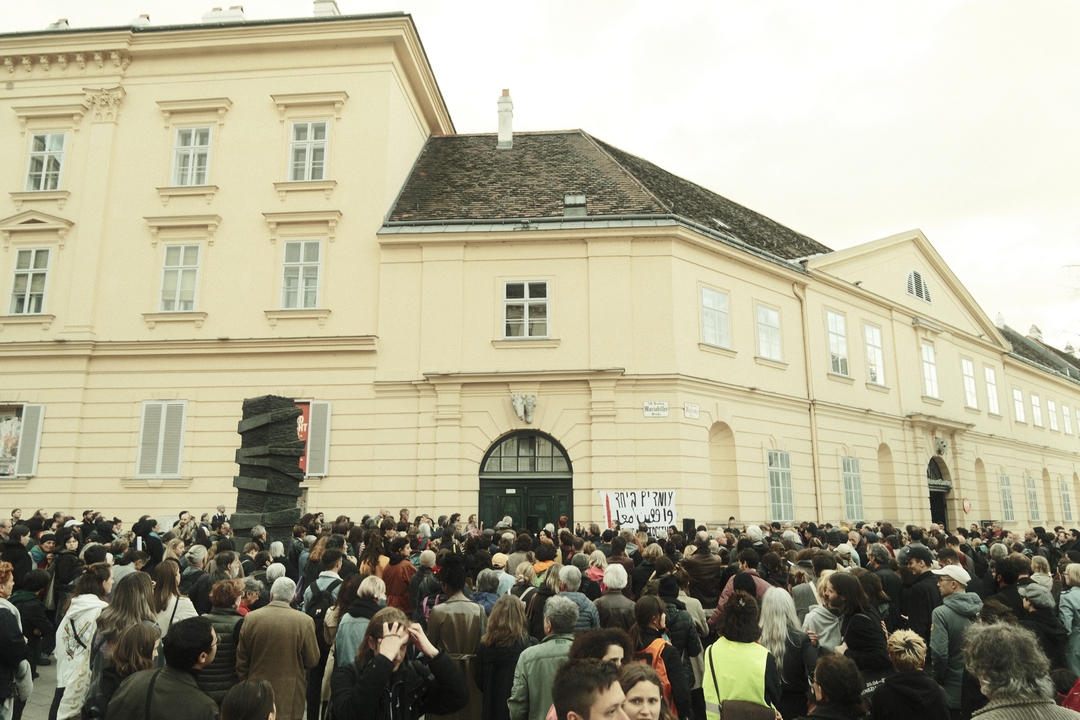
This edited conversation examines the role of music in the Jewish-Palestinian peace initiative Standing Together Vienna, which was founded in October 2023 in response to the Hamas massacre on October 7 and the unfolding genocide in Gaza. The initiative organized vigils to mourn all Palestinian and Israeli victims, as well as protests demanding a ceasefire and just peace in Israel-Palestine. In Austria’s polarized political climate these events opened an alternative space that named the structural imbalance of occupation and refused ethnonationalism and racism in every form. The conversation brings together four Vienna-based musicians, Marwan Abado, Natalie Adler-Oppenheim, Golnar Shahyar, and Sakîna Têyna, who reflect on their participation and musical performances at the movement’s first vigils in the fall of 2023. They discuss their motivations for participating in the movement, their considerations in choosing repertoire, and their experiences of navigating Austria’s repressive environment regarding discourse on Israel-Palestine, while also confronting pressures from within their own communities due to their participation in a joint initiative. The conversation contributes to ethnomusicological minority studies by exploring how diaspora musicians balance individual political articulation with community belonging in times of authoritarianism, war, and genocide. It illustrates how musical activism can contribute to peace work beyond romanticized notions of music as a unifier, by creating spaces of encounter where alternative futures can be imagined without flattening differences or power imbalances.
Dear subscribers!
We warmly welcome you to the new semester and are pleased to provide you with updates and information about our Departments’s upcoming events this month.
First of all, we would like to congratulate our colleague Ioannis Christidis on securing funding for his ESPRIT project "Performing Liberation? SWANA-EDM on European Dance Floors"!
We would also like to congratulate our colleague and former student Elnaz Mohammadzadeh, who was awarded the mdw 2026 Recognition Award for her master’s thesis in ethnomusicology, titled “Music and Dance in East Khorasan, Iran: Forms of Expression, Transmission, and Gender Perspectives.”
On Thursday, October 15, two of our students will take their master’s exams: the academic Master’s examination by Mira Perusich at 2:00 p.m. in the Gerlinde Haid Hall and the artistic Master’s examination by Parmis Rahmani at 6:30 p.m. in the concert hall of the Future Art Lab.
With the start of the 2026 winter semester, a second cohort of five students has now begun their studies in our Department’s unique "Afghan Music Education in Exile Program". We warmly welcome them to the mdw!
From October 31 through November 2, the symposium “Ancestral Futurities: Encounters with Heritage in Contemporary Dance and Choreographic Practices", organized by Beatriz Herrera Corado in cooperation with Tanzquartier Wien.
On Monday, November 2, Ira Khonen Temple will hold the workshop "Community, Archive, Lineage: Belonging to Yiddish folk music through rupture and repair".
Our colleague Isabel Frey has published the edited conversation "Sounding Together: A Conversation with Musicians from the Jewish-Palestinian Peace Initiative Standing Together Vienna" in the new rubric "Forum" in the Journal Music & Minorities.
More dates to mark on your calendar:
- November 5, 2026, 1:30 p.m.: Guest lecture "From a Cow's Moo to a Yodeling Diploma: Swiss Yodeling Then and Now" by Lea Hagmann
- November 6, 2026, 6:30 p.m.: Film screening and Q&A: "Beyond Tradition: The Power of Nature's Voices"
- November 11, 2026, 6:30 p.m.: Opening of the Gerlinde Haid Hall
- November 12 & 13, 2026: Annual Conference of the Austrian Folk Song Society
Studies
New Students in the "Afghan Music Education in Exile" Program
Starting with the winter term 2026, a second batch of five students started their studies in our department's exceptional „Afghan Music Education in Exile Program.“ Given the Taliban music ban that also targets higher music education, this programs aims to enable music students from Kabul to continue der studies at mdw. Students are financially supported by the Students at Risk Fonds of the ÖAD and ÖH. We warmly welcome them to the mdw!
Symposium
"Ancestral Futurities: Encounters with Heritage in Contemporary Dance and Choreographic Practices"
organized from Beatriz Hererra Corado in cooperation with the Tanzquartier Wien
Saturday, October 31 through Tuesday, November 3, 2026, Tanzquartier Wien Studios
The symposium explores how artists engage with cultural heritage, dance practices, and rituals connected to ancestrality through theoretical and methodological perspectives. It provides a platform to share and discuss strategies and methodologies for dance research and creation in order to expand and challenge the dominant dance canons. The program includes scholar and artistic engagements organized in panel discussions, lectures, and studio labs. It creates a space to acknowledge the diversity of bodily epistemologies, highlighting how social, political, spiritual, and “ancestral” movement practices inform, challenge, reshape, and expand contemporary dance and choreography. The aim is to collectively generate an ongoing questioning of what we label as traditional and contemporary and investigate ways of creating relationships among translocal experiences and their transmissions.
Keynote lectures by Şebnem Sözer Özdemir and Urmimala Sarkar.
This event is supported by the Gender|Queer|Diversity call.
Workshop
Community, Archive, Lineage: Belonging to Yiddish folk music through rupture and repair
with Ira Khonen Temple
Monday, November 2, 3–5 p.m., Gerlinde Haid-Saal (SEG 17A)
In this workshop we’ll talk about finding, selecting and performing repertoire in Yiddish, from the nuts and bolts to the whys and wherefore. We’ll look at some of Ira’s translations and adaptations on their recent album Strange Tongue and discuss some of the differences between literary translation and translation for performance. Also discussed: Why and how to queer a text? And how do the “non-performance” elements that surround a text (for example its author and composer, history, past usages, meaning) become part of the performance itself?
Ira Khonen Temple is a songwriter, accordionist and cultural organizer. A founder of the radical-traditional Yiddish music group Tsibele, Ira was also a longtime music director for the Aftselakhis Spectacle Committee Purimshpil and member of New York’s activist street band The Rude Mechanical Orchestra. Ira performs on and off Broadway, playing recently in Cabaret and Fiddler afn Dakh. Their first solo album “Strange Tongue - Mistame-Loshn” was released by Borscht Beat Records this October. The album is a collection of traditional Yiddish songs, reimagined and expanded in English - marrying queer, trans songwriting with the urgent, living breath of Yiddish culture as it is vibrantly practiced today in Brooklyn.
Publication
"Sounding Together: A Conversation with Musicians from the Jewish-Palestinian Peace Initiative Standing Together Vienna"
from Isabel Frey, Music & Minorities, Vol. 5 (2026)
with Marwan Abado, Natalie Adler-Oppenheim, Golnar Shahyar, and Sakîna Têyna
This edited conversation examines the role of music in the Jewish-Palestinian peace initiative Standing Together Vienna, which was founded in October 2023 in response to the Hamas massacre on October 7 and the unfolding genocide in Gaza. The initiative organized vigils to mourn all Palestinian and Israeli victims, as well as protests demanding a ceasefire and just peace in Israel-Palestine. In Austria’s polarized political climate these events opened an alternative space that named the structural imbalance of occupation and refused ethnonationalism and racism in every form. The conversation brings together four Vienna-based musicians, Marwan Abado, Natalie Adler-Oppenheim, Golnar Shahyar, and Sakîna Têyna, who reflect on their participation and musical performances at the movement’s first vigils in the fall of 2023. They discuss their motivations for participating in the movement, their considerations in choosing repertoire, and their experiences of navigating Austria’s repressive environment regarding discourse on Israel-Palestine, while also confronting pressures from within their own communities due to their participation in a joint initiative. The conversation contributes to ethnomusicological minority studies by exploring how diaspora musicians balance individual political articulation with community belonging in times of authoritarianism, war, and genocide. It illustrates how musical activism can contribute to peace work beyond romanticized notions of music as a unifier, by creating spaces of encounter where alternative futures can be imagined without flattening differences or power imbalances.
Credits: header © IVE; Afghan Music Education in Exile Program © Marko Kölbl; Symposium Ancetral Futurities © Till Krappmann; Workshop Ira Khonen Temple © Levi Mandel; Publication Sounding Together © Christopher Glanzl.
Newsletter: Isabel Frey
Impressum & Offenlegung
mdw – Universität für Musik und darstellende Kunst Wien
Institut für Volksmusikforschung und Ethnomusikologie
Anton-von-Webern-Platz 1, 1030 Wien, Österreich
+43 1 71155, vr1@mdw.ac.at, mdw.ac.at
